
How to Convince Your Parents to Give You More Independence Easily
Nearly half of American teens say they wish they had more freedom and control over their daily lives. Balancing academic pressures, friendships, and home responsibilities can make the push for independence feel complicated. This guide breaks down the practical steps you need to assess your current strengths, set clear goals, and present a solid case to your parents for gaining more personal independence without sacrificing trust or important responsibilities.
Quick Summary
| Key Point | Explanation |
|---|---|
| 1. Assess Your Independence Skills | Evaluate your current skills to identify strengths and improvement areas for greater autonomy. |
| 2. Define Specific Freedoms Desired | Clearly outline the freedoms you seek, focusing on areas where you feel ready to take more responsibility. |
| 3. Document Achievements as Evidence | Create a portfolio of accomplishments demonstrating maturity and readiness for increased independence. |
| 4. Communicate Plans Respectfully | Approach discussions with parents thoughtfully, expressing gratitude and clearly stating requests for more freedom. |
| 5. Show Consistent Responsibility | Build trust through ongoing reliable actions and managing responsibilities, reinforcing your readiness for independence. |
Step 1: Assess Your Current Level of Independence
Being independent means taking control of your life, making smart decisions, and handling responsibilities on your own. This first step is all about understanding where you are right now in your journey toward personal autonomy. By evaluating your current independence skills, you can identify strengths and areas where you need improvement.
Start by doing an honest self assessment. Look at different areas of your life like cooking, managing money, scheduling appointments, doing laundry, and handling basic transportation. Ask yourself how comfortable you are performing these tasks without help from your parents. Can you make a budget? Do you know how to schedule a doctor appointment? Are you able to do your own laundry and keep your living space clean? These practical skills are key indicators of your independence level.

Remember that independence is a skill you build over time. No one becomes fully independent overnight. Some areas might feel easy for you, while others feel challenging. The goal is steady progress, not instant perfection. Think of this assessment as a roadmap to help you grow and become more self sufficient.
Pro tip: Create a simple checklist of daily tasks and track how many you can complete independently each week to measure your progress.
Step 2: Identify Specific Areas Where You Want More Freedom
Now that you understand your current independence level, it is time to get crystal clear about the specific freedoms you want to gain. This step is about pinpointing the exact areas where you feel ready to take more responsibility and demonstrate your maturity. Understanding different dimensions of personal autonomy will help you craft a strategic approach to discussing independence with your parents.
Start by making a detailed list of the freedoms most important to you. Think about specific scenarios like managing your own social schedule, having more privacy in your bedroom, making decisions about your extracurricular activities, or having more control over your personal technology use. Consider areas like weekend plans, friend interactions, academic choices, and personal expenses. Be honest with yourself about what matters most and where you genuinely feel prepared to show more responsibility.
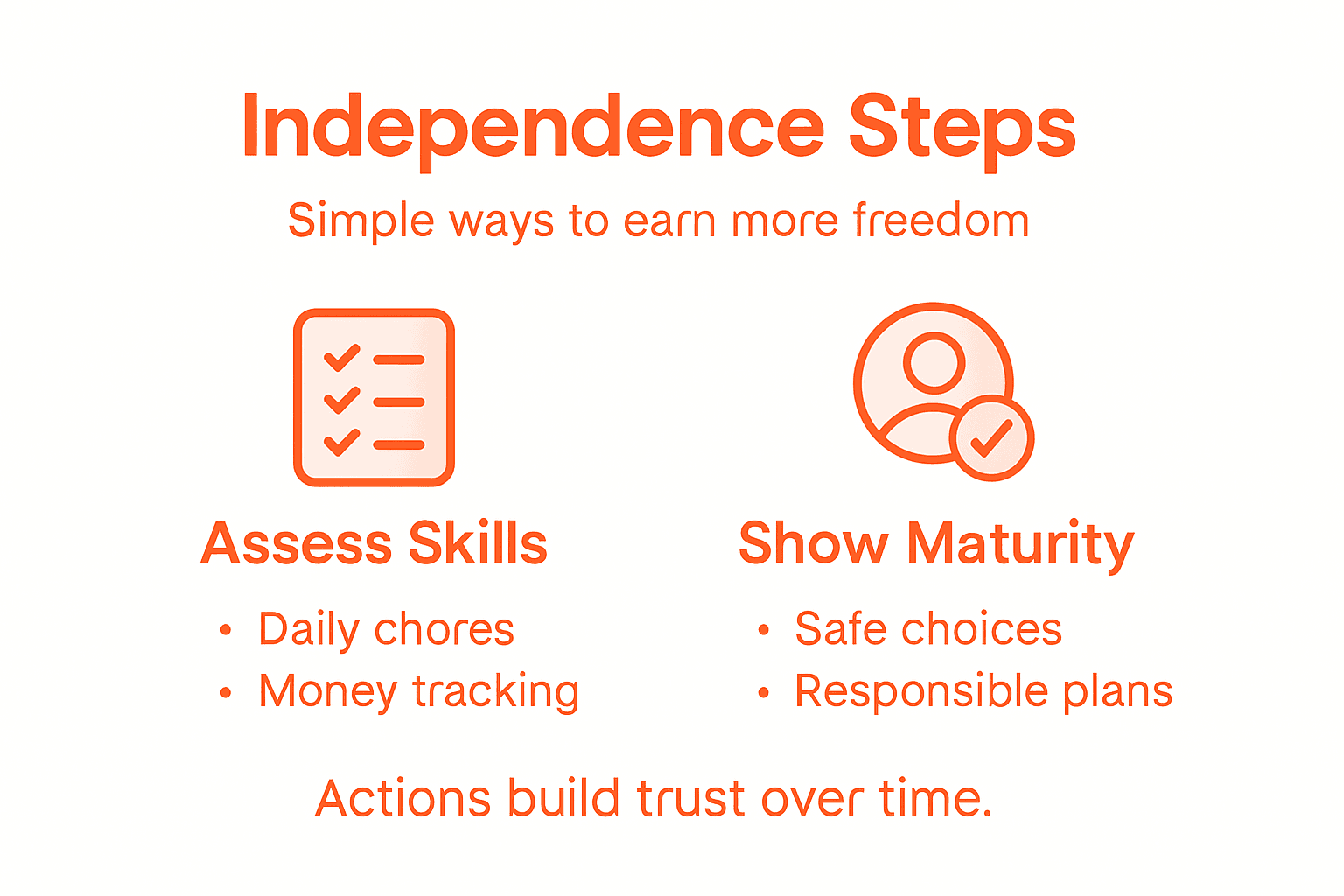
Remember that requesting freedom is not about arguing or rebelling. It is about demonstrating that you are mature enough to handle increased responsibilities. Focus on concrete examples where you can prove your readiness. Maybe you have consistently maintained good grades, kept your room clean, or helped with household chores. These specific demonstrations will strengthen your case when discussing expanded privileges with your parents.
Pro tip: Write down concrete examples of how you have already shown responsibility in each area you want more freedom.
Step 3: Gather Evidence to Support Your Request
Preparing a solid case for increased independence requires more than just good intentions. You need concrete evidence that demonstrates your maturity and readiness to handle more responsibility. Supporting adolescent autonomy through evidence can help your parents understand that granting you more freedom is a positive step in your development.
Start by documenting your recent achievements and responsible behaviors. Create a comprehensive portfolio that showcases your capabilities. Include academic records showing consistent grades, screenshots of completed chores or household tasks, volunteer work certificates, part time job references, or extracurricular leadership roles. Track instances where you have demonstrated financial responsibility like managing a savings account, budgeting your allowance, or making responsible purchasing decisions. These tangible proofs will help illustrate your growing maturity and ability to handle increased independence.
Remember that gathering evidence is not about bragging but about presenting a logical, respectful argument. Your goal is to show your parents that you are not just asking for freedom but are actively proving you can handle more responsibilities. Think of this as building a professional case that highlights your growth, reliability, and potential. By presenting clear, factual evidence, you transform the conversation from an emotional request to a mature negotiation.
Pro tip: Organize your evidence in a clean folder or digital presentation to make it easy for your parents to review your accomplishments.
Step 4: Communicate Your Plan Clearly and Respectfully
Communicating your desire for independence is an art that requires careful preparation and emotional intelligence. Effective communication strategies with parents can make the difference between a productive conversation and an argument. Your goal is to approach this discussion as a mature partnership rather than a confrontation.
Choose the right time and setting for your conversation. Pick a moment when your parents are calm and not distracted by work or other stress. Start by expressing appreciation for their support and guidance. Then clearly outline the specific freedoms you are seeking and the concrete ways you plan to demonstrate responsibility. Use specific language like “I would like to manage my own weekend schedule” instead of general statements. Explain the reasoning behind each request and proactively address potential concerns they might have. Show that you have thought through potential challenges and have plans to handle them responsibly.
Listen actively during the conversation. Your parents will likely have questions or reservations. Respond with patience and respect. Avoid becoming defensive or emotional. Instead, validate their concerns and be willing to negotiate or create a gradual plan for increased independence. Demonstrate that you are not demanding freedom but requesting a collaborative approach to growing up.
Pro tip: Practice your conversation with a trusted friend or family member to help refine your communication approach and build confidence.
Step 5: Demonstrate Responsibility Over Time
Consistency is key when proving you are ready for more independence. Developing adolescent responsibility requires sustained effort and a genuine commitment to showing maturity through your actions. This means going beyond one time promises and creating a pattern of reliable behavior that builds trust with your parents.
Start by setting small achievable goals that demonstrate your responsibility. These could include consistently completing household chores without reminders, maintaining your academic performance, managing your personal budget, or helping with family responsibilities. Keep a record of these accomplishments and be prepared to discuss them with your parents. Show that you can follow through on commitments and handle increasing levels of responsibility without constant supervision. When you make a mistake or fall short, own up to it quickly and develop a plan to improve.
Remember that earning independence is a gradual process. Your parents want to see steady progress and evidence that you can make thoughtful decisions. Be patient with yourself and them. Celebrate small victories and learn from setbacks. Each responsible action builds a track record that shows you are maturing and becoming more self sufficient. Trust is earned through consistent behavior not grand gestures.
Below is a comparison of ways to demonstrate readiness for more independence:
| Method | Effort Level | Parental Impact |
|---|---|---|
| Completing chores regularly | Moderate | Shows reliability |
| Maintaining good grades | High | Indicates maturity |
| Managing personal schedule | Moderate | Builds trust |
| Handling finances responsibly | High | Proves decision-making skills |
| Taking initiative in family tasks | Moderate | Strengthens responsibility perception |
Pro tip: Create a simple weekly checklist of responsibilities to help you track and demonstrate your growing maturity.
Step 6: Review Progress and Adjust Your Approach
The journey to independence is not a straight line but a dynamic process of continuous learning and adaptation. Monitoring adolescent development strategies requires honest reflection and willingness to adjust your approach based on what you learn about yourself and your relationship with your parents.
Schedule regular check ins with your parents to discuss your progress. These conversations are not about proving you are right but about collaborative problem solving. Be prepared to share specific examples of how you have demonstrated responsibility and listen openly to their feedback. If certain strategies are not working ask thoughtful questions like “What could I do differently to show I am ready for more independence?” Be willing to acknowledge areas where you might need more support or guidance.
Remember that independence is not about perfection but about consistent growth. Some weeks you will make great strides and other weeks you might struggle. The key is maintaining a positive attitude and showing your parents that you are committed to personal development. View setbacks as learning opportunities and demonstrate resilience by quickly developing plans to improve. Your willingness to adapt and learn will ultimately convince your parents that you are mature and responsible.
Pro tip: Keep a personal journal documenting your progress to help you reflect objectively on your independence journey.
Here’s a summary of practical steps and the main focus of each stage to help you achieve greater independence:
| Step | Main Focus | Key Outcome |
|---|---|---|
| 1. Assess Current Independence | Identify strengths and gaps | Clear understanding of abilities |
| 2. Pinpoint Desired Freedoms | Select areas for more control | List of specific goals |
| 3. Gather Supporting Evidence | Document achievements | Compelling case for parents |
| 4. Communicate Clearly | Use respectful dialog | Positive, mature discussion |
| 5. Show Responsibility | Demonstrate reliable actions | Built parental trust |
| 6. Review Progress | Adjust based on feedback | Continuous personal growth |
Take Control of Your Independence Journey Today
Struggling to convince your parents to grant you more freedom is a common challenge for many high school students. The article highlights how building trust through clear communication and consistent responsibility can open doors to increased independence. If you want to master these skills but feel overwhelmed by managing your time, budgeting, and personal growth, you are not alone. These key areas are essential to proving your readiness and earning your parents’ trust.
Start strengthening your independence with proven strategies that boost your productivity and personal management skills. Explore practical tools to help you budget your allowance, organize your schedule, and maintain a balanced lifestyle. Take the first step by visiting Learning With Angie where you can find resources tailored to your academic and personal growth needs. Preparing yourself for responsible adulthood is easier when you have the right guidance.
Ready to show your parents you are capable of managing your own life with maturity and confidence Visit Learning With Angie now and unlock expert tips to enhance your study habits and daily routines. Your path to greater freedom starts here.
Frequently Asked Questions
How can I assess my current level of independence?
To assess your current level of independence, start by evaluating your skills in various areas like cooking, managing money, and scheduling appointments. Create a checklist of daily tasks and track how many you can complete independently each week to measure your progress.
What specific areas should I focus on for gaining more independence?
Focus on areas that matter most to you, such as managing your social schedule, handling your personal finances, or deciding on extracurricular activities. Make a detailed list of freedoms you desire and be honest about what you feel ready to take responsibility for.
How can I gather evidence to support my request for more independence?
Gather evidence by documenting your achievements, such as maintaining good grades, completing chores, or managing a budget. Organize this information into a clean portfolio to present a compelling case to your parents.
What are effective ways to communicate my desire for more independence?
Use clear and respectful communication by picking the right time to discuss your needs with your parents. Start the conversation by expressing appreciation for their support, then present your requests along with specific examples of how you have shown responsibility.
How can I demonstrate responsibility consistently over time?
Demonstrate responsibility by setting small, achievable goals, such as completing chores without being reminded or managing your personal budget effectively. Keep a record of these accomplishments to show your parents your ongoing commitment to becoming more independent.
How often should I review my progress and adjust my approach?
Schedule regular check-ins with your parents to review your progress, ideally every few weeks. Use these conversations to openly address any feedback and adjust your strategies based on what you’ve learned about yourself and your relationship with them.