
Guide to Overcoming Perfectionism and Imposter Syndrome
Nearly 70% of high-achievers admit to feeling like they do not deserve their success at some point. These silent struggles of perfectionism and imposter syndrome can drain your energy, cloud your accomplishments, and undermine your progress. Recognizing the signs and knowing how these patterns operate can help you reclaim self-confidence, stop second-guessing yourself, and start thriving on your own terms.
Key Takeaways
| Point | Details |
|---|---|
| Understanding Psychological Patterns | Perfectionism and imposter syndrome are common mental barriers that can undermine confidence and success, often manifesting through self-doubt and unrealistic expectations. |
| Recognizing Types of Imposter Syndrome | There are five distinct types of imposter syndrome, and understanding them can help identify and address specific feelings of self-doubt. |
| Impact on Academic and Personal Growth | These psychological patterns can severely affect mental health and academic performance, leading to anxiety and avoidance of challenges. |
| Strategies for Overcoming Barriers | Cultivating self-compassion, setting realistic goals, and challenging negative thought patterns are essential steps toward overcoming perfectionism and imposter feelings. |
Defining Perfectionism and Imposter Syndrome
Ever feel like you’re constantly trying to be perfect but never quite measuring up? Welcome to the world of perfectionism and imposter syndrome – two mental patterns that can seriously mess with your confidence and success. According to research from Yale University, these psychological experiences are more common than you might think, especially among students and young professionals.
Let’s break down what these terms really mean. Perfectionism is when you set impossibly high standards for yourself, often pushing so hard that you actually end up sabotaging your own progress. As research from Harding University explains, it’s about striving towards unrealistic goals that are practically impossible to reach. You might find yourself spending hours on a project, redoing it over and over, never feeling satisfied with the result.
Imposter syndrome takes this a step further. It’s that nagging feeling that you’re a fraud – even when you’re actually successful. Imagine getting top grades or winning an award, but still believing deep down that you don’t really deserve it. According to scholarly research, people experiencing imposter syndrome believe they will inevitably be “found out” as not being as competent as others perceive them to be.
The tricky part about both perfectionism and imposter syndrome is how sneaky they can be. They often hide in plain sight, masquerading as ambition or high standards. But in reality, they’re psychological roadblocks that can prevent you from recognizing your own worth and potential. Recognizing these patterns is the first step towards breaking free from their grip and building genuine self-confidence.
Key Types and Common Misconceptions
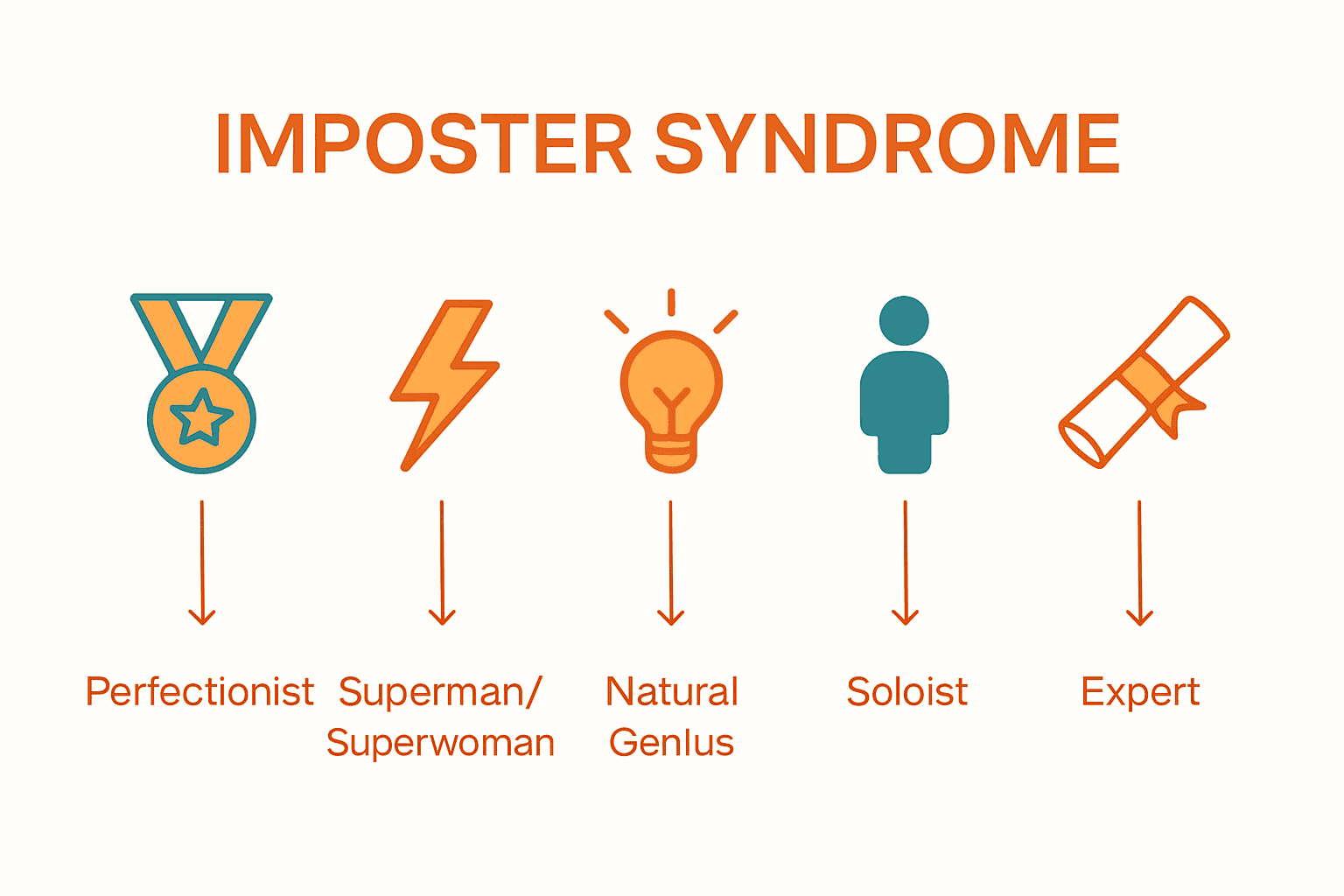
Imposter syndrome isn’t a one-size-fits-all experience. According to research from the University of Arizona Global Campus, there are actually five distinct types of imposter syndrome patterns that people commonly experience. Understanding these types can help you recognize and address your specific feelings of self-doubt.
Here’s a comparison of the five imposter syndrome types and how they typically affect individuals:
| Type | Defining Trait | Common Behaviors |
|---|---|---|
| The Perfectionist | Sets impossible standards | Overworks Never satisfied |
| The Superwoman/Superman | Proves worth through effort | Works long hours Avoids breaks |
| The Natural Genius | Expects instant mastery | Frustrated by setbacks Avoids challenges |
| The Soloist | Values independence | Refuses help Works alone |
| The Expert | Needs more knowledge | Seeks extra training Doubts competence |
- The Perfectionist: Always setting impossibly high standards and feeling like a failure if everything isn’t 100% perfect
- The Superwoman/Superman: Pushing themselves to work harder than everyone else to prove their worth
- The Natural Genius: Believing they should understand and master things immediately, feeling inadequate if learning takes time
- The Soloist: Thinking they must accomplish everything alone and viewing asking for help as a weakness
- The Expert: Constantly seeking more knowledge and certifications, never feeling like they know enough
Research from the American Society of Clinical Laboratory Science reveals an even broader categorization: imposter syndrome types can be divided into two major groups – overachievers and non-starters. Overachievers include Perfectionists and People-Pleasers who work excessively hard to compensate for their perceived inadequacies. Non-starters, on the other hand, experience Paralysis and Procrastination – they become so overwhelmed by their self-doubt that they struggle to even begin tasks.
One of the biggest misconceptions about imposter syndrome is that it only affects certain people. In reality, it can impact anyone – from students to professionals, across all fields and experience levels. High-achieving individuals are often the most vulnerable, precisely because their success can paradoxically fuel their feelings of being an ‘fraud’. Recognizing these patterns is the first step towards breaking free from the cycle of self-doubt and building genuine confidence.
Recognizing Symptoms and Root Causes
Identifying imposter syndrome and perfectionism isn’t always straightforward. These psychological patterns can be subtle, creeping into your thoughts and behaviors in ways you might not immediately recognize. According to research from Yale University’s Poorvu Center, these experiences often manifest as an intense feeling of being a fraud, constantly setting standards so high that they become almost self-sabotaging.
Let’s break down some key symptoms you might experience:
- Constant self-doubt, even when you’ve achieved success
- Attributing your achievements to luck rather than your own skills
- Feeling like you’ll be “found out” as incompetent
- Overworking to compensate for perceived inadequacies
- Difficulty accepting compliments or recognition
- Intense fear of failure
- Chronic comparison with others
Research published in medical journals reveals a fascinating insight: psychological distress is strongly linked to perfectionism and imposter feelings. Scientific studies have found that these character traits are actually more powerful predictors of psychological adjustment than many demographic factors. This means your internal thought patterns can significantly impact your mental well-being more than external circumstances.
The root causes of imposter syndrome are complex and often deeply personal. They can stem from childhood experiences, societal pressures, family dynamics, or past educational environments that emphasized extreme achievement. Some people develop these feelings after entering competitive academic or professional spaces where they suddenly feel less exceptional.
 Understanding that these feelings are common – and not a reflection of your actual worth – is the first step towards breaking free from their grip. Remember, experiencing imposter syndrome doesn’t make you weak. It makes you human.
Impact on Academic and Personal Growth
Perfectionism and imposter syndrome aren’t just passing feelings – they can have profound and sometimes devastating consequences on your academic performance and personal development. Research reveals a startling connection between these psychological patterns and significant mental health challenges. A medical study found that an alarming 27.5% of students experience psychiatric levels of distress directly linked to perfectionism and imposter feelings.
In academic settings, these psychological patterns can create a destructive cycle. Imposter syndrome often leads students to:
- Avoid challenging courses or opportunities
- Spend excessive time over-preparing
- Constantly compare themselves to peers
- Hesitate to seek help or ask questions
- Struggle with test anxiety and performance pressure
More critically, some research suggests a concerning link between maladaptive perfectionism and serious mental health risks. Medical student studies have explored potential connections between these mindsets and suicidal ideation, highlighting how deeply these psychological patterns can impact personal well-being.
Fostering uniqueness: A guide to personal growth starts with recognizing that your worth isn’t defined by perfect performance. These psychological challenges can actually become opportunities for growth if approached with self-compassion. By understanding the root of these feelings, you can transform self-doubt into personal resilience, turning potential mental barriers into stepping stones for authentic personal and academic development.
Effective Strategies and Practical Solutions
Overcoming perfectionism and imposter syndrome isn’t about achieving flawlessness – it’s about developing realistic expectations and cultivating self-compassion. According to research from Yale University’s Poorvu Center, navigating these psychological challenges requires a balanced approach that transforms destructive thought patterns into opportunities for growth.
Key strategies to combat these mental barriers include:
- Recognize the difference between excellence and perfectionism
- Practice self-compassionate self-talk
- Document and celebrate your actual achievements
- Challenge negative thought patterns
- Set realistic, attainable goals
- Seek feedback from trusted mentors
- Embrace learning opportunities as growth experiences
As California State University highlights, there’s a critical distinction between perfectionism and striving for excellence. Perfectionism involves pursuing impossible standards that ultimately undermine your potential, while striving for excellence means setting high yet achievable goals. Learn how to improve problem-solving skills can be an essential part of developing a more balanced mindset. This approach helps you develop resilience, recognizing that mistakes are not failures but valuable learning experiences that contribute to your personal and academic growth.
The most powerful strategy is cultivating self-awareness. By understanding that imposter feelings are common and not a reflection of your true capabilities, you can gradually rebuild confidence. Remember, every successful person has experienced self-doubt – what matters is how you choose to respond to these feelings.
Avoiding Traps and Building Confidence
Perfectionism is a cunning trap that can slowly erode your confidence and potential. According to research from Johns Hopkins University, the key to avoiding these psychological pitfalls is learning to strategically vary your standards. This doesn’t mean lowering your expectations across the board, but rather becoming more intentional about where you invest your mental and emotional energy.
Common traps that undermine confidence include:
- Comparing yourself constantly to others
- Catastrophizing small mistakes
- Overlooking your genuine achievements
- Believing perfection is the only acceptable outcome
- Avoiding challenges for fear of failure
- Dismissing positive feedback
- Overanalyzing every single decision
Research from California State University emphasizes the critical distinction between perfectionism and striving for excellence. Perfectionists pursue impossible standards that ultimately sabotage their progress, while those who strive for excellence set challenging yet realistic goals. Learn how to enhance teamwork and critical thinking can help you develop a more balanced perspective, transforming self-doubt into genuine personal growth.
Building confidence is about creating a compassionate relationship with yourself. Start by acknowledging your efforts, not just your outcomes. Celebrate small wins, embrace learning opportunities, and remember that growth isn’t linear. Your worth isn’t determined by flawless performance, but by your resilience, curiosity, and willingness to keep moving forward despite challenges.
 Unlock Your True Potential Beyond Perfectionism and Imposter Syndrome

Struggling with perfectionism and imposter syndrome can leave you feeling stuck in a cycle of self-doubt and relentless pressure to be flawless. These challenges often hide behind high standards and fear of failure, making it hard to recognize your real achievements or embrace growth. If you find yourself overworking, fearing mistakes, or doubting your worth despite success, you are not alone. The good news is that with the right strategies and mindset, you can break free from this trap and regain confidence in your abilities.
Discover practical tools to shift from perfectionism to excellence and silence your inner critic by exploring helpful resources on improving problem-solving skills and building confidence through personal growth. Take control of your learning journey and daily habits and start transforming self-doubt into strength right now because your progress and well-being cannot wait.
Frequently Asked Questions
What are the main differences between perfectionism and imposter syndrome?
Perfectionism involves setting impossibly high standards for oneself and feeling unsatisfied with achievements, while imposter syndrome is the persistent belief that one’s success is undeserved and that they will be exposed as a fraud.
How can I recognize if I have imposter syndrome?
Common symptoms of imposter syndrome include constant self-doubt, attributing successes to luck, fear of being ‘found out,’ and difficulty accepting compliments.
What strategies can I use to overcome perfectionism?
To combat perfectionism, recognize the difference between excellence and perfectionism, practice self-compassion, set realistic goals, and celebrate your achievements.
How does perfectionism affect academic performance?
Perfectionism can lead to avoidance of challenges, excessive preparation, and increased anxiety, which can ultimately harm academic performance and mental health.
Recommended
- How to Embrace Your Introversion—Powerful Benefits of Being an Introvert
- 15 Reasons the Feynman Technique Is a Game-Changer for Students
Want a head start? The Building Self-Confidence workbook in my shop was made for exactly this — it’ll save you a ton of time.