You sit down to study, promise yourself one quick episode first, and suddenly your homework is still untouched. Oops. The Animedoro technique flips that habit around by making anime the reward after focused work, not the thing that eats your whole afternoon.
It can make a boring study session feel less painful, especially when motivation is nowhere to be found. Still, it only works when the studying comes first and the break has a clear ending.
Key Takeaways
- The Animedoro technique pairs 40 to 60 minutes of focused work with one roughly 20-minute anime episode.
- It is a productivity method, not a scientifically tested learning treatment on its own.
- Your work block should include active recall, practice problems, or writing, not passive rereading.
- Pick the episode before you begin, use a timer, and stop after one episode.
- If anime makes you want to keep watching, choose a different break reward.
How the Animedoro Technique Works
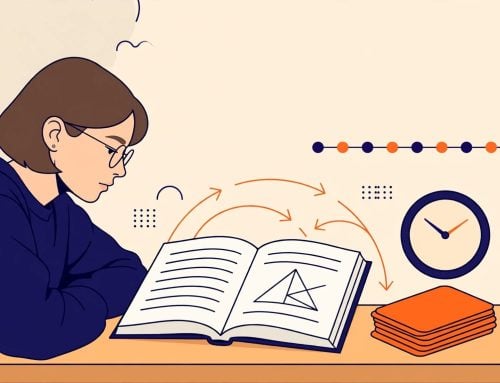
Animedoro is a twist on the classic Pomodoro method. Traditional Pomodoro uses 25 minutes of work followed by a five-minute break, with a longer break after several rounds. Animedoro gives you a longer focus block and a more exciting reward.
The basic rhythm looks like this:
- Choose one clear study task.
- Work without interruptions for 40 to 60 minutes.
- Watch one anime episode for about 20 minutes.
- Return to the next task and repeat if needed.
Most anime episodes run around 24 minutes. If you skip the opening, ending, and credits, the break often lands closer to 19 or 20 minutes. That built-in limit is the whole point. You are not taking a vague “I’ll scroll for a bit” break that somehow turns into an accidental 45-minute disappearance.

The Animedoro technique works best when your work period has a finish line. “Study chemistry” is too fuzzy. Try “complete 12 stoichiometry problems” or “turn Chapter 4 notes into 15 flashcards.”
That small detail matters. Your brain is much more willing to begin when it knows what “done” means.
Your anime break should be a reward for finishing a study block, not background noise playing beside unfinished work.
Some students like Animedoro because 25 minutes feels too short. You finally stop staring at the first paragraph, get into the assignment, and then the timer interrupts you. A 50-minute block gives you time to settle in, especially for essays, problem sets, reading, or a big project.
Does the Animedoro Technique Improve Focus?
Here is the honest answer: there is no strong research showing that Animedoro itself improves grades or focus. It is mainly a popular productivity idea built around timed work, planned breaks, and rewards.
That does not mean it is useless. It means you should treat it as a tool to test, not a magic study personality.
The parts of the method that make sense are already familiar. A timer creates a boundary around work. A planned break gives your brain something to expect. A reward can make an unpleasant task easier to start. For some students, knowing they have one episode waiting makes it easier to resist checking TikTok every six minutes.
But the timer is not doing the learning for you. What you do during the focus block matters far more.
Research on study habits points toward active strategies such as self-quizzing, summarizing in your own words, and self-explanation over passive review. This overview of study habits and academic performance is a good reminder that time spent looking at notes is not the same as learning.
Use your Animedoro block to make your brain work a little. Close your notes and write what you remember. Solve a problem before checking the example. Explain the topic to a sibling, a parent, your pet, or the wall. Your dog may not understand photosynthesis, but you will notice where your explanation falls apart.
Build an Animedoro Study Session That Counts
Before you hit Start, do a two-minute setup. Choose your task, gather what you need, fill your water bottle, and put your phone out of reach. Not face down beside your elbow. Across the room, in your backpack, or with a parent if that helps.
You also need to choose the episode before the study block begins. Searching for a show during your break is a sneaky little procrastination trap. You open Netflix to find something short, then spend 18 minutes comparing trailers. Not ideal.
A simple timer is better than relying on your phone. If you need your phone for the timer, turn on Do Not Disturb and use an app or website blocker. Keep only the tabs, books, and supplies for your current assignment visible.
Here are two schedules you can try.
| When you need it | Focus block | Break | Best for |
|---|---|---|---|
| A short homework reset | 40 minutes | One episode, about 20 minutes | One or two assignments |
| A serious exam review | 50 minutes | One episode, about 20 minutes | Practice questions and essays |
| Deep project work | 60 minutes | One episode, about 20 minutes | Drafting, coding, research, lab reports |
For a 50-minute biology block, you might spend the first 10 minutes reviewing yesterday’s notes. Then spend 25 minutes answering practice questions without looking. Use the last 15 minutes to check mistakes and make a short list of what to revisit.
After the episode, start a fresh block with a different task. Maybe you shift from flashcards to practice problems, or from outlining an essay to writing the first body paragraph. Changing tasks can make a longer study session feel less like brain wallpaper.
If you are using a planner, Google Calendar, or Notion, put the study block on your schedule before you begin. A to-do list is helpful, but it can become a wish list if your tasks never get an actual time slot. The focus and productivity study tips from Study Australia also stress planning, task priorities, and a workable study environment.
Mistakes That Turn Animedoro Into Procrastination
The biggest problem is obvious: you tell yourself “one episode,” then watch four. Anime is designed to make you want the next episode. Cliffhangers are not a personal attack, but they can absolutely wreck your schedule.
Choose a show you have already seen, a low-stakes comfort show, or an episode without a giant ongoing plot twist. Comedy series can work well for some students. If the show is too addictive, your break reward is too expensive.
Set two alarms. The first tells you the episode is about to end. The second tells you it is time to stand up, stretch, grab water, and return to your desk. Do not start another episode while you are “getting ready” to study again. That is how the plan falls apart.
Another mistake is making the work block way too hard. A 60-minute timer will not fix a task you do not understand. If you are stuck after 10 minutes, switch gears. Write down one question for your teacher. Watch the assigned lesson. Find one worked example. Ask a classmate. Then return to the task.
You also do not need to earn every bit of rest. If you are exhausted, hungry, sick, or overwhelmed, take a real break first. Animedoro is not supposed to turn downtime into something you have to deserve.
Parents can help by agreeing on the structure ahead of time. The goal is not to police every episode. It is to help your student make a clear plan, protect their study space, and notice whether the routine is helping. If it becomes daily binge-watching with a textbook nearby, it needs an adjustment.
Make Anime Breaks Part of a Bigger Study Plan
Animedoro can get you to start. It cannot replace a study system.
Use the method for your daily review, then return to the material later. After class, spend 10 to 15 minutes cleaning up confusing notes and turning headings into questions. A few days later, quiz yourself again. The following week, mix that topic with older material and do practice questions.
This kind of spacing keeps finals from becoming a full-blown academic emergency. It also helps you spot confusion early, when you can still ask for help.
Try pairing the Animedoro technique with one proven study action per block:
- Create questions in the sidebar of your notes, then answer them without peeking.
- Use flashcards with short prompts and say the answer before flipping.
- Complete practice problems before looking at the solution.
- Teach the lesson aloud in plain language.
For more options beyond timed study sessions, these effective study techniques can help you build a routine that fits the class and the assignment.
Final Thoughts
The Animedoro technique works when it gives your day structure, not when it gives procrastination a cute new name. Put the episode after focused, active work, keep the break to one episode, and use a timer that you respect.
If one episode helps you finish a study block, great. If it pulls you away from your work, swap it for a walk, snack, music, or a quick chat instead. The best study method is the one that helps you learn, then lets you enjoy your free time without the homework guilt.
This post may contain affiliate links. If you make a purchase through these links, I may earn a small commission at no extra cost to you.