
Building Healthy Habits That Stick
Habits shape more than just your daily schedule. They quietly decide your energy, choices, and future without needing your constant focus. Yet even though nearly half of our daily actions are guided by habits instead of conscious decisions, most people believe building new habits takes superhuman willpower. The real secret is much simpler and has everything to do with how your brain creates shortcuts that make change feel almost effortless.
Quick Summary
| Takeaway | Explanation |
|---|---|
| Understand the habit loop: cue, routine, reward | Recognizing how cues trigger routines and rewards reinforces behavior, enabling you to reshape your habits effectively. |
| Focus on small, consistent changes | Incremental adjustments lead to significant transformations over time, making it easier to establish lasting habits. |
| Create a supportive environment | Designing your surroundings to eliminate obstacles and foster positive behaviors can improve your habit formation process. |
| Use habit stacking for efficiency | Link new habits to existing routines to increase the likelihood of maintaining them in your daily life. |
| Celebrate small wins for motivation | Acknowledge progress regularly to boost your motivation and reinforce the habits you are working to establish. |
What are Habits and How Do They Form?
Habits are powerful automatic behaviors that shape our daily lives without requiring constant conscious effort. According to scientific research, habits are learned responses triggered by specific environmental cues that develop through consistent repetition.
The Brain and Habit Formation
When you repeatedly perform an action in the same context, your brain starts creating efficient neural pathways. These pathways make the behavior progressively easier and more automatic. Think of it like creating a well-worn trail in a forest – the more you walk the same path, the clearer and smoother it becomes.
Your brain loves efficiency. By converting complex actions into automatic routines, it saves mental energy for more challenging tasks. This is why habits can be both incredibly helpful and potentially harmful depending on what you’re repeatedly doing.
Understanding the Habit Loop
Habit formation follows a predictable cycle called the habit loop, which consists of three key components:
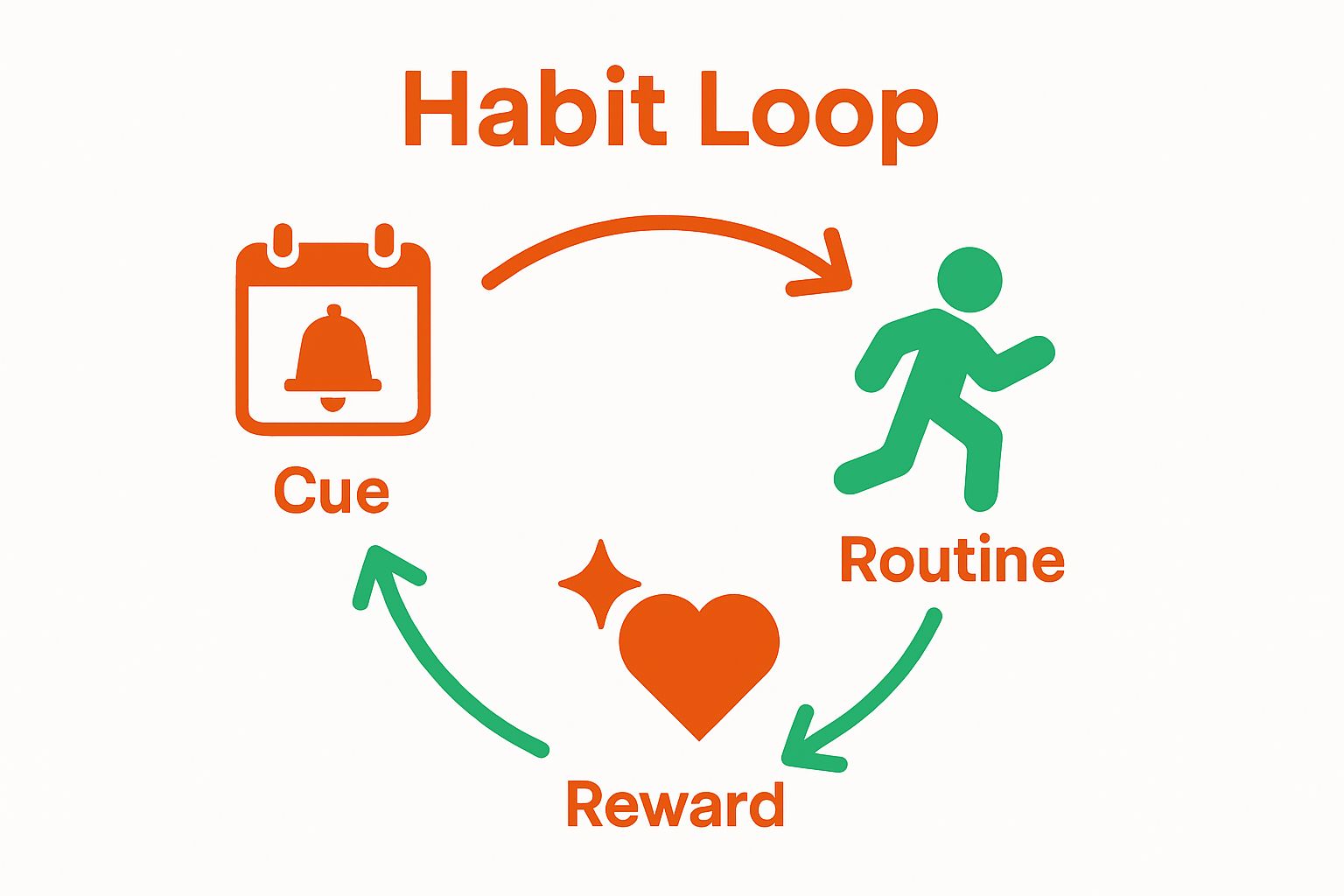
- Cue: The trigger that initiates the habit (like feeling stressed)
- Routine: The actual behavior you perform (like eating comfort food)
- Reward: The positive feeling that reinforces the behavior
Recognizing this loop helps you understand why certain behaviors become ingrained and how you can intentionally reshape your habits. By identifying your specific cues and rewards, you can start building healthy habits that stick and replace less beneficial patterns.
Here is a breakdown of the core components of the habit loop and their roles in habit formation for easy reference.
| Habit Loop Component | Description | Example |
|---|---|---|
| Cue | Trigger that initiates the habit | Feeling stressed |
| Routine | The behavior or action you perform | Eating comfort food |
| Reward | Positive feeling or benefit that reinforces the behavior | Sense of relief or pleasure |
Building healthy habits isn’t about willpower – it’s about understanding how your brain works and creating environments that support positive change.
Why Building Healthy Habits is Important for Everyone
Healthy habits are not just trendy recommendations but essential strategies for creating lasting personal transformation. Scientific research demonstrates that consistent positive behaviors can dramatically improve your overall quality of life.
Long-Term Personal Impact
Building healthy habits goes far beyond temporary changes. These behaviors create cumulative effects that compound over time, impacting your physical health, mental well-being, and future opportunities. Small consistent actions can lead to significant life improvements.
Immagine your daily choices as tiny investments in your future self. Each healthy habit you build becomes a foundational block for personal growth, resilience, and long-term success. The small choices you make today determine the opportunities and challenges you’ll face tomorrow.
Health and Performance Benefits
Healthy habits provide multiple interconnected benefits:
- Improved physical energy and stamina
- Enhanced mental clarity and emotional stability
- Reduced risk of chronic health conditions
- Better stress management skills
- Increased personal confidence and self-discipline
People who consistently practice positive habits tend to experience lower stress levels, higher productivity, and greater overall satisfaction with their lives. Learn more about developing lasting habits that can transform your daily experience.
Building healthy habits is not about perfection – it’s about progress. Your commitment to small, sustainable changes creates a powerful momentum that can reshape your entire life trajectory.
The Psychology Behind Making Habits Stick
Psychological mechanisms play a critical role in transforming behaviors into lasting habits. According to research in behavioral psychology, our brain has sophisticated systems designed to automate repeated actions and conserve mental energy.
The Brain’s Habit Formation Process
Your brain doesn’t distinguish between good and bad habits – it simply seeks efficiency. When you perform an action repeatedly, neural pathways become stronger, making the behavior increasingly automatic. Neuroplasticity allows your brain to rewire itself based on consistent experiences.
This means every time you choose a specific behavior, you’re essentially training your brain to make that action easier and more natural in the future. It’s like creating a well-worn path in your mind that becomes smoother and more accessible with each repetition.
Psychological Triggers and Rewards
Successful habit formation relies on understanding two key psychological principles:
- Consistency: Performing the behavior in similar contexts
- Reward System: Experiencing positive emotions or benefits
Your brain craves predictable patterns and positive reinforcement. When a behavior produces a satisfying outcome, you’re more likely to repeat it. Check out our guide on applying habit strategies to studying to see how these principles work in real-life scenarios.
Building habits is less about willpower and more about creating an environment and mindset that naturally supports your desired behaviors. By understanding these psychological mechanisms, you can design habits that feel effortless and genuinely enjoyable.


Key Strategies to Reinforce Healthy Habits
Successful habit formation requires more than good intentions. Psychological research reveals specific strategies that dramatically increase the likelihood of developing and maintaining positive behaviors.
Creating a Supportive Environment
Your environment plays a crucial role in habit development. By designing your physical and social surroundings to support desired behaviors, you make healthy choices feel more natural and effortless. This means removing obstacles and creating clear pathways for the habits you want to build.
For instance, if you want to exercise regularly, prepare your workout clothes the night before, keep your gym bag packed, and place your running shoes where you can easily see them. Small environmental nudges can significantly increase your motivation and consistency.
Habit Stacking and Tracking
Two powerful techniques for reinforcing habits include:
- Habit Stacking: Connecting a new habit to an existing routine
- Tracking Progress: Monitoring and celebrating small wins
Habit stacking works by anchoring a new behavior to an established habit. For example, if you already drink coffee every morning, you could stack a new habit of doing five minutes of stretching immediately after your first cup.
Explore our daily healthy habits checklist to discover practical ways of implementing these strategies in your life. Remember, consistent small actions compound into significant life transformations over time.
Real-Life Examples of Successful Habit-Building
Transforming theoretical knowledge into practical action separates successful habit builders from those who struggle. Behavioral research reveals that concrete, relatable examples can significantly boost motivation and understanding.
Small Changes, Big Transformations
Successful habit building often starts with microscopic adjustments. Consider Sarah, a college student who wanted to improve her study habits. Instead of attempting a complete overhaul, she started by dedicating just 15 minutes each evening to consistent review. Within months, this small commitment evolved into a two-hour focused study routine that dramatically improved her academic performance.
Similar transformations happen when people make intentional, incremental changes. The key is consistency and patience, not perfection.
Habit Transformation Patterns
Successful habit builders typically demonstrate several common characteristics:
- Breaking large goals into tiny, manageable actions
- Creating clear accountability systems
- Celebrating small progress consistently
- Adapting strategies when initial approaches fail
- Maintaining flexibility and self-compassion
Take Michael, who transformed his fitness journey by simply walking 10 minutes daily. This modest start eventually led to regular gym attendance and a complete lifestyle change. The most powerful habits often begin with seemingly insignificant actions.
This table summarizes the common characteristics and practices demonstrated by people who have successfully built lasting habits, offering a quick reference for readers seeking practical approaches.
| Characteristic | Explanation |
|---|---|
| Breaks goals into small actions | Sets tiny, manageable steps for gradual progress |
| Accountability systems | Uses reminders, check-ins, or support networks |
| Celebrates small progress | Regularly acknowledges milestones to stay motivated |
| Adapts strategies as needed | Adjusts approach when initial plans don’t work |
| Practices flexibility and compassion | Stays patient and avoids harsh self-criticism during setbacks |

Stay updated with more habit-building insights and learn how real people overcome challenges and create lasting change. Remember, your habits are the architects of your future self.
Transform Your Habits Into Lasting Wellness
Struggling to make healthy habits stick is a challenge that can feel overwhelming. This article highlighted how your brain forms routines through cues, rewards, and the habit loop. Yet, putting these proven strategies into daily practice often requires ongoing support and the right resources.
Take control of your wellness journey today. Explore practical tools, healthy routines, and expert tips tailored for students and lifelong learners in our Wellness section. Ready to take action and truly change your routines? This is where your new approach to building habits begins—let us help you create change that lasts starting today.
Frequently Asked Questions
How do I start building healthy habits that stick?
To start building healthy habits, begin by identifying small, manageable actions you can integrate into your daily routine. For example, commit to 10 minutes of exercise each day; this small change can lead to greater improvements over time.
What is the habit loop and how can I use it to my advantage?
The habit loop consists of three components: cue, routine, and reward. To use it effectively, identify your cues, set a specific routine you want to establish, and ensure there’s a rewarding outcome to reinforce the behavior.
How can I create a supportive environment for my new habits?
Creating a supportive environment involves modifying your physical spaces to encourage positive behaviors. For instance, if you want to eat healthier, keep fruits visible on the counter while storing snacks out of reach.
What are effective strategies for tracking my habit progress?
Effective strategies for tracking progress include using a journal or habit-tracking app to log your daily actions. Celebrate small wins to motivate yourself; for example, reward yourself for sticking to your habit for a week.
How can I overcome setbacks when trying to build habits?
Overcoming setbacks starts with maintaining a mindset of self-compassion and flexibility. If you miss a day, focus on re-establishing your routine promptly instead of dwelling on the mistake; aim to get back on track within 24 hours.
Recommended