How to Build Study Routine for Better Grades and Focus
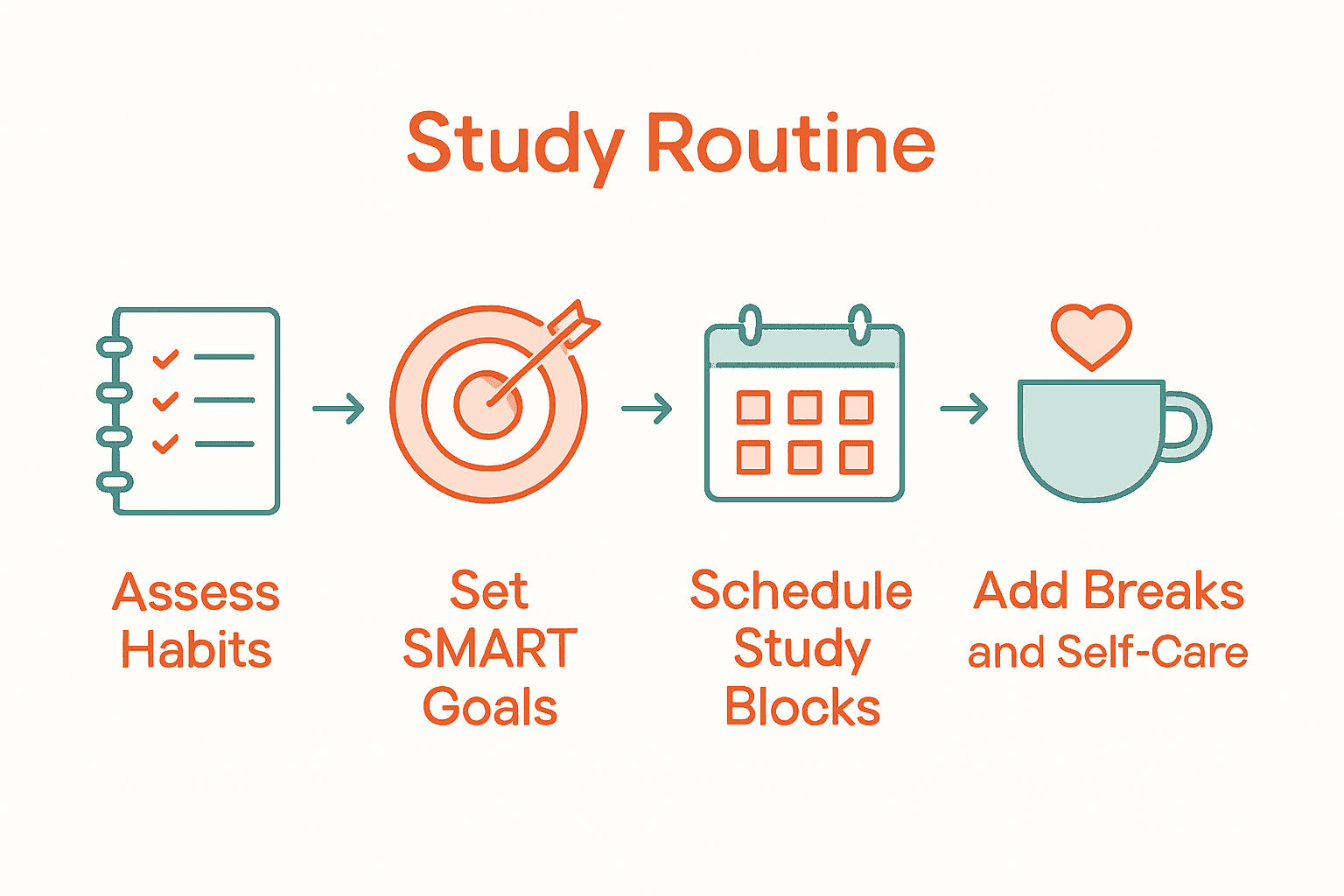
Most american students spend over three hours each day on school-related work, yet many still struggle to achieve the results they want. Building a successful study routine goes beyond just logging hours, and understanding your own learning habits can make all the difference. This guide breaks down strategies that help you examine your own routine, set realistic goals, create a balanced schedule, and take care of your well-being so you get the most from every study session.
Quick Summary
| Key Insight | Explanation |
|---|---|
| 1. Assess Your Current Study Habits | Log your study practices honestly to identify areas for improvement. This self-assessment lays the foundation for effective changes. |
| 2. Set SMART Goals | Create Specific, Measurable, Achievable, Relevant, and Time-bound goals for both academics and personal development. This adds structure to your study effort. |
| 3. Design a Flexible Study Schedule | Develop a study schedule that balances intensity with personal energy levels. Include buffer times for unexpected events to maintain sustainability. |
| 4. Incorporate Breaks and Self-Care | Use techniques like the Pomodoro Technique to include breaks. Prioritizing physical and mental well-being boosts overall performance. |
| 5. Regularly Track and Adjust | Conduct weekly reviews of your progress to refine your study strategies. Flexibility helps you adapt and improve your routine over time. |
Step 1: Assess Your Current Study Habits
To build an effective study routine that skyrockets your grades and focus, you first need to understand your existing study habits. Think of this step as taking a snapshot of your current learning approach. According to Lincoln Land Community College, a comprehensive self assessment can reveal hidden patterns that might be holding you back.
Start by creating a detailed log of your current study practices. Track how much time you spend studying, where you study, what distractions exist, and how you typically prepare for exams. William Paterson University recommends using a study habits evaluation checklist to discover behaviors that might be undermining your academic performance. Write down honest answers to questions like: Do you review notes regularly? Are you studying in a quiet environment? How often do you get interrupted by phone notifications?
A pro tip for this assessment is brutal honesty. Don’t sugarcoat your current habits. If you spend more time scrolling social media than studying, write that down. Understanding your actual study patterns is the first step toward meaningful improvement. In the next section, we’ll help you transform these insights into a powerful, personalized study strategy that works for your unique learning style. Ready to take a deep dive into your study world?
Step 2: Define Clear Academic and Personal Goals
Now that you understand your current study habits, it is time to craft precise goals that will transform your academic journey. University of Cincinnati emphasizes that setting clear academic goals is not just about dreaming big it is about creating a roadmap for success. Your goals should cover both academic performance and personal development areas.
University of Northern Iowa recommends using the SMART framework when establishing your objectives: Specific, Measurable, Achievable, Relevant, and Time-bound. For academic goals, this might look like “Improve my math grade from B to A by next semester” or “Complete all assignments one day before their deadline.” Personal goals could include “Study for 2 hours every weekday” or “Reduce smartphone usage during study time by 50%.” When crafting these goals, be realistic yet ambitious. Consider breaking larger goals into smaller milestones that feel manageable and motivating.
A pro tip is to write down your goals and place them somewhere visible. Whether it is on your bedroom wall, smartphone wallpaper, or study planner, keeping these objectives front and center will help you stay focused and committed. We will explore strategies to track and achieve these goals in the upcoming sections of our guide. Ready to turn your academic aspirations into a structured plan?
Step 3: Design a Realistic Study Schedule
With your goals clearly defined, it is time to transform those aspirations into a concrete study schedule that fits your lifestyle. William Paterson University emphasizes the importance of creating manageable study periods that align with your personal rhythms and academic demands. Your ideal schedule should balance intensity with sustainability.
Start by mapping out your existing commitments like classes, work, extracurricular activities, and personal responsibilities. Then strategically block out dedicated study times that match your energy levels. For example, if you are most alert in the morning, schedule challenging subjects during those hours. Aim to create consistent study blocks of 60 to 90 minutes with short 10 to 15 minute breaks in between. This approach prevents burnout and helps maintain focus. Consider using a digital calendar or physical planner to visually track and commit to these study sessions.
A pro tip is to build flexibility into your schedule. Life happens, and rigid plans often fall apart. Build in buffer time for unexpected events, and be kind to yourself if you need to adjust. Create a study planner checklist that allows for spontaneity while keeping you accountable. In the next section, we will explore how to optimize your study environment to maximize these carefully planned sessions. Ready to design a study routine that works for you?

Step 4: Incorporate Breaks and Self-Care Practices
Building a successful study routine isn’t just about cramming information into your brain it is about creating a sustainable approach that keeps you mentally and physically healthy. Prioritizing Self Care During Academic Challenges means understanding that your well-being directly impacts your academic performance.
Start by implementing the Pomodoro Technique during your study sessions. This method involves studying intensely for 25 minutes, followed by a 5-minute break. During these breaks, do something that genuinely refreshes you: stretch, take a short walk, drink water, or do some deep breathing exercises. Physical movement helps reset your brain and prevents mental fatigue. Additionally, schedule longer breaks between study blocks. These might include quick workouts, meditation, listening to music, or a brief social interaction that helps you recharge.
A pro tip is to treat self-care as a non-negotiable part of your study routine, not an afterthought. Create a self-care checklist that includes hydration, movement, nutrition, and mental health practices. Your brain is a muscle that needs rest and proper maintenance. In the next section, we will explore how to create an optimal study environment that supports your well-being. Are you ready to study smarter, not harder?
Step 5: Track Progress and Adjust Your Routine
Creating a study routine is not a one-time event it is an ongoing process of evaluation and refinement. William Paterson University emphasizes the importance of regularly assessing your study habits to ensure continuous improvement. Think of your study routine like a living document that evolves with your academic journey.
Lincoln Land Community College recommends implementing a weekly review process to monitor your progress. Set aside time every weekend to reflect on your past week. Ask yourself critical questions: Did you meet your study goals? Which strategies worked well? Where did you struggle? Track your grades, study time, and overall academic performance using a journal or digital tracking app. Quantify your progress by looking at metrics like test scores, assignment completions, and time spent studying effectively.
A pro tip is to be flexible and kind to yourself during this process. Not every strategy will work perfectly the first time, and that is okay. If something is not working, modify your approach rather than feeling discouraged. Consider experimenting with different study techniques, adjusting your schedule, or seeking additional support if needed. Your study routine is a personal journey of continuous learning and self improvement. Ready to become your own academic coach?
Build Your Perfect Study Routine and Achieve Academic Success
Struggling to create a study routine that truly fits your lifestyle and boosts your focus is a common challenge for many students. This article highlights key pain points like understanding your current habits, setting clear SMART goals, designing a realistic schedule, and prioritizing self-care to avoid burnout. If you find yourself overwhelmed by distractions or unsure how to stay motivated through continuous progress tracking you are not alone.
Take control of your learning journey today by exploring tailored strategies and tools designed to match your unique needs. At Learning with Angie you will discover practical resources that empower you to master study aesthetics, time management, and productivity. Start building a balanced routine that elevates your grades and well-being with expert guidance.
Frequently Asked Questions
How can I assess my current study habits effectively?
To assess your current study habits, keep a detailed log of your study practices for at least one week. Record how much time you study, where you study, any distractions, and your preparation methods for exams.
What SMART goals should I set for my study routine?
When setting goals for your study routine, use the SMART framework to create specific, measurable, achievable, relevant, and time-bound goals. For instance, aim to “study for 2 hours every weekday” or “improve my quiz scores by 10% by the end of the month.”
How do I create a realistic study schedule that works for me?
To create a realistic study schedule, map out your existing commitments and identify your peak productivity hours. Block out dedicated study times of 60 to 90 minutes, and include short breaks to recharge, adjusting as necessary based on your personal energy levels.
What are effective self-care practices to incorporate into my study routine?
Incorporate regular breaks during your study sessions, such as the Pomodoro Technique, where you study intensely for 25 minutes followed by a 5-minute break. Use these breaks for physical movement, hydration, or relaxation to maintain your well-being.
How can I track my progress and make necessary adjustments to my study routine?
To track your progress, set aside time each week to review your study goals and evaluate which methods worked or didn’t. Adjust your strategies based on this reflection, and try to quantify your progress, such as tracking your grades and study time.
What should I do if my study routine isn’t yielding the desired results?
If your study routine isn’t producing the results you want, be flexible and willing to modify your approach. Experiment with different study techniques or adjust your schedule, and seek additional support if needed to find strategies that work best for you.
Recommended
- How to Apply Atomic Habits to Studying to Get Better Grades
- 12 Apps That’ll Stop Social Media From Destroying Your GPA (From Someone Who Almost Failed Because of TikTok)
- 9 Simple Organization Techniques for a Balanced Life
- 17 Aesthetic Study Timers to Romanticize Studying
Want a head start? The Ultimate Student Planner in my shop was made for exactly this — it’ll save you a ton of time.