
Complete Guide to Beating Procrastination
Nearly 20 percent of people regularly delay important tasks even when they know it creates problems. Most think procrastination is just laziness, but science shows it involves deep emotional and psychological roots. By understanding why your brain pushes things off, you gain new tools to change those patterns and take control before deadlines loom.
Key Takeaways
| Point | Details |
|---|---|
| Understanding Procrastination | Procrastination is a complex psychological behavior, often a result of self-regulation failure involving emotional and cognitive triggers. |
| Types of Procrastination | Recognizing the three primary types—decisional, arousal, and avoidant—can help individuals identify their patterns and address them effectively. |
| Emotional Triggers | Emotions such as fear of failure and perfectionism significantly contribute to procrastination, impacting decision-making processes in the brain. |
| Strategies to Overcome Procrastination | Employ strategies like breaking tasks into micro-steps, implementing the 5-minute rule, and fostering accountability through habit-building techniques. |
Understanding Procrastination And Misconceptions
Procrastination isn’t just about being lazy. Procrastination is actually a complex psychological behavior where you intentionally delay or postpone tasks even when you know doing so might cause problems. According to research from Frontiers in Psychology, it’s more accurately described as a self-regulation failure involving multiple psychological mechanisms.
What Really Happens When You Procrastinate
Contrary to popular belief, procrastination isn’t a character flaw. Research reveals three primary types of procrastination:
- Decisional Procrastination: Struggling to make choices
- Arousal Procrastination: Waiting until the last minute for excitement
- Avoidant Procrastination: Avoiding tasks due to emotional discomfort
According to research from BMC Psychology, procrastination is deeply connected to emotion regulation. People often procrastinate not because they’re unmotivated, but because they’re trying to cope with stress, anxiety, and negative emotions. When a task feels overwhelming or triggers uncomfortable feelings, your brain chooses temporary relief through delay.
Think of procrastination like hitting the snooze button on your responsibilities. You know you should get up, but something keeps holding you back. Understanding that procrastination is a complex emotional response – not a personal failure – is the first step toward overcoming it.
Recognizing Different Procrastination Types
Not all procrastination looks the same. According to research from Frontiers in Psychology, there are actually three primary procrastination types that explain why people delay tasks. Understanding these types can help you recognize your own procrastination pattern and develop targeted strategies to overcome it.
The Three Procrastination Archetypes
Here’s a comparison of the three main procrastination types:
| Procrastination Type | Core Traits | Common Triggers |
|---|---|---|
| Decisional | Indecisiveness Fear of wrong choice |
Anxiety about outcomes Lack of clarity |
| Arousal | Thrives on pressure Seeks excitement |
Approaching deadlines Boredom |
| Avoidant | Emotional discomfort Task-related anxiety |
Fear of failure Negative emotions |
- Decisional Procrastination
- Characterized by difficulty making choices
- Constantly second-guessing decisions
- Afraid of making the wrong choice, so you make no choice at all
- Arousal Procrastination
- Thrives on last-minute pressure
- Deliberately waits until close to the deadline
- Gets an adrenaline rush from working under intense time constraints
- Avoidant Procrastination
- Rooted in fear and emotional discomfort
- Avoids tasks that trigger anxiety or negative emotions
- Uses procrastination as a defense mechanism
Interestingly, research from medical studies suggests procrastination isn’t limited to work or academic settings. Our comprehensive guide on overcoming procrastination reveals that people procrastinate in various life domains, including health-related behaviors like exercise and self-care.
Recognizing which type of procrastinator you are is the first step toward breaking the cycle.
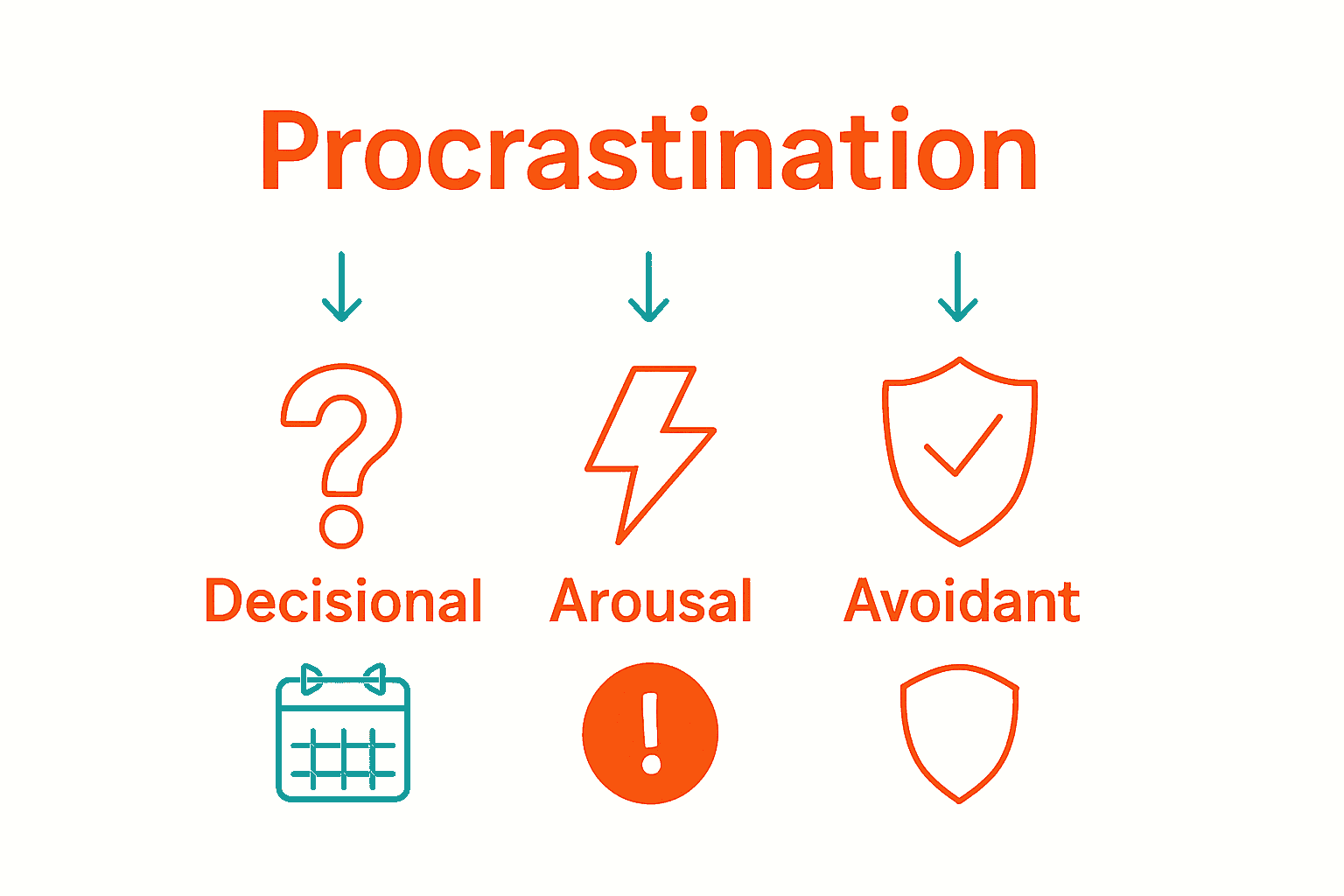 Each type requires a slightly different approach, so understanding your specific pattern helps you develop more effective strategies to beat procrastination.
Emotional And Cognitive Triggers Behind Delay
Procrastination isn’t just a simple choice to avoid work. It’s a complex brain game where your emotions and thinking patterns play a massive role. According to groundbreaking neuro-scientific research, procrastination emerges from a delicate dance between different brain regions responsible for cognitive control and emotional processing.
How Your Brain Decides to Delay
Research reveals that two key brain areas are constantly negotiating when you’re facing a task:
- Cognitive Control Center (Dorsolateral Prefrontal Cortex): The rational part that knows what needs to be done
- Emotional Processing Pathways (Hippocampus-Insula Connectivity): The emotional center that evaluates how you feel about the task
When these brain regions clash, procrastination happens. Your emotional brain might perceive the task as too stressful, uncomfortable, or overwhelming. Even when your rational brain understands the importance of completing the task, the emotional brain can hijack your decision-making process.
Common emotional triggers that lead to procrastination include:
- Fear of failure
- Perfectionism
- Feeling overwhelmed
- Low self-confidence
- Past negative experiences
Learn more strategies for managing task anxiety and understand how to create a more balanced approach to challenging tasks. By recognizing these emotional and cognitive triggers, you can develop better strategies to overcome procrastination and take control of your productivity.

Science-Backed Strategies To Beat Procrastination
Beating procrastination isn’t about willpower, it’s about smart strategies backed by psychological research. Temporal Motivation Theory provides a groundbreaking framework for understanding and overcoming delay behaviors. By systematically addressing the root causes of procrastination, you can transform your productivity.
Proven Techniques to Kick-start Action
Research reveals several powerful strategies to combat procrastination:
- Break Tasks into Micro-Steps
- Leverage the Zeigarnik effect: Incomplete tasks create psychological tension
- Create bite-sized, manageable tasks
- Build momentum through small, achievable actions
- The 5-Minute Rule
- Rooted in Cognitive Behavioral Therapy (CBT)
- Commit to just 5 minutes of work
- Overcome initial resistance and build momentum
- Implementation Intentions
- Create specific ‘if-then’ action plans
- Example: “If it’s 7 AM, then I’ll study for 30 minutes”
- Automate goal pursuit by predetermining responses
Reducing Procrastination Triggers
- Minimize distractions in your work environment
- Increase perceived task value
- Set artificial deadlines to create urgency
Learn how to apply habit-building techniques to make these strategies stick. Remember, beating procrastination is a skill you can learn and improve with consistent practice.
Building Sustainable Habits And Accountability
Habit formation is the secret sauce to beating procrastination long-term. It’s not about massive changes, but tiny, consistent steps that transform your behavior. According to research on habit strategies, the key is starting small and making new behaviors feel natural and almost automatic.
Strategies for Lasting Change
- Atomic Habit Techniques
- Start with extremely small behaviors
- Stack new habits onto existing routines
- Design clear environmental cues
- Focus on identity transformation
- Accountability Methods
- Create temptation bundling (pair challenging tasks with enjoyable activities)
- Reduce friction to starting tasks
- Set strategic milestone checkpoints
- Use implementation intentions
Building Your Anti-Procrastination System
Effective habit building isn’t about willpower – it’s about creating systems that make productivity feel easier. This means designing your environment, routines, and mindset to naturally guide you toward action.
Key principles include:
- Making good habits obvious
- Making bad habits invisible
- Connecting tasks to your desired identity
- Celebrating small wins consistently
Check out our guide on financial planning to see how systematic approaches can transform multiple areas of your life. Remember, sustainable change happens through small, consistent actions that gradually reshape your behavioral patterns.
Transform Your Procrastination Into Productivity With Us
Struggling to break free from the cycle of avoidant procrastination or feeling stuck by last-minute stress and overwhelming anxiety? The challenges described in our Complete Guide to Beating Procrastination are real and can disrupt your academic success and everyday happiness. If you recognize yourself in the patterns of emotional discomfort, fear of failure, or lack of motivation, you are not alone. Many learners find themselves searching for concrete solutions and step-by-step guidance to finally gain control over their study routines and mental well-being.
Now is the moment to act. Discover a range of empowering resources, personalized study strategies, and proven productivity tips tailored just for you. Unlock specialized tools that help you overcome procrastination and build sustainable habits. Explore more expert techniques to support your academic journey by checking out our habit-building methods and our actionable advice on beating procrastination. Take your first step now to create a balanced and productive life.
Frequently Asked Questions
What are the main types of procrastination?
Procrastination can be categorized into three main types: Decisional Procrastination (difficulty making choices), Arousal Procrastination (thriving under last-minute pressure), and Avoidant Procrastination (avoiding tasks due to emotional discomfort).
How can I effectively manage my procrastination?
You can effectively manage procrastination by breaking tasks into micro-steps, using the 5-minute rule to overcome resistance, creating specific ‘if-then’ plans (implementation intentions), and reducing distractions in your work environment.
What role do emotions play in procrastination?
Emotions play a significant role in procrastination, as individuals often delay tasks to cope with feelings of stress, anxiety, fear of failure, or perfectionism. Understanding these emotional triggers is key to overcoming procrastination.
How can building habits help with procrastination?
Building sustainable habits can help with procrastination by making productive behaviors automatic. This can be achieved through techniques such as starting small, stacking new habits onto existing routines, and using accountability methods to ensure consistency.
Recommended
- 9 Guaranteed Ways to Overcome Procrastination for Students
- How to Apply Atomic Habits to Studying to Get Better Grades
- How Timer Aesthetic Study Techniques Can Transform Your Chaotic Life Into Something Actually Manageable
Want a head start? The Ultimate Student Planner in my shop was made for exactly this — it’ll save you a ton of time.