Eating Healthy on a Student Budget
Healthy eating might sound like a luxury when you are juggling classes, deadlines, and a tight budget. But believe it or not, students with solid nutrition habits see significantly higher academic achievement than those who skip meals or rely on quick snacks. Most surprising of all, eating healthy as a student has less to do with expensive super-foods and more to do with making a few smart, budget-friendly choices that anyone can start today.
Quick Summary
| Takeaway | Explanation |
|---|---|
| Balanced nutrition fuels academic success | Consuming a variety of nutrients enhances focus, memory, and learning. A well-rounded diet supports better academic performance. |
| Prioritize whole foods over processed options | Whole foods provide essential nutrients that support brain function, energy levels, and overall health, while processed foods can hinder performance. |
| Strategic budgeting improves meal choices | Smart financial planning allows students to access healthier foods without overspending, enabling an affordable balanced diet. |
| Meal planning reduces waste and saves money | Planning meals in advance helps control food costs, minimize waste, and ensures consistent intake of nutritious foods. |
| Understand nutritional density for smarter choices | Choosing nutrient-dense foods maximizes health benefits per calorie, helping students maintain a healthy diet on a budget. |
What Does Eating Healthy Mean for Students?
Eating healthy isn’t just about following strict diet rules or avoiding all tasty foods. For students, it means creating balanced nutrition that supports your brain, body, and energy levels while working within your budget and schedule.
Nutrition Beyond Just Food
Healthy eating is more than counting calories. It’s about giving your body the right mix of nutrients that help you think clearly, stay focused in class, and maintain steady energy throughout long study sessions. Affordable and Healthy Meal Strategies for College Students can help you understand how to make smart food choices.
Good nutrition for students includes:
- Balanced proteins for muscle development and brain function
- Complex carbohydrates that provide sustained energy
- Healthy fats that support cognitive performance
- Essential vitamins and minerals from diverse food sources
Understanding Student Nutritional Needs
Your body during student years has unique nutritional requirements. According to Harvard School of Public Health, students need a diet that supports growth, learning, and physical activity.
For most students, healthy eating means:
- Prioritizing whole foods over processed snacks
- Eating regular meals that include multiple food groups
- Staying hydrated
- Making budget-friendly choices that don’t compromise nutrition
Think of your diet like a fuel system for your academic journey. The right nutrients help you study better, feel more alert, and maintain overall wellness without breaking the bank.
Why is Eating Healthy Important for Students?
Eating healthy isn’t just a trendy recommendation – it’s a critical strategy for student success. Your diet directly impacts your academic performance, mental health, and long-term wellness. Nutrition is the foundation of your student experience, influencing everything from test scores to energy levels.
Academic Performance and Brain Function
What you eat dramatically affects how your brain works. 10 Healthy Habits Every College Student Should Adopt Today highlights the connection between nutrition and cognitive performance. Proper nutrition supports:
- Enhanced memory retention
- Improved concentration and focus
- Faster information processing
- Better stress management
According to National Institutes of Health, students with consistent nutritional intake demonstrate significantly higher academic achievement compared to those with irregular eating habits.
Physical and Mental Health Benefits
Healthy eating goes beyond academic performance. It’s about building a strong foundation for your entire student life. Good nutrition helps you:
- Maintain consistent energy levels
- Support immune system function
- Reduce risk of chronic health conditions
- Stabilize mood and emotional well-being
Your body is like a complex machine. Feed it quality fuel, and you’ll perform at your best – in classrooms, during study sessions, and in your overall student experience. Every nutritious meal is an investment in your future self.
 How Budgeting Influences Healthy Eating Choices

Budgeting isn’t just about tracking money – it’s a strategic approach to making smarter food choices that support your health without draining your wallet. Your budget directly shapes the quality and variety of nutrition you can access as a student.
Understanding Food Economics
Healthy eating on a budget requires understanding how financial constraints impact nutritional choices. How to Create a College Budget (Without Eating Ramen Every Night) explains the critical connection between financial planning and meal strategies.
Budget limitations often push students towards less expensive food options, which can include:
- Processed and packaged foods
- Fast food and quick meal solutions
- Lower quality protein sources
- Limited fresh produce selections
According to USDA Economic Research Service, students from lower-income backgrounds face significant challenges in maintaining nutritionally balanced diets due to financial restrictions.
Strategic Food Purchasing
Smart budgeting transforms how you approach food shopping. It’s about making intentional choices that maximize nutritional value while minimizing expenses. Effective strategies include:
- Buying seasonal produce
- Purchasing bulk proteins
- Choosing frozen vegetables
- Planning meals in advance
- Comparing price-per-unit across brands
Think of your food budget like a puzzle. Each financial decision represents a piece that contributes to your overall health and wellness strategy. By understanding how to allocate your resources strategically, you can create nutritious meals that fuel your academic journey without overwhelming your finances.
Below is a comparison table highlighting how different healthy eating strategies support students in maintaining a balanced diet on a limited budget.
| Strategy | Benefits | How It Supports Students |
|---|---|---|
| Meal Planning | Reduces food waste, saves time and money | Ensures consistent, nutritious intake |
| Buying Seasonal Produce | Provides fresher, affordable options | Access to high-quality nutrients |
| Purchasing in Bulk | Lowers per-unit cost on staples | Stretches budget for more meals |
| Choosing Frozen/Canned Vegetables | Longer shelf life, often cheaper | Maintains access to essential nutrients |
| Shopping Sales & Student Discounts | Cuts grocery costs | Enables purchase of healthier options |
| Embracing Plant-Based Proteins | Less expensive than animal proteins | Affordable, nutritious protein sources |
| Comparing Price-Per-Unit | Informs cost-effective purchases | Maximizes nutrition per dollar spent |
Key Concepts of Nutrition for Students on a Budget
Nutrition is more than just eating – it’s about understanding how different foods fuel your body and mind. For students operating on limited financial resources, knowing key nutritional principles can transform your approach to healthy eating.
Macro-nutrients: Your Nutritional Building Blocks
A College Students Guide To Cheap Eating highlights the importance of understanding macro-nutrients. These essential nutrients form the foundation of a balanced diet:
- Proteins: Muscle repair and brain function
- Carbohydrates: Energy and cognitive performance
- Fats: Hormone regulation and nutrient absorption
According to Harvard School of Public Health, balancing these macro-nutrients is crucial for optimal student performance, regardless of budget constraints.
Nutritional Density vs. Cost
Understanding nutritional density helps you make smarter food choices. Nutritional density measures the amount of nutrients per calorie, allowing you to maximize health benefits while minimizing expenses. Budget-friendly, nutrient-dense foods include:
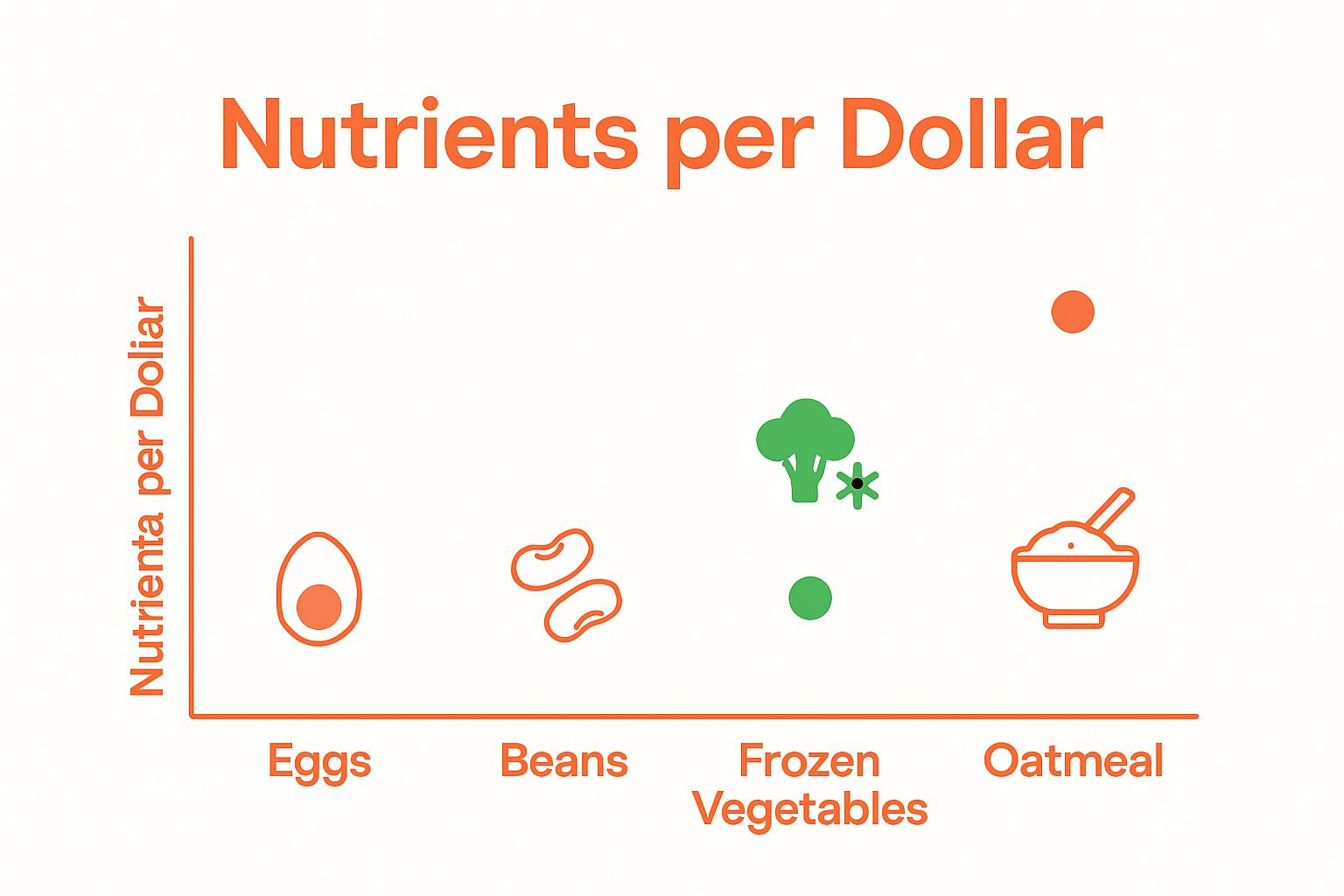
- Eggs: Affordable protein and vitamin source
- Beans: Cheap, high-protein, fiber-rich
- Frozen vegetables: Nutritious and long-lasting
- Oatmeal: Complex carbohydrates and minerals
Your nutrition doesn’t have to be expensive to be effective. By understanding these fundamental concepts, you can create a healthy diet that supports your academic goals without breaking the bank.
The following table summarizes the key macronutrients and their primary functions for student health, as covered in the article.
| Macronutrient | Main Functions | Example Budget-Friendly Sources |
|---|---|---|
| Protein | Muscle repair, brain function | Eggs, beans |
| Carbohydrate | Sustained energy, cognitive performance | Oatmeal, whole grains |
| Fat | Hormone regulation, nutrient absorption | Eggs, plant-based oils |
Practical Strategies for Thriving on a Healthy Diet
Surviving and thriving on a healthy diet as a student isn’t about perfection – it’s about making smart, sustainable choices. Your nutrition strategy should be flexible, affordable, and aligned with your academic and personal goals.
Smart Meal Planning
When to Hit the Grocery Store (Without Going Broke): A College Student’s Guide offers insights into strategic grocery shopping. Effective meal planning involves:
- Preparing meals in advance
- Buying ingredients that work across multiple recipes
- Using versatile, long-lasting ingredients
- Minimizing food waste
According to Harvard T.H. Chan School of Public Health, following structured meal planning helps students maintain balanced nutrition while controlling expenses.
Budget-Friendly Nutrition Hacks
Transforming your diet doesn’t require expensive ingredients or complicated recipes. Simple strategies can dramatically improve your nutritional intake. Consider these cost-effective approaches:
- Embrace plant-based protein sources
- Purchase frozen and canned vegetables
- Buy generic or store-brand products
- Shop during sales and use student discounts
- Join loyalty programs at local grocery stores
Think of your diet as an investment in your academic and personal success. By being intentional and creative, you can nourish your body without emptying your wallet.

Take Control of Healthy Eating on a Student Budget
Struggling to balance good nutrition with a tight student budget is a common challenge discussed throughout this article. The desire to achieve healthy eating without overspending often meets real-life barriers, like rising grocery costs, limited cooking skills, or lack of time. Many students wonder how they can fuel their studies and maintain wellness without breaking the bank. If this sounds like your experience, you’re not alone.
Start turning your knowledge into action with support from Finances – Learning With Angie, where you can find smart budgeting tips tailored for students. Discover practical, healthy recipes on Recipes – Learning With Angie that make the most of your grocery dollars. Ready to make real changes? Find the resources, tools, and community that will help you thrive academically and eat well every day. Your healthier, more balanced college life starts today.
Frequently Asked Questions
What are macro-nutrients and why are they important for students?
Macro-nutrients are the essential nutrients that provide energy and support bodily functions, including proteins for muscle and brain health, carbohydrates for energy, and fats for nutrient absorption. Balancing these macro-nutrients is crucial for optimal student performance.
How can I eat healthy on a tight budget?
Eating healthy on a tight budget involves meal planning, buying seasonal produce, purchasing in bulk, and choosing frozen or canned vegetables. Strategic food purchasing helps maximize nutrition while minimizing costs.
What are some budget-friendly, nutrient-dense foods?
Budget-friendly, nutrient-dense foods include eggs, beans, frozen vegetables, and oatmeal. These foods provide essential nutrients without breaking the bank, making them excellent choices for students.
How does diet affect academic performance?
A healthy diet significantly impacts academic performance by enhancing memory retention, improving focus, and managing stress. Proper nutrition supports cognitive functions, which can lead to better grades and overall well-being.
Recommended
- Affordable and Healthy Meal Strategies for College Students
- A College Students Guide To Cheap Eating
- When to Hit the Grocery Store (Without Going Broke): A College Student’s Guide
- How to Turn Pennies into Power: The Frugal College Experience
Want a head start? The Ultimate Student Planner in my shop was made for exactly this — it’ll save you a ton of time.