
What is a Study Aesthetic? Understanding Its Importance
Study aesthetic is everywhere on social media and for a good reason. Research shows that visually appealing study environments can boost motivation and even improve information retention. Most people think it is all about pretty pens and color-coded notes, but that barely scratches the surface. Built right, a study aesthetic can actually shape your mindset and turn the grind of schoolwork into something that feels inspiring and personal.
Table of Contents
- Defining Study Aesthetic: Key Concepts And Elements
- The Importance Of Study Aesthetic In Learning
- How Study Aesthetic Influences Focus And Motivation
- Exploring Different Types Of Study Aesthetics
- Creating Your Own Unique Study Aesthetic
Quick Summary
| Takeaway | Explanation |
|---|---|
| Create an Inspiring Study Environment | Aesthetically pleasing study spaces enhance motivation and information retention. Personal elements make studying enjoyable and engaging. |
| Utilize Color Psychology | Different colors affect learning; select hues that promote focus or creativity based on your study needs. |
| Incorporate Personal Style | Develop a study aesthetic that reflects your learning preferences and emotional triggers for a more meaningful study experience. |
| Experiment with Aesthetic Types | Explore various styles, such as minimalist or vintage, to discover which resonates most with your learning approach. |
| Transform Study into a Creative Journey | Shift the perception of studying from a chore to a creative process by integrating design and personal expression. |
Defining Study Aesthetic: Key Concepts and Elements
A study aesthetic goes beyond simple note-taking or studying techniques. It represents a holistic approach to learning that transforms the academic experience through intentional design, visual appeal, and personal expression. According to research from the philosophy of aesthetics, aesthetics fundamentally involves understanding beauty, perception, and emotional engagement.
The Core Components of Study Aesthetic
Study aesthetic isn’t just about making things look pretty. It involves creating a deliberate, personalized environment and approach to learning that resonates with your individual style and motivates you to engage more deeply with educational materials. Key elements include:
- Visual design of study materials
- Color coordination and organization
- Personal expression through note-taking styles
- Creating an inspiring study environment
Why Study Aesthetic Matters
Study aesthetics tap into powerful psychological principles. When your study materials and environment feel appealing and personally meaningful, you’re more likely to feel motivated and retain information. Our guide on how to romanticize studying explores additional strategies for making learning more enjoyable.
The goal is to transform studying from a mundane task into an engaging, creative process. By infusing personal style and intentional design into your academic work, you create a more enjoyable and potentially more effective learning experience. This approach recognizes that learning is not just about absorbing information, but about creating a meaningful, personalized journey of intellectual growth.
The Importance of Study Aesthetic in Learning
Study aesthetic is more than a trendy approach to education. It represents a strategic method of enhancing learning experiences through intentional design and personal engagement. According to research from the Association for Talent Development, positive visual experiences can significantly improve learning motivation and cognitive processing.
Psychological Impact of Aesthetic Learning
When students create aesthetically pleasing study environments and materials, they unlock powerful psychological benefits. These benefits extend far beyond visual appeal and tap into deeper motivational mechanisms.
This table organizes the main psychological and cognitive benefits of incorporating a study aesthetic, providing a quick reference for why these concepts matter in academic contexts.
| Psychological Benefit | Description |
|---|---|
| Increased Intrinsic Motivation | Greater desire to study due to appealing surroundings |
| Enhanced Emotional Connection | Stronger bond with learning materials and process |
| Reduced Stress and Anxiety | Calmer mindset, less overwhelm during study sessions |
| Improved Information Retention | Higher likelihood of remembering and recalling content |
| Improved Focus and Attention | Easier to concentrate and minimize distractions |
- Increased intrinsic motivation
- Enhanced emotional connection to learning materials
- Reduced study stress and anxiety
- Improved information retention
Transforming Learning Through Personal Expression
Study aesthetic empowers learners to transform academic work from a mandatory task into a creative, personalized journey. By integrating individual style and design principles, students can make learning more engaging and meaningful. Check out our guide on aesthetic study websites to explore visual inspiration for your learning approach.
Ultimately, study aesthetic recognizes that learning is a holistic experience. It’s not just about absorbing information, but about creating an environment that sparks curiosity, encourages creativity, and makes the educational process genuinely enjoyable. By understanding and implementing study aesthetic principles, students can develop a more positive, productive relationship with their academic pursuits.
How Study Aesthetic Influences Focus and Motivation
Study aesthetic plays a crucial role in transforming academic experiences by directly impacting psychological engagement and cognitive performance. According to research published in PubMed, the perceived quality of learning environments significantly influences motivation and concentration through complex psychological mechanisms.
The Neurological Connection
When students create aesthetically pleasing study environments, they activate specific neurological pathways that enhance cognitive processing and emotional engagement. This connection goes beyond simple visual appeal and taps into deeper motivational systems. Key neurological responses include:
- Reduced stress hormone production
- Enhanced dopamine release associated with pleasure
- Increased neural plasticity and learning receptiveness
- Improved attentional control and cognitive flexibility
Transforming Mental Barriers Through Design
Study aesthetic serves as a powerful psychological tool for overcoming mental resistance to learning. By creating visually appealing and personally meaningful study spaces, students can reframe academic work from a mundane task to an inspiring journey. Our guide on study motivation wallpapers offers additional strategies for visual inspiration.
Ultimately, study aesthetic represents more than decorative choices. It is a strategic approach to learning that recognizes the intricate relationship between environmental design, emotional state, and cognitive performance. By intentionally crafting study environments that spark joy, curiosity, and personal expression, students can unlock higher levels of motivation, focus, and academic potential.
Exploring Different Types of Study Aesthetics
Study aesthetics is not a one size fits all concept, but a dynamic and personalized approach to learning. According to cross-cultural research on aesthetic preferences, individual and cultural variations play a significant role in how people perceive and engage with aesthetic experiences.
Diverse Aesthetic Styles in Study Environments
Study aesthetics can be categorized into several distinctive styles, each reflecting unique personal preferences and learning approaches. These styles go beyond mere visual appeal and represent deeper psychological connections to the learning process. Major aesthetic styles include:
Below is a comparison table summarizing the major types of study aesthetics discussed in the article, helping you identify which style might suit your preferences best.
| Study Aesthetic Style | Key Characteristics | Typical Elements |
|---|---|---|
| Minimalist | Clean, uncluttered, neutral palette | Simple decor, white space, neat organization |
| Vintage Academic | Warm, classic, nostalgic atmosphere | Leather-bound books, antique accents, muted tones |
| Digital and Modern | Sleek, tech-forward, contemporary look | Tablets, laptops, LED lights, bright colors |
| Nature-Inspired | Organic, calming, invokes connection to nature | Plants, natural light, wood textures |
| Artistic and Eclectic | Personalized, colorful, creative environment | DIY art, mixed patterns, bold visuals |
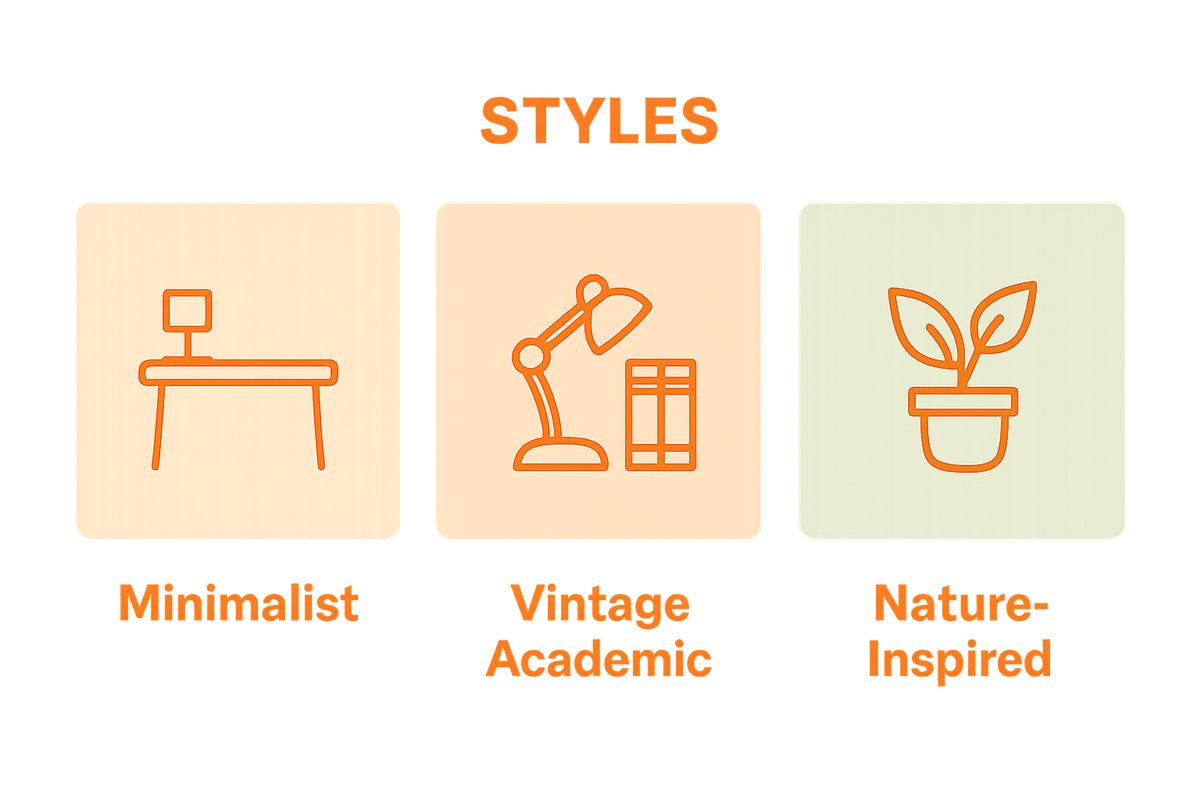
- Minimalist aesthetic: Clean, uncluttered spaces with neutral colors
- Vintage academic: Leather-bound books, warm tones, classic study environments
- Digital and modern: Sleek technology, bright colors, contemporary design
- Nature inspired: Organic elements, green spaces, natural light and textures
- Artistic and eclectic: Colorful, personalized spaces with creative elements
Color Psychology in Study Design
Color plays a crucial role in creating effective study aesthetics. Our comprehensive guide on color psychology explores how different colors impact learning and motivation. Some colors promote concentration, while others stimulate creativity or reduce stress.
Ultimately, the most effective study aesthetic is the one that resonates personally with you. It should create an environment that motivates, inspires, and supports your unique learning style. By understanding and experimenting with different aesthetic approaches, students can design study spaces that not only look appealing but also enhance their academic performance and emotional engagement.
Creating Your Own Unique Study Aesthetic
Developing a personalized study aesthetic is an intimate journey of self-discovery and academic empowerment. According to research published in NCBI, incorporating personal elements into learning environments can significantly enhance attention restoration and psychological well-being.
Understanding Personal Style and Learning Preferences
Creating a unique study aesthetic requires deep self reflection and experimentation. It involves understanding your individual learning style, emotional triggers, and visual preferences. Key considerations include:
- Personal color psychology preferences
- Comfort and functionality of study space
- Sources of inspiration and motivation
- Individual sensory sensitivities
- Energy levels and concentration patterns
Digital and Physical Aesthetic Integration
Modern study aesthetics blend digital and physical environments seamlessly. Our guide to starting a studygram offers insights into creating visually cohesive study documentation. The goal is developing an aesthetic that feels authentic and supports your learning objectives.
Your study aesthetic is a dynamic, evolving personal expression. It should adapt as you grow, learn, and discover new aspects of your academic journey. By intentionally crafting an environment that resonates with your inner motivations, you transform studying from a mundane task into a deeply personal and engaging experience.

Elevate Your Learning with Study Aesthetic Solutions
Struggling to make studying feel less like a chore and more like a creative, inspiring experience? In this article, we explored how a personalized study aesthetic can help reduce stress, spark motivation, and transform your academic journey. If you feel overwhelmed by cluttered materials or uninspired study spaces, you are not alone. Many high school and college students want to boost their focus and make learning more meaningful, but often do not know where to start.
Discover how easy it can be to build a study routine you actually enjoy. Our Studying resources are packed with practical strategies, visual inspiration, and step-by-step guides to help you develop your own unique study aesthetic. Ready to take actionable steps toward a focused, joyful, and productive academic life? Visit Learning With Angie now for proven tips that will help you achieve your academic goals and create the study environment you deserve. If you are looking to boost your productivity and organize your materials digitally, check out our dedicated Notion solutions for more personalized support. Start designing your best study life today!
Frequently Asked Questions
What is a study aesthetic?
A study aesthetic is a personalized approach to learning that incorporates intentional design, visual appeal, and individual expression to create an engaging academic environment.
Why is study aesthetic important for learning?
Study aesthetic enhances motivation, emotional connection to learning materials, and reduces study stress, leading to improved information retention and overall academic performance.
How can I create a unique study aesthetic?
To create a unique study aesthetic, consider your personal style, learning preferences, color choices, and incorporate elements that inspire and motivate you in your study space.
What are some different styles of study aesthetics?
Different styles of study aesthetics include minimalist, vintage academic, digital and modern, nature-inspired, and artistic and eclectic, reflecting various personal preferences and learning approaches.