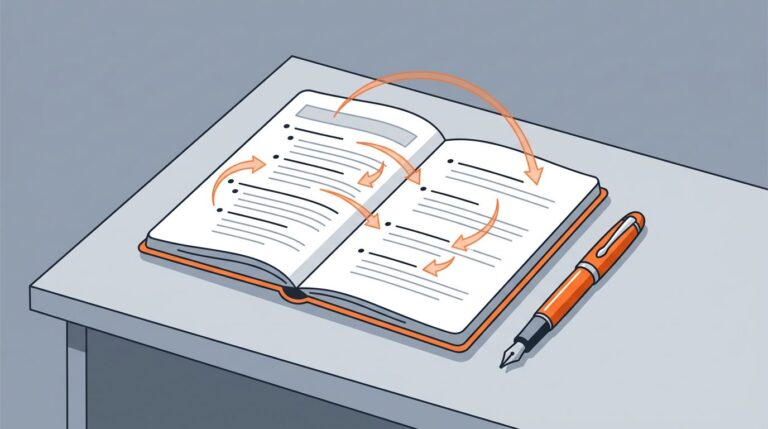
College Application Timeline for High School Juniors
College applications rarely fall apart because you missed one huge task. They get stressful because 20 small tasks pile up at once, usually during senior fall when you already have classes, activities, and a life.
A solid college application timeline gives every task a home before the chaos starts. You don’t need your entire future figured out in junior year. You need a clear way to make smart choices, ask for support early, and avoid the last-minute scramble.
This post may contain affiliate links. If you make a purchase through these links, I may earn a small commission at no extra cost to you.
Key Takeaways
- Build one college application timeline early and track each school’s deadlines, requirements, testing policy, recommendations, financial aid forms, and portal details.
- Use junior spring to research a balanced college list, visit or compare schools, take an initial SAT or ACT, and ask teachers for recommendation letters.
- Use the summer before senior year to draft your personal statement, review supplemental essay requirements, and set up application accounts.
- In senior fall, submit early applications at least a week before their deadlines, then confirm that transcripts, recommendations, scores, and other required materials were received.
- Treat financial aid as a separate deadline system: file the FAFSA, check for CSS Profile or college-specific forms, and compare net costs rather than scholarship headlines alone.
Build Your College Application Timeline Before It Gets Busy
Start with one calendar you will actually check. A paper planner, Google Calendar, Notion, and a spreadsheet can all work. The best system is the one you won’t abandon after three days.
Create one row or page for every college on your list. Track the application plan, deadline, essay requirements, testing policy, recommendation letters, financial aid forms, and portal login. Add scholarship applications, one expected admission decision date, and an application note for campus-specific requirements.
Here is the basic rhythm to follow:
| Time period | Put on your calendar | Try to finish before the next phase |
|---|---|---|
| January to March of junior year | Explore majors, colleges, and testing options | A first college list and spring test plan |
| April to May | Visit schools, ask recommenders, take a first SAT or ACT | A refined list and teacher commitments |
| June to August | Draft essays and complete application basics | A strong personal statement draft |
| September to November of senior year | Submit early applications and required forms | early action or early decision applications |
| December to May | Finish regular decision apps and compare offers | Your enrollment choice and deposit |
For schools with rolling admissions, track their opening dates and follow-up reminders separately.
Set reminders for three weeks before every application deadline, then one week before. Check current college websites and confirm updates with counselors and testing agencies, so don’t rely on a screenshot from last year.
A deadline is not the day you begin working. It is the day your application should already be checked, submitted, and out of your hands.
A few common mistakes can make the process harder than it needs to be:
- Treating the submission date as the day you begin working on essays, transcripts, and scores.
- Assuming every college uses the same testing, aid, or recommendation rules.
- Asking a teacher for a letter two days before school ends. Please don’t do this to them.
- Applying without checking the net price calculator or likely out-of-pocket cost.

Junior Spring Is for Research, Testing, and Relationships
Your college list does not need to be perfect yet. It does need to be real.
Many students can manage about 8 to 12 applications well. You may apply to fewer if you have clear favorites. You may apply to more if your major is selective or your financial aid situation requires options. Quality research beats applying to 25 schools you barely know.
Include a mix of reach, target, and likely schools based on admission rates, your academic record, and the details of your intended major. An Ivy League school may be a reach, but it does not need to define your plan. A school is not a “safety” if you cannot afford it, so check each college’s net price calculator with your family. Record each school’s admissions approach, including whether it uses rolling admissions.
Spring is also a good time for in-person college visits, especially when preparing a UC application and comparing individual campuses. If travel is not possible, plan virtual college visits, attend online information sessions, and read course catalogs. Use those comparisons to decide which campuses deserve a visit for your UC application, while noting details that shape daily life: class sizes, housing, advising, transportation, and internship access.
If you plan to submit standardized test scores, take your first SAT exam or ACT exam during spring of junior year. That gives you time to decide whether a retake makes sense. Add AP exams to your testing calendar, then check the official SAT test dates and registration deadlines and the ACT national test schedule instead of trusting random social media posts.
Test-optional does not mean every student should make the same choice. Read each college’s current policy. If a score supports your application, submit it. If it does not, put your energy into grades, essays, activities, and strong recommendations.
Before junior year ends, ask two teachers who know your work well for letters of recommendation. Give them at least four weeks, preferably longer. Bring a short brag sheet with your activities, goals, favorite class moments, and anything you hope they can mention.
Use Summer to Write Without the Senior-Year Panic
Summer is your essay season. No, you don’t need to write 14 perfect essays before July ends. You do want a workable personal statement before classes begin again.
Start by brainstorming moments that changed how you think, act, or understand yourself. The strongest essay is not always about your biggest award or toughest hardship. It is about your voice and what the reader learns about you.
The 2026-27 Common App essay prompts were released before the application opened on August 1. Future cycles may follow a similar pattern, but always check the official prompts for your year. A UC application uses a separate system from Common App, so review its prompts independently.
Write a messy first draft. Then take a break, read it out loud, and revise for clarity. You are not trying to sound like a professor. You are trying to sound like yourself on a good day.
Your personal statement is not the same as supplemental essays. The personal statement gives colleges a wider picture of you. Supplemental essays answer focused questions such as “Why this college?” or “Why this major?” Save school-specific details, courses, clubs, and programs for those shorter responses.
Use time blocks so essay writing does not become a giant item called “work on college stuff.” Try two 45-minute sessions each week. One session can be for drafting. The other can be for revising, researching schools, updating your activities list, or starting scholarship applications.
During August, create your account and review the Common Application platform. Add colleges slowly and check requirements, opening dates, and rolling admissions policies. If you’re completing a UC application, create its account separately, since its requirements, questions, and deadlines may differ.
Senior Fall Is About Matching the Right Plan to Each College
By September, your college application timeline should show what is due first and which materials are missing. It should also identify who needs a reminder and when to expect your admission decision.
Submit applications at least a week before the deadline. Technology problems happen. Portals crash. Wi-Fi chooses the worst possible moment to become dramatic.
Understand Early Action, Early Decision, and Regular Decision
Early Action is usually nonbinding. You apply early and receive an admission decision earlier, but you can often compare offers before choosing a school.
Early Decision is generally binding. If admitted and the cost makes attendance possible, you agree to enroll and withdraw other applications. Use this plan only for a true first-choice college after a serious family conversation about cost.
Regular Decision gives you more time and is often due in January, though dates vary. Rolling admissions schools review applications as they arrive, so applying earlier can help.
Early Action and Early Decision deadlines often land in October or November, while Regular Decision deadlines are often later. Still, “often” is not a deadline. A UC application may use dates that differ from this general pattern. Use each college’s admissions page as your source of truth, and review current college application deadline patterns only as a general reference.
There is no universal last SAT or ACT date. A college may accept standardized test scores after the application deadline for Regular Decision but not for an early plan. Check whether it wants the score in hand by the deadline or allows later score reporting.
Request official transcripts through your high school counselor early. Check your applicant portal after submission, including the UC application portal if relevant. A submitted application is not complete until the college receives the required transcript, recommendations, and any other documents.

Handle Financial Aid, Decisions, and curve-balls
Financial aid has its own deadlines, and they can arrive before an admission decision. File the FAFSA as early as you can after it opens, while also checking state and college deadlines.
For students applying during the 2026-27 cycle, the Department of Education says the 2027-28 FAFSA will be available by October 1, 2026. If you are beginning junior year in fall 2026, you will use a later FAFSA form, so watch for the official date for your own cycle.
Some colleges use rolling admissions, so monitor your portals for updates. Colleges may also require the CSS Profile or their own aid forms, and scholarship applications can have separate deadlines. Check every financial aid page, including each campus’s instructions for a UC application. Gather tax information, W-2 forms, records of untaxed income, and account details with your parent or guardian before filing begins.
If application fees are a problem, talk to your counselor early about fee waivers. Do not quietly remove a good-fit college from your list because you feel awkward asking for help.
When offers arrive, compare the net cost, not only the scholarship headline. Review each financial aid package, including awards from scholarship applications. Look at grants, scholarships, loans, work-study, renewal rules, and the amount your family would need to pay each year. If your finances changed because of job loss, medical costs, or another major event, ask the financial aid office about its appeal process.
If You Are Deferred or Awaiting a Decision
A deferral means an early application will be reconsidered later. Read the college’s instructions first. If it allows updates, send a short letter with meaningful new information, such as stronger grades, a leadership role, or an award. Do not send five extra emails because you are stressed. One thoughtful update is better.
If you are placed on the wait-list, accept the spot only if you would truly attend. Follow the college’s instructions, send a letter of continued interest only if it permits one, and deposit at another college by that school’s deadline. Many colleges use May 1 as their enrollment deposit date, but your admission letter controls.
A deferred admission decision is different from an early application deferral. It means an admitted student asks to delay enrollment for a gap year. Every college has its own policy, so ask before making plans or paying for programs.
Frequently Asked Questions
When should I start my college application timeline?
Start building your timeline during junior year, before senior fall becomes busy. Research schools, plan testing, ask for recommendations, and create a calendar with reminders at least three weeks before each deadline.
How many colleges should I apply to?
Many students can manage about 8 to 12 applications well, but the right number depends on your goals, major, and financial aid needs. Build a balanced list of reach, target, and likely schools, and make sure your likely schools are affordable as well as academically realistic.
When should I write my college essays?
Use the summer before senior year to brainstorm and draft your personal statement. Start supplemental essays after you understand each college’s specific questions, programs, and requirements.
Should I apply Early Action or Early Decision?
Early Action is usually nonbinding and lets you apply early while comparing offers later. Early Decision is generally binding, so choose it only for a true first-choice college after discussing admission and cost with your family.
What should I do after submitting an application?
Check the applicant portal to confirm that the college received your transcript, recommendations, test scores, and other required documents. Continue tracking financial aid and scholarship deadlines, and follow the college’s instructions if you are deferred or placed on a wait-list.
Your Next Step Is a Calm, Visible Plan
A good plan does not make every decision easy, including an admission decision. It makes the next step obvious.
Start with your calendar, your first college list, and one conversation with your family or counselor. Flag rolling admissions dates, note a UC application’s requirements, and keep moving one small task at a time. Senior fall will still be busy, but it does not have to feel like a disaster waiting to happen, so when that time comes follow the college application timeline for seniors for a month-by-month plan.
Want a head start? The All-in-One College Application Organizer keeps every deadline, essay and login in one place from junior year on.