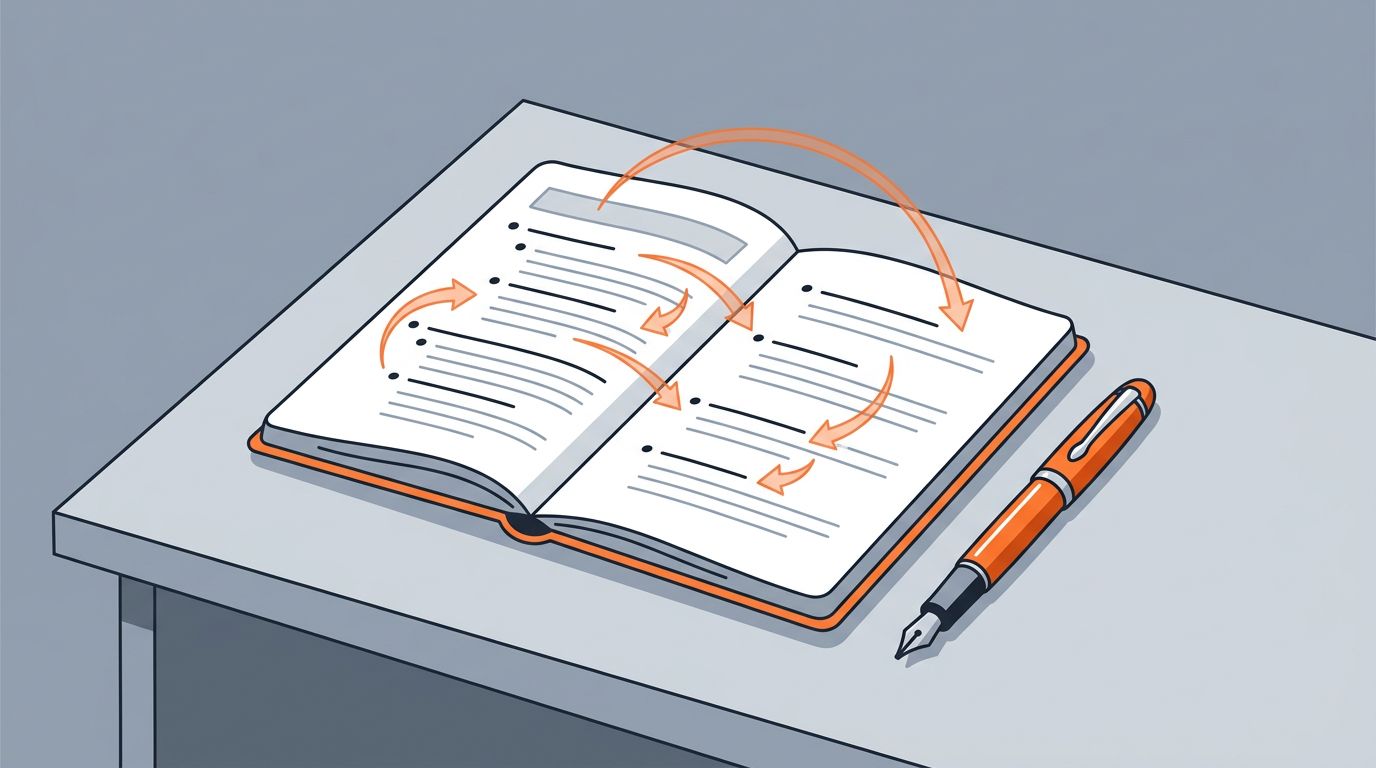
Essay Skills That Improve Every Draft You Write
Your essay can hold smart ideas and still earn a weak grade. That usually happens when your reader can’t follow how one thought leads to the next.
Strong essay skills help you turn rough ideas into a clear argument, useful evidence, and clean paragraphs. Once you know what to plan, what to write, and what to fix, the process feels less stressful.
The first step is seeing what good essay writing looks like on the page.
What strong essay writing looks like
Good essays don’t win because they sound fancy. They work because your reader can follow your thinking without extra effort.
That matters in every subject. In English, you may analyze a poem or novel. In history, you may explain causes and effects. In science or social studies, you may argue from facts. Even when the topic changes, the core skills stay the same.
A strong essay does four simple things. First, it answers the prompt. Next, it takes a clear position or main idea. Then, it supports that idea with proof. After that, it explains why the proof matters.
Your teacher shouldn’t need to guess what you mean. If your claim is vague, your body paragraphs drift. If your evidence appears without explanation, your paper feels unfinished. Clear writing prevents both problems.
The difference often starts with the thesis.
| Weak thesis | Stronger thesis | Why it helps |
|---|---|---|
| Phone use in school is bad. | Schools should limit phone use during class because constant alerts hurt focus and weaken group discussion. | It takes a position and gives two points to prove. |
| Social media affects teens. | Heavy social media use can reduce teen sleep, which then hurts mood and focus at school. | It shows a clear relationship the essay can explain. |
A strong thesis doesn’t need big words. It needs direction.
The same rule applies to paragraphs. Each paragraph should do one job. It should present one reason, one example, or one part of your analysis. When a paragraph tries to do too much, your reader loses the thread.
Good essay writing also respects the reader’s time. You don’t need long warm-up sentences. You don’t need filler. You need clear points, solid proof, and smooth movement from one idea to the next.
Once you know what quality looks like, you can build it on purpose.
Read the prompt until you know your job
Many essays go wrong before the first sentence. You skim the prompt, start drafting fast, and answer a question nobody asked.
That mistake is common because prompts can hide a lot in a few lines. One word can change your whole task. “Analyze” is not the same as “summarize.” “Compare” is not the same as “argue.” If the prompt asks why a character changes, three paragraphs of plot summary won’t help you.
Slow down at the start. Two careful minutes can save you from a full rewrite later.
When you read the prompt, mark four things:
- Circle the task word, such as analyze, explain, compare, or argue.
- Underline any limits, such as one chapter, one time period, or two sources.
- Box required materials, such as a poem, article, novel, or data set.
- Rewrite the task in your own words before you draft.
If your teacher gives a rubric, read that right away. Rubrics tell you what earns points. Often, they focus on the same few areas: thesis, organization, evidence, analysis, and grammar. When you know the scoring categories, you can write with more control.
It also helps to spot what the prompt does not ask for. Some students add extra background because they think longer means better. Usually, it doesn’t. Extra facts that don’t support your main point only make the essay weaker.
Try turning the prompt into a working question. For example, “How does the author show loneliness?” becomes “What choices in the text make loneliness visible?” That version pushes you toward analysis.
If the prompt still feels fuzzy, ask for help early. A teacher, tutor, parent, or classmate can often catch confusion before it grows. You don’t need someone to write your paper. You need a clean starting line.
Once you know your job, planning gets much easier.
Plan before you draft, even if you hate outlining
Planning feels slow when you’re in a hurry. Still, a short plan saves time because it keeps you from wandering halfway through the essay.

You don’t need a perfect outline. You need a simple map. That map can fit on half a page.
A useful planning process looks like this:
- Jot down every idea that fits the prompt.
- Pick the strongest claim or main answer.
- Group your ideas into two to four body paragraphs.
- Match each paragraph with evidence, examples, or details.
At this stage, don’t chase polished wording. Focus on order. Ask yourself which point should come first, which detail supports it, and what the reader needs to know before the next paragraph.
Suppose you’re writing about school phone rules. Your quick plan might look like this: claim, limited phone use is better than a full ban; paragraph one, phones distract during class; paragraph two, phones help in real emergencies; paragraph three, a clear policy protects both focus and safety. That outline is enough to start.
Planning also helps you cut weak ideas early. Maybe one point sounds interesting, but you don’t have proof for it. Drop it now. Maybe two points say almost the same thing. Merge them now. This is easier before you draft six extra sentences you won’t keep.
If you’re writing about literature, list scenes, quotes, or symbols under each paragraph idea. If you’re writing an informative essay, collect facts, examples, or source notes in the same way. Either way, your goal is the same. You want each paragraph to have material before you start building it.
The best outline is the one that keeps you from getting lost.
Some students prefer sticky notes. Others use a notebook margin, a Google Doc, or a notes app. The format matters less than the thinking. Strong essay skills begin before the draft because good writing starts with good choices.
Write paragraphs that do real work
A solid paragraph makes one point and helps prove your thesis. That sounds simple, yet this is where many essays fall apart.
The topic sentence is your first tool. It should tell the reader what the paragraph will argue, not merely announce a topic. “Another reason phones matter” is weak. “Phone alerts interrupt attention during class, which lowers the quality of discussion” is stronger because it makes a claim.
After the topic sentence, add evidence. That evidence might be a quote, a fact from a source, a detail from a story, or an example from class material. Pick only what supports the point. A long quote doesn’t make a paragraph stronger if half of it doesn’t matter.
Then comes the part students skip: analysis. This is where you explain how the evidence supports your point. If you quote a line from a novel, tell the reader what word choice, image, or action matters. If you use a fact from an article, explain what it proves and how it connects to your thesis.
Your analysis should usually be longer than the quote.
A clear paragraph gives the reader one idea to hold at a time.
Transitions help, too. You don’t need a dramatic bridge. Often, one clear phrase is enough: “This matters because…” “A second effect appears when…” “In contrast…” Those signals help your reader move with you instead of stopping to figure out the connection.
Introductions deserve the same kind of control. You don’t need a huge hook or a sweeping statement about all of human history. Start close to the topic. Give a little context, then state your thesis. A short introduction with direction beats a long introduction with no point.
Conclusions should do more than repeat the first paragraph. Restate your main claim in fresh words and show what your argument adds. If your essay explains a problem, your ending can show why that problem matters. If your essay analyzes a text, your ending can point back to the bigger idea in the work.
When you draft, keep your sentences readable. Shorter is often better. Clear verbs help. Extra filler hurts. If a sentence says the same thing twice, cut half of it.
Strong body paragraphs are where your grade usually rises or falls. When each paragraph has a clear job, your whole essay feels stronger.
Find your voice without sounding stiff
Many students think academic writing has to sound cold or overly formal. It doesn’t. Your voice should sound clear, calm, and sure of what you’re saying.

You don’t need huge words to sound smart. In fact, simple language often sounds more confident. When you pick a word you fully understand, your sentence stays under control. When you reach for words that feel borrowed, your meaning gets shaky.
Voice also comes from sentence shape. If every sentence has the same rhythm, your essay turns flat. Mix short sentences with medium ones. Start some with transitions. Start others with the subject. That variety helps your writing move.
Stay careful with tone. In most academic essays, slang feels too loose. Text-message shortcuts don’t belong there either. Still, stiff phrases can hurt you just as much. “The author utilizes symbolism in a profound manner” sounds forced. “The author uses the storm to show fear” is cleaner and stronger.
Confidence matters. Avoid hiding behind weak phrases like “I think” or “maybe this shows” unless the assignment calls for reflection. If your evidence supports the claim, say the claim directly.
You should also make room for your own thinking. Sources support your essay, but they shouldn’t bury it. If your paragraph contains two long quotes and one short sentence from you, your voice has disappeared. Bring it back with analysis, interpretation, and clear links to your thesis.
Reading your work aloud helps here. When a sentence feels awkward in your mouth, it usually feels awkward on the page. Smooth it out until it sounds natural and clear.
Your goal isn’t to sound impressive. Your goal is to sound like a thoughtful student who understands the material and can explain it well.
Revise in layers, then proofread at the end
Revision is where good essays become strong essays. Yet many students skip it or confuse it with spellcheck.
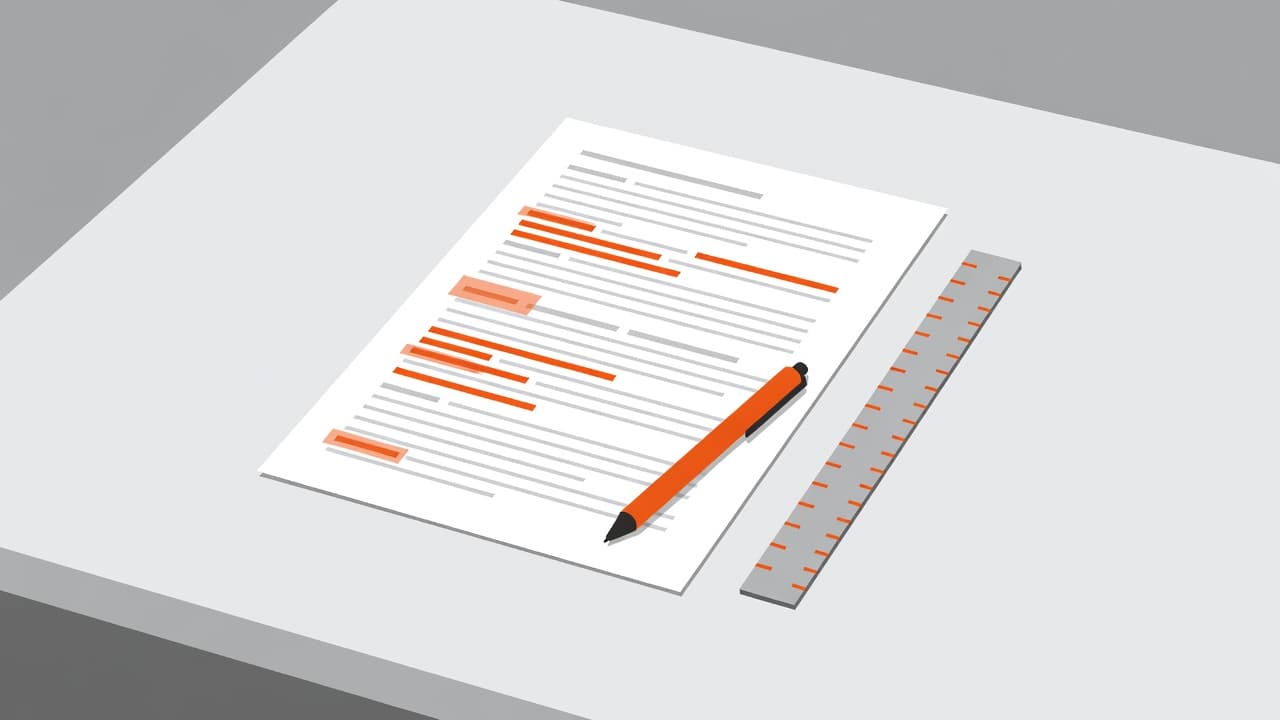
Proofreading fixes surface errors. Revision fixes thinking, structure, and clarity. You need both, but not at the same time.
Start with the big picture. Read your draft and ask whether it answers the prompt. Check your thesis. Then look at paragraph order. Does each paragraph build on the one before it? Would the essay get stronger if you moved one section higher or cut one section entirely?
Next, zoom in on paragraphs. Each one should connect to the thesis. Each one should include proof. Most of all, each one should explain that proof. If a paragraph ends right after a quote, add your thinking. If a paragraph repeats an earlier point, combine or delete.
After that, edit sentences. Cut filler phrases. Replace vague words like “things” or “stuff.” Fix long sentences that wobble. Add transitions where the logic feels jumpy. If you find the same word five times in one paragraph, swap some out.
Only then should you proofread. Check spelling, punctuation, grammar, and citation details. If you’re using sources, review quote marks, page numbers, and your works cited or reference list. A strong argument can still lose points over sloppy format.
A quick revision checklist helps:
- Read the essay once for structure, not grammar.
- Read it again for paragraph strength and analysis.
- Read it aloud for sentence flow and awkward wording.
- Use spellcheck last, not first.
- Ask someone where they got confused, then fix that spot.
A parent, friend, tutor, or teacher can help if they read like a real audience. Don’t ask only, “Is this good?” Ask, “Where did you lose the point?” or “Which paragraph felt weak?” Those questions lead to useful feedback.
Give yourself time between drafting and revising if you can. Even 20 minutes helps. Distance makes weak spots easier to see.
Strong essay skills grow fastest during revision because that’s where you learn what your first draft still needs.
Conclusion
Smart ideas don’t earn strong grades on their own. Your reader has to see your thinking clearly from the thesis to the final sentence.
When you read the prompt with care, plan before drafting, build focused paragraphs, and revise in layers, your writing gets sharper. Those habits matter more than fancy words.
The next time you face a blank page, trust clear thinking over quick typing. That’s how better essays start, and it’s how better writers grow.
This post may contain affiliate links. If you make a purchase through these links, I may earn a small commission at no extra cost to you.