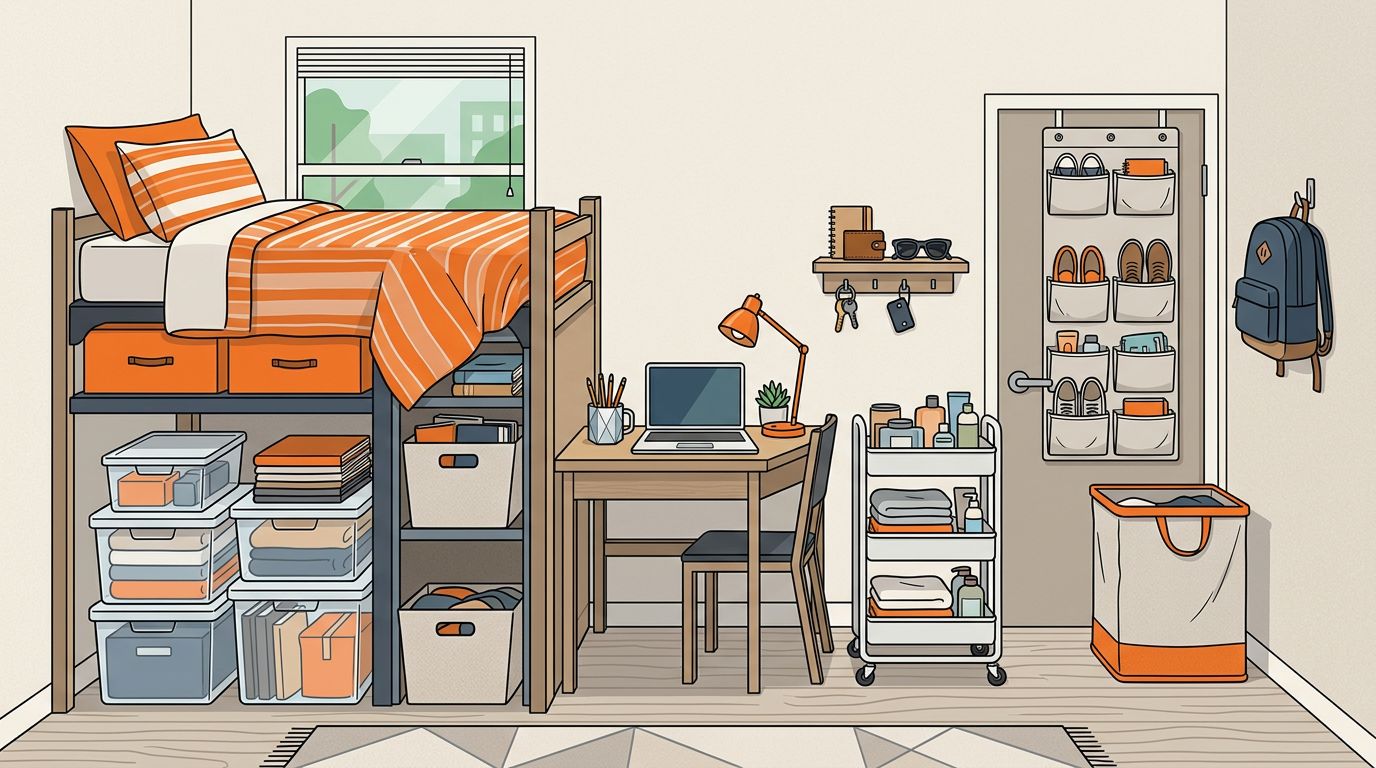
Dorm Room Organization That Holds Up All Semester
A dorm can go from cute move-in day to laundry mountain by the second week of classes. The fix isn’t buying 14 matching bins. It’s building a dorm room organization system that pairs smart college storage solutions with a layout that gives every daily item a home before your schedule gets busy.
You need a setup that works when you’re rushing to an 8 a.m. class, eating instant noodles at your desk, and trying to find a clean shirt with five minutes left. Start by gathering your core dorm room essentials, use what fits your room, and leave room for real life.
Key Takeaways
- Measure your room, furniture, and under-bed clearance before ordering storage, especially if you plan to use under-bed storage for bulkier gear.
- Build zones for sleep, study, getting ready, and grab-and-go essentials.
- Check your housing rules before buying adhesive hooks, bed risers, lamps, or appliances.
- Choose low-cost items that can do two jobs, such as a rolling cart or over-the-door organizer, and focus on small space essentials that maximize your square footage.
- Reset your room for ten minutes each week, before the mess turns into a personal crisis.
Dorm Room Organization: Measure First, Buy Second
Move-in shopping gets dangerous fast. You see a perfect storage cart online, add it to your cart, and then make common college packing mistakes by buying items before realizing they block your desk drawer or do not fit beside your bed. Annoying. Also expensive.
Before you buy anything, get the dimensions of your assigned room from housing if they are available. Measure these spots when you arrive, too:
- The space under your bed, including the lowest crossbar
- The width between your bed and wall
- The depth and height of your closet
- Your desk surface, drawers, and any attached shelving
- The back of your door and the clearance above it
Don’t assume your bed can be raised. Some residence halls provide loftable beds, some allow approved risers, and some don’t permit either. Housing rules can also limit candles, hot plates, extension cords, wall adhesives, and furniture changes. Check your school’s current residence life handbook before spending money.
A roll of painter’s tape is a surprisingly helpful move-in tool. Test the footprint of organizational supplies like a drawer unit on the floor before building your whole room around it. If you can’t comfortably walk around the tape, the storage piece is too big.
The best storage isn’t the item with the most compartments. It’s the item you can reach without moving three other things first.
You also don’t need to organize for an imaginary version of yourself who folds every hoodie perfectly. Organize for the student you are on a Wednesday night. If you drop your backpack by the door, create a spot there. If your desk becomes a snack station, plan for it instead of pretending it won’t happen.
Build Four Zones That Match Your Actual Routine
Good dorm room organization works like a tiny apartment. Your room may be one small rectangle, but each part should have one clear job.
Start with your sleep zone. Keep your bed limited to sleep, rest, and low-effort downtime when possible. A bedside caddy can hold your phone charger, water bottle, glasses, lip balm, earplugs, and a paperback. This keeps those little items from migrating under the bed, which is basically where objects go to retire.
Put an extra blanket, spare sheets, or bulky twin xl bedding in under-bed bins. If you need to store a thick mattress topper during the day or between semesters, those low-profile containers are helpful. Fabric zip bags can work well for seasonal items, but don’t use them for things you need every day.
Your study zone needs fewer things than you think. Keep your laptop, charger, class notebook, planner, pens, headphones, calculator, and one active textbook within arm’s reach. Everything else can live in a drawer, shelf, or backpack.
Make the desk a place where work can begin in under a minute. Put your phone across the room, inside a drawer, or in your backpack during a focused study block. A tidy surface won’t write your paper for you, sadly, but it does remove the tiny distractions that make starting harder.
Your getting-ready zone should hold toiletries, hair tools, daily skincare, medications, and clothes for the next day. Smart clothing storage helps keep your outfits accessible and prevents pile-ups on your chair. Use a shower caddy that drains well, then give it a home when you return. Wet shower caddies left on carpet or furniture are a fast route to gross smells.
Finally, create a grab-and-go zone near the door. This is where your backpack, keys, ID, umbrella, reusable water bottle, transit pass, and gym bag belong. Add a small hook, basket, or tray if your housing rules allow it.
When every zone has a job, your dorm stops feeling like one giant pile of stuff.
Make Your Desk a Study Space, Not a Storage Unit

Your desk is probably the only place you can study without balancing a laptop on your knees. Protect it by adding a desk bookshelf hutch if your room layout allows it.
Keep only your current class materials on the desktop. If you’re writing a psychology paper, you don’t need your chemistry lab goggles, six unopened mailers, and a pile of laundry watching you struggle.
Use one vertical file holder for papers that still need action. Labeling isn’t required if you have only one category: things to deal with. Sort it once a week into recycling, filing, or your course folders.
For paper notes, give each class one folder or slim binder. Plastic folders hold up better than paper ones, especially when a water bottle decides to leak in your backpack. If you take notes digitally, keep a small notebook nearby for quick reminders, practice problems, or active recall as part of your daily dorm room essentials.
After a lecture, spend a few minutes turning your notes into questions. Write, “What are the stages of cellular respiration?” instead of only highlighting the heading. Later, close your notes and answer from memory. Your dorm setup should support studying that actually works, not only a desk that looks good in a move-in photo.
A small desk lamp can make late-night reading easier, but check housing rules first. Look for these space saving ideas like a stable LED lamp with a cool bulb, not a hot lamp squeezed beside fabric and papers.
Use Vertical Space Without Damaging the Walls
When floor space is scarce, look up and make the most of your vertical space. The back of your door, closet rod, desk hutch, and bed frame can all hold useful items.
An over-the-door organizer is great for snacks, cleaning supplies, hair products, socks, or school supplies. Using hanging closet shelves as closet organizers can separate sweaters, T-shirts, towels, and bags without forcing you to buy a heavy dresser, making them some of the best space saving ideas for small rooms.
If your dorm permits removable adhesive products, command hooks can hold lightweight items like lanyards, hats, and a small towel. Follow the package weight limit, clean the wall first, and don’t hang anything that could injure your roommate if it falls. Your wall decor should not become a 2 a.m. jump scare.
Bedside caddies are another low-space win. Choose one with a sturdy board or flap that slides under the mattress, then use it for your charging cable, remote, notebook, and water. No nightstand? No problem.
Avoid stacking random plastic drawers until they reach your shoulder. Tall, unstable storage looks organized until one drawer opens and the whole tower starts acting suspicious. Keep heavy items low and lighter items higher up.
Buy Multipurpose Storage on a Student Budget
You don’t need a dorm room that looks like a container store display. Instead, look for practical college storage solutions that solve more than one problem at once.
A rolling utility cart can hold toiletries in the morning, snacks in the afternoon, and cleaning supplies when your roommate’s microwave popcorn incident happens. Move it where you need it, then roll it out of the way.
Collapsible fabric cubes act as versatile modular storage that works in shelves, under a desk, or inside a closet. Use clear storage totes for extra chargers and tech gear, medicine and first-aid basics, and random items that otherwise collect on your desk. Keep medication private and stored according to its label, and slide a compact shoe rack near the door to keep the floor clear.
A laundry bag or a sturdy hamper with handles is worth the small upgrade because you will carry it down a hallway. A lot. Choose one that can stand upright, has airflow, and won’t tear after two trips.
For food, use one washable bin for dry snacks and one small container for utensils, mugs, and tea. Don’t store open food in flimsy bags. Dorm rooms can attract uninvited visitors, and they are not splitting the grocery bill.
Before buying a mini fridge organizer, check whether your room already includes a refrigerator and what size is allowed. Some schools require approved rental units or prohibit personal appliances beyond a certain size.
Common Dorm Organization Mistakes to Avoid
The biggest mistake is treating move-in day as the final exam. Your room will get messy. Classes will get busy. You may have a week where your clean clothes live in a basket. That doesn’t mean your system failed.
Avoid these problems before they become a headache:
- Buying storage before measuring: A bin that doesn’t fit under your bed is now an overpriced floor obstacle.
- Keeping every item visible: Open shelves look nice, but too many exposed items create visual clutter fast. Hide backups and rarely used supplies.
- Skipping proper storage accessories: Forgetting to buy closet organizers or a durable laundry bag means your dorm room essentials end up scattered across the floor.
- Using your desk as a drop zone: Mail, makeup, food wrappers, and laundry make homework feel harder before you even open your laptop.
- Forgetting the exit routine: If your keys, ID, charger, and backpack don’t have a home by the door, mornings become a scavenger hunt.
- Ignoring weekly maintenance: A ten-minute reset is easier than spending Sunday night digging through a semester’s worth of mystery papers.
Set a recurring reminder for the same day each week. Toss trash, return dishes, start laundry, clear your desk, refill your shower caddy, and put stray items back in their zones. Keeping up with these small habits now will also make packing everything up for summer storage much easier when the semester finally ends. Put on music, set a timer, and make it boringly easy.
Frequently Asked Questions
How should I store my items if my dorm room has strict rules about wall adhesives?
If you cannot use adhesive hooks, rely on freestanding storage like rolling carts, over-the-door racks that don’t require drilling, and under-bed bins. Tension rods inside closets and stackable desk organizers also help maximize your vertical space without touching the walls.
What is the best way to handle laundry in a small dorm room?
Choose a durable, upright hamper or a backpack-style laundry bag with comfortable handles for the trek to the laundry room. Keep it tucked in a closet corner or beside your desk so it doesn’t take up valuable floor space.
How often should I reorganize my dorm room during the semester?
Instead of waiting for a total mess, set aside ten minutes each week for a quick reset. Toss trash, clear your desk surface, and put stray items back in their designated zones to keep the clutter manageable.
A Room That Helps You Breathe
Your dorm doesn’t need to be perfect to feel good. It needs to make the next right thing easier, whether that’s finding your charger, starting an assignment, or getting out the door without panic.
Build your dorm room organization around your habits, your budget, and your school’s rules. By combining smart planning with the right small space essentials, a few practical zones and a short weekly reset can keep your room from becoming one more thing you have to stress about.
This post may contain affiliate links. If you make a purchase through these links, I may earn a small commission at no extra cost to you.
Want this already built? The Decluttering Guide takes the same approach past the dorm room and into everything else.