
Goal Setting for Students – Unlock Academic Success
Staring down the final year of high school, American seniors know the pressure to perform well and navigate college preparation can feel overwhelming. Setting effective goals is not just a motivational poster cliché, but a real tool for transforming hopes into concrete achievements. By understanding the difference between vague wishes and clear academic goals, you gain strategies that push you forward, helping you break big dreams into practical steps for genuine success.
Key Takeaways
| Point | Details |
|---|---|
| Effective Goal Setting Is Strategic | Goals must be specific, measurable, and time-bound to guide academic achievement. They should foster personal accountability and realistic expectations. |
| Flexibility is Crucial | Students should be willing to adapt and reassess goals as circumstances change rather than viewing them as fixed. |
| SMART Goals Enhance Preparation | Implementing the SMART framework turns vague aspirations into actionable steps, improving focus and preparation for college. |
| Overcome Common Pitfalls | Students should recognize common goal-setting misconceptions and apply strategies that encourage resilience, such as breaking goals into manageable tasks. |
Defining Goal Setting and Key Misconceptions
Goal setting is more than just writing down random wishes or dreams. It’s a strategic process of identifying specific, actionable objectives that guide your academic journey and transform your potential into tangible achievements. Goal setting theory in academic contexts reveals a complex landscape of self-regulated learning activities designed to improve performance.
At its core, goal setting involves creating clear, measurable targets that push you beyond your current capabilities. Academic goals are different from generic wishes because they include specific milestones, timelines, and concrete actions. Unlike vague statements like “I want to do better,” effective goals have precise parameters:
- Specific performance targets
- Measurable outcomes
- Time-bound commitments
- Realistic expectations
- Personal accountability
Many students struggle with goal setting due to several common misconceptions. Myth 1: Goals are fixed and unchangeable. Reality: Successful goal setting requires flexibility and periodic reassessment. Myth 2: Only long-term goals matter. Reality: Short-term and intermediate goals are crucial stepping stones toward larger achievements.
Here is a summary of common misconceptions versus realities in goal setting:
| Misconception | Reality | Impact on Students |
|---|---|---|
| Goals are fixed | Goals can change | Leads to rigidity |
| Only long-term goals matter | Short-term goals are critical | Prevents incremental progress |
| Motivation stays constant | Motivation fluctuates | Causes discouragement |
| Goals must be perfect | Adaptation is normal | Discourages persistent effort |
The psychology behind goal setting is fascinating. Goal-setting research demonstrates that specific, challenging goals consistently lead to higher performance compared to vague or easy targets. This means pushing yourself slightly beyond your comfort zone while maintaining realistic expectations.
Pro tip: Start your goal-setting journey by creating three connected goals: one short-term (this semester), one medium-term (this academic year), and one long-term (graduation/career preparation).
Types of Academic Goals for High School Seniors
High school seniors face a critical period of academic planning that requires strategic goal setting across multiple dimensions. Academic goal-setting strategies reveal that successful students develop comprehensive objectives targeting different aspects of their educational journey.
Academic goals typically fall into several key categories that work together to create a holistic approach to student success:
-
Performance Goals
- Achieving specific grade point averages
- Scoring target ranges on standardized tests
- Maintaining academic honor roll status
-
Learning Mastery Goals
- Deeply understanding complex subject matter
- Developing advanced study skills
- Improving critical thinking capabilities
-
College Preparation Goals
- Completing college application requirements
- Researching potential university programs
- Preparing compelling application essays
- Securing recommendation letters
The goal complex model demonstrates that students who pursue goals with autonomous motivation achieve significantly better outcomes. This means your goals should emerge from personal passion and intrinsic desire for growth, not external pressures.
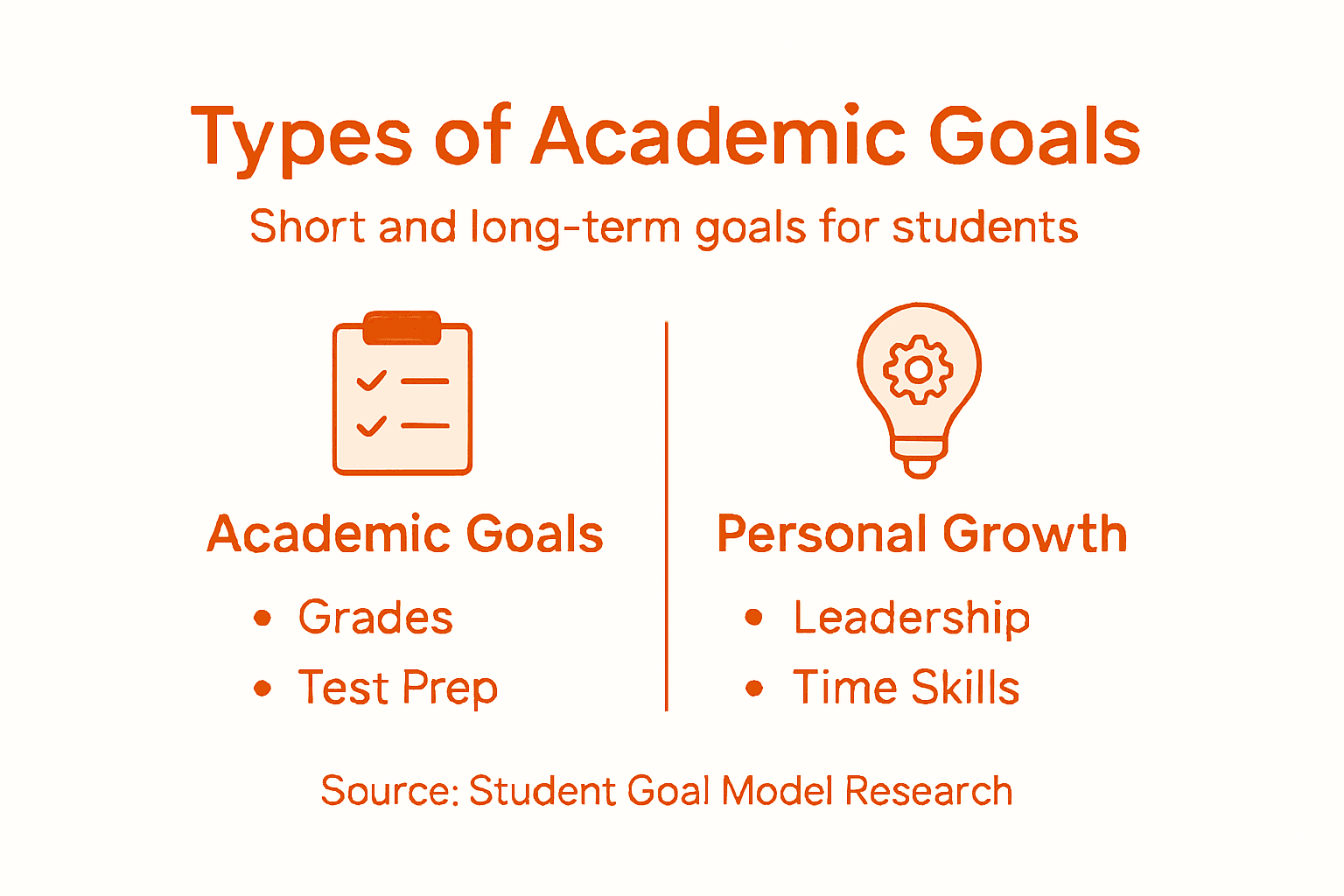
Extracurricular and personal development goals are equally important. These might include leadership roles in school clubs, participating in community service, developing time management skills, or pursuing specialized academic interests that complement your core curriculum.
See how different types of academic goals support overall student development:
| Goal Type | Main Focus | Example Outcome | Long-Term Benefit |
|---|---|---|---|
| Performance | Grades & scores | Honor roll achievement | Competitive college options |
| Learning Mastery | Deep understanding | Advanced study skills | Better critical thinking |
| College Prep | Application process | Strong essays | Admission success |
| Extracurricular | Personal growth | Club leadership | Stronger resumes |
Pro tip: Create a goal pyramid with short-term tactical objectives supporting long-term strategic ambitions, ensuring each smaller goal directly contributes to your ultimate academic vision.
How SMART Goals Improve College Preparation
SMART goal strategies transform college preparation from a vague aspiration into a structured, actionable roadmap. By breaking down complex objectives into clear, measurable components, students can systematically navigate the challenging journey toward college admission and academic success.
SMART Goals represent a powerful framework for effective goal setting, with each letter representing a critical attribute:
-
Specific: Clearly define what you want to achieve
- Example: “Raise my math GPA from 3.2 to 3.6 this semester”
-
Measurable: Include concrete criteria for tracking progress
- Example: “Complete 3 practice SAT tests before November”
-
Achievable: Set challenging but realistic goals
- Example: “Study 10 hours weekly for college entrance exams”
-
Relevant: Align goals with broader academic and personal objectives
- Example: “Research and apply to 5 target universities matching my academic interests”
-
Time-bound: Establish definitive deadlines
- Example: “Submit college applications by December 15th”
Research demonstrates that goal-setting practices in classrooms dramatically improve student preparedness. By implementing SMART goals, you transform abstract desires into concrete action plans, increasing motivation and providing clear benchmarks for tracking your progress.
The power of SMART goals lies in their ability to break down overwhelming tasks into manageable steps. Instead of feeling paralyzed by the complexity of college preparation, you create a step-by-step approach that builds confidence and momentum.
Pro tip: Develop a goal tracking system using a digital spreadsheet or dedicated planner, updating and reviewing your SMART goals monthly to ensure continuous progress and adaptability.
Essential Steps for Effective Goal Planning
Goal planning strategies transform student aspirations from abstract wishes into concrete roadmaps for academic success. Understanding the systematic approach to goal setting empowers students to take deliberate, strategic actions toward their objectives.
Goal Planning Framework involves several critical components that work together to create a comprehensive approach:
-
Self-Assessment
- Evaluate current academic strengths and weaknesses
- Identify genuine personal motivations
- Understand your learning style and preferences
-
Objective Definition
- Create clear, specific goals
- Distinguish between short-term and long-term objectives
- Align goals with personal values and academic requirements
-
Strategic Development
- Break larger goals into smaller, manageable tasks
- Create actionable timelines
- Establish measurable milestones
-
Resource Mapping
- Identify necessary tools and support systems
- Recognize potential obstacles
- Develop contingency strategies
-
Progress Tracking
- Implement regular self-evaluation methods
- Maintain flexible, adaptable approaches
- Celebrate incremental achievements
Successful goal planning requires consistent commitment and a willingness to adjust strategies. The process is dynamic, demanding ongoing reflection and strategic modifications based on your evolving academic landscape.

Pro tip: Create a visual goal roadmap using color-coded tracking systems, helping you maintain motivation and clarity throughout your academic journey.
Common Pitfalls and How to Avoid Them
Student learning misconceptions can derail even the most well-intentioned goal-setting efforts. Understanding these common traps helps high school seniors develop more resilient and effective academic strategies.
Common Goal-Setting Pitfalls that students frequently encounter include:
-
Unrealistic Expectations
- Setting impossibly high standards
- Comparing yourself to others
- Ignoring personal limitations and context
-
Lack of Specificity
- Using vague goal statements
- Failing to define clear milestones
- Avoiding quantifiable measurements
-
Motivation Misconceptions
- Believing motivation is constant
- Waiting for perfect conditions
- Overlooking the role of consistent effort
-
Inflexibility
- Treating goals as rigid requirements
- Refusing to adapt when circumstances change
- Punishing yourself for minor setbacks
Strategies for Overcoming Pitfalls
- Practice self-compassion and realistic goal setting
- Break larger goals into smaller, manageable tasks
- Regularly review and adjust your objectives
- Develop a growth mindset that embraces learning from challenges
Confronting learning misconceptions requires systematic approaches. Students must actively challenge their existing beliefs and create opportunities for genuine reflection and growth.
Pro tip: Conduct a monthly goal review, honestly assessing your progress and being willing to modify your approach without self-judgment.
Building Confidence and Resilience Through Goals
Goal setting strategies transform academic challenges into opportunities for personal growth. Confidence isn’t something you’re born with – it’s a skill you can deliberately develop through strategic goal management.
Confidence-Building Goal Techniques include:
-
Incremental Achievement
- Set progressively challenging goals
- Create visible milestone markers
- Celebrate small victories
-
Skill Development Focus
- Prioritize learning over performance
- Embrace challenges as growth opportunities
- Document personal improvement
-
Mindset Transformation
- View setbacks as learning experiences
- Develop positive self-narrative
- Practice self-compassion
Resilience Amplification Strategies:
- Break complex goals into manageable steps
- Create backup plans for potential obstacles
- Maintain a growth-oriented perspective
- Regularly reflect on personal progress
Academic goal management reveals that consistent goal tracking builds intrinsic motivation. By understanding your progress, you transform potential frustration into powerful momentum.
Pro tip: Create a visual progress journal tracking your goals, noting not just achievements but lessons learned from challenges.
Empower Your Academic Journey with Strategic Goal Setting
Struggling to translate your academic aspirations into clear, achievable goals can feel overwhelming. This article breaks down common pitfalls like vague objectives and unrealistic expectations, while highlighting the power of goal-setting frameworks such as SMART goals and incremental milestones. If you want to overcome these challenges and boost your confidence through effective planning and self-reflection, you need more than just advice — you need actionable resources tailored to your unique learning style.
At Learning with Angie, we specialize in helping high school and college students master essential skills including time management, productivity, and maintaining balance. Our tailored tools and strategies align perfectly with the concepts discussed in the article around structured goal planning, motivation, and resilience. Don’t wait to create the academic success story you deserve. Take control now by exploring our expert solutions and start designing your personalized roadmap today at Learning with Angie. Your goals are within reach when you have the right support system in place.
Frequently Asked Questions
What is goal setting and why is it important for students?
Goal setting is the process of identifying specific, actionable objectives that guide students in their academic journey. It is important because it transforms potential into tangible achievements and provides a clear roadmap for success.
What are SMART goals and how can they help with academic success?
SMART goals are Specific, Measurable, Achievable, Relevant, and Time-bound objectives. They help students structure their goals in a clear and actionable way, making it easier to track progress and stay motivated throughout the college preparation process.
How can I create effective academic goals as a high school senior?
To create effective academic goals, assess your strengths and weaknesses, define clear and specific objectives, break them down into manageable tasks, and map out necessary resources. Incorporating performance goals, learning mastery goals, and college preparation goals will create a comprehensive strategy.
What common pitfalls should I avoid when setting academic goals?
Common pitfalls include setting unrealistic expectations, lacking specificity in goals, believing motivation is constant, and being inflexible with goals. To avoid these, practice self-compassion, regularly review and adjust your objectives, and embrace a growth mindset.
Recommended
- Create Your Success: Ultimate Goal Setting Checklist
- 7 Areas of Goal-Setting for Student Success
- 16 Essential College Care Package Ideas to Support and Inspire Students
- How to Stay Motivated When You’re the Boss of Your Own School Day
Want a head start? The Goal Planner turns a big academic goal into clear steps, a weekly plan and a place to track your progress.