
How to study effectively: proven strategies for students
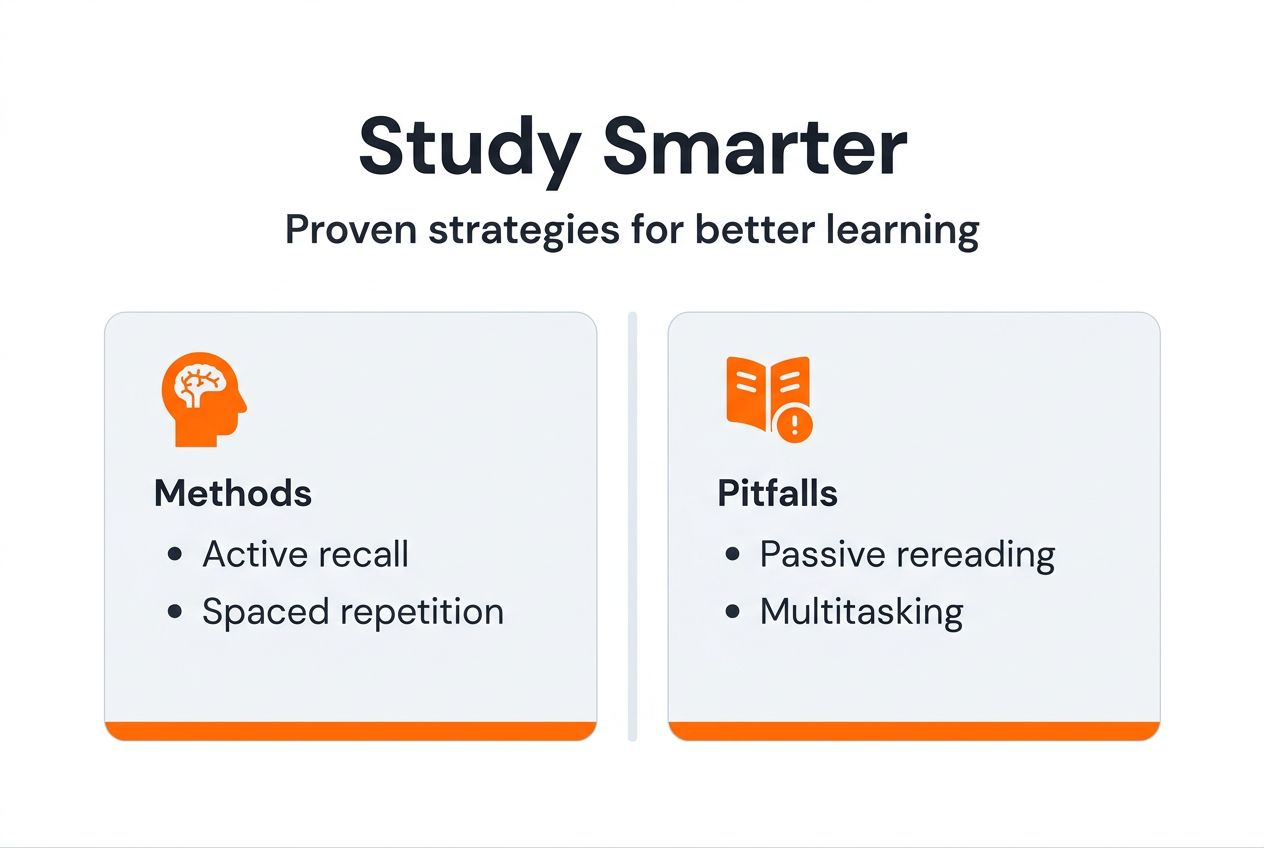
Many students spend hours rereading notes, believing it will lead to better grades. Research shows this passive technique is one of the least effective ways to learn. Scientific study methods like active recall and spaced repetition dramatically improve retention and understanding. This article reveals evidence-based strategies that transform your academic performance while maintaining balance through effective time management and wellness practices.
Key takeaways
| Point | Details |
|---|---|
| Active recall boosts retention | Testing yourself improves memory by 50% compared to passive review |
| Spaced repetition creates lasting learning | Distributing study sessions over time leads to 70% better long-term recall |
| Multitasking kills efficiency | Switching between tasks reduces learning effectiveness by 40% |
| Time blocking enhances productivity | Structured scheduling increases focus by 25% and reduces procrastination |
| Wellness supports academic success | Adequate sleep, exercise, and breaks sustain cognitive performance and prevent burnout |
The science behind effective studying
Understanding how your brain processes information transforms the way you approach studying. Cognitive psychology research reveals that not all study methods produce equal results.
Active recall forces your brain to retrieve information from memory rather than passively reviewing it. When you quiz yourself or explain concepts without looking at notes, you strengthen neural pathways. Studies demonstrate that active recall improves retention by 50% compared to passive reading.
Spaced repetition significantly enhances long-term memory by reviewing material at increasing intervals. Instead of cramming everything the night before an exam, you revisit topics multiple times over days or weeks. This technique produces 70% better recall after one week compared to massed practice.
Passive rereading creates an illusion of knowledge. Your brain recognizes familiar words and concepts, making you feel confident. However, recognition differs dramatically from retrieval. When exam time arrives, you struggle to reproduce information because you never practiced accessing it from memory.
Retention rates by study method:
| Study Method | Retention After 1 Week | Retention After 1 Month |
|---|---|---|
| Rereading notes | 20% | 10% |
| Highlighting | 25% | 12% |
| Active recall | 70% | 55% |
| Spaced repetition | 80% | 65% |
Effective studying engages effortful processing. Your brain must work to reconstruct information, creating stronger memory traces. Using an effective study planner checklist helps you implement these proven techniques systematically.
Pro Tip: Create practice questions immediately after learning new material, then answer them without referring to your notes to maximize active recall benefits.
Common misconceptions and study myths debunked
Popular study beliefs often contradict scientific evidence. Recognizing these myths helps you avoid wasting time on ineffective strategies.
Many students believe multitasking makes them more efficient. Multitasking reduces learning efficiency by up to 40%, impairing both focus and memory consolidation. Your brain cannot truly process two cognitively demanding tasks simultaneously. What feels like multitasking is actually rapid task switching, and each switch carries a cognitive cost.
Rereading feels productive because it requires little effort and creates familiarity. This ease tricks you into overestimating your understanding. Active recall feels harder because it exposes gaps in your knowledge, but this difficulty signals genuine learning.
The myth that longer study hours always produce better results ignores the role of fatigue. After prolonged study sessions without breaks, your brain’s ability to encode new information declines sharply. Quality beats quantity when concentration drops.
“Students who engage in continuous study sessions without breaks show significantly reduced retention compared to those who incorporate strategic rest periods, with performance declining by 30% after two hours of uninterrupted studying.”
Common study myths:
- More time always equals better grades
- Highlighting is an effective primary study method
- You can effectively study while watching TV
- Cramming works if you focus hard enough
- Learning styles determine study success
Understanding how to manage study time for better grades means rejecting these myths and adopting evidence-based approaches. Your study habits should reflect what research proves effective, not what feels comfortable or traditional.
Time management and scheduling for academic success
Structured time management transforms chaotic study habits into productive routines. Without clear scheduling, procrastination and overwhelm become inevitable.

Time blocking allocates specific periods for focused study tasks. Research shows structured scheduling improves productivity by 25% by eliminating decision fatigue about what to study next. You designate Monday 4:00 PM to 5:30 PM for biology, Tuesday 3:00 PM to 4:30 PM for calculus, creating predictable patterns.
Clear scheduling reduces procrastination by removing ambiguity. When your calendar shows exactly when you will tackle each subject, the mental barrier to starting diminishes. You follow the plan rather than debating whether to begin.
Balancing academic work with other commitments prevents burnout. Your schedule should include study blocks, meals, exercise, social time, and sleep. Overcommitting to academics while neglecting other needs ultimately reduces performance.
Steps to create an effective study schedule:
- List all courses and upcoming assignments or exams
- Estimate realistic study time needed for each subject
- Block out non-negotiable commitments like classes, work, meals
- Assign specific time slots to each subject using time blocking
- Include buffer time for unexpected tasks or delays
- Schedule breaks between study blocks
- Review and adjust weekly based on what works
Using the time blocking method for students creates accountability. Digital calendars with notifications enforce your schedule, making it harder to skip planned study sessions.
Pro Tip: Set calendar alerts 10 minutes before each study block to transition mentally and gather materials, reducing startup friction.
Implementing effective time management tips consistently builds momentum. Small daily improvements compound into significant academic gains over a semester.
Integrating wellness: sleep, exercise, and breaks
Your brain’s learning capacity depends heavily on physical wellness. Neglecting sleep, movement, or rest sabotages even the best study techniques.
Sleep consolidates memories from short-term to long-term storage. During deep sleep, your brain replays and strengthens neural connections formed while studying. Students sleeping less than 6 hours show 40% decreased recall compared to those getting 7 to 9 hours. Pulling all-nighters before exams undermines the very learning you worked to achieve.
Physical exercise increases blood flow to the brain, enhancing cognitive function and concentration. A 20-minute walk or brief workout session before studying primes your mind for better focus. Regular exercise also reduces stress and anxiety that interfere with learning.
Strategic breaks prevent mental fatigue. The Pomodoro technique increases attention by 20 to 30% and decreases fatigue by 25%. You study intensely for 25 minutes, then take a 5-minute break. After four cycles, take a longer 15 to 30 minute break. This rhythm maintains high focus throughout extended study sessions.
Daily wellness habits to support studying:
- Aim for 7 to 9 hours of sleep nightly
- Exercise for at least 20 minutes daily
- Take 5 minute breaks every 25 to 30 minutes
- Stay hydrated throughout study sessions
- Eat nutritious meals to fuel brain function
- Limit caffeine after 2:00 PM to protect sleep
“Adequate sleep is not a luxury for students but a biological necessity that directly determines academic performance, with well-rested students demonstrating superior problem-solving abilities and memory retention.”
Learning to incorporate wellness into your daily routine creates sustainable academic success. Short-term sacrifices of sleep or health for extra study time backfire by reducing your brain’s ability to learn effectively.
Putting it all together: building your personalized study plan
Combining evidence-based techniques into a cohesive system maximizes your academic results while maintaining balance. A personalized plan adapts these principles to your specific schedule and learning needs.
Start by assessing your current commitments and available study time. Be realistic about how many focused hours you can sustain daily. Quality concentrated study beats endless unfocused hours.
Integrate active recall and spaced repetition into your schedule. Plan to review material multiple times across several days rather than once intensively. Use flashcards, practice problems, or self-quizzing to test retrieval.
Apply time blocking to structure your days. Assign specific subjects to specific time slots, treating these blocks as non-negotiable appointments. Include breaks using the Pomodoro technique to maintain focus.
Prioritize wellness fundamentals. Schedule adequate sleep, exercise, and meals just as firmly as study sessions. These habits sustain the cognitive performance needed for effective learning.
Steps to build your personalized study plan:
- Audit your weekly schedule and identify available study hours
- Prioritize subjects based on difficulty and upcoming deadlines
- Allocate study blocks using time blocking principles
- Incorporate active recall and spaced repetition for each subject
- Schedule breaks every 25 to 30 minutes during study blocks
- Plan 7 to 9 hours of sleep and daily physical activity
- Review your plan weekly and adjust based on results
Tracking what works lets you refine your approach continuously. Notice which study methods produce the best retention for different subjects. Some courses may benefit more from practice problems, others from concept mapping or teaching the material to someone else.
Comparing study method benefits:
| Method | Best For | Time Investment | Retention Rate |
|---|---|---|---|
| Active recall | Memorization, facts | Medium | Very High |
| Spaced repetition | Long-term retention | High | Highest |
| Practice problems | Application, math | High | Very High |
| Concept mapping | Understanding relationships | Medium | High |
| Teaching others | Deep comprehension | High | Very High |
Using resources on how to create a study schedule provides additional structure. An effective study planner checklist ensures you do not overlook critical elements.
Pro Tip: Review and adjust your study plan every Sunday evening, celebrating what worked well and modifying what did not to continuously improve your system.
Enhance your study journey with Learning with Angie
Building an effective study system takes guidance and the right resources. Learning with Angie offers comprehensive support to help you implement these evidence-based strategies successfully.
Explore understanding and defining study aesthetics to create motivating, organized study spaces that enhance focus. Discover how to master time management step by step with practical frameworks tailored for students. Access effective time management tips that align perfectly with the scientific principles covered in this article. These resources transform study theory into actionable daily practices that produce real academic improvements.
FAQ
What are the most effective study techniques according to science?
Active recall and spaced repetition consistently demonstrate the highest retention rates in cognitive research. Active recall involves testing yourself without looking at notes, forcing your brain to retrieve information and strengthening memory pathways. Spaced repetition distributes study sessions over increasing intervals, producing 70% better long-term retention compared to cramming.
How does multitasking affect my study efficiency?
Multitasking reduces learning efficiency by up to 40% because your brain cannot truly focus on two cognitively demanding tasks simultaneously. What feels like multitasking is actually rapid task switching, and each switch carries a cognitive cost that disrupts memory consolidation. Single-task focused study sessions produce dramatically better retention and understanding.
How can I balance my study schedule with other commitments?
Time blocking helps you allocate specific periods for focused study while protecting time for personal activities, work, and social commitments. Prioritize wellness habits like adequate sleep and regular exercise, as these sustain the cognitive performance needed for effective learning. Regularly review and adjust your schedule weekly to ensure it remains realistic and sustainable, and explore strategies for balancing lifestyle and academics.
Why is sleep so important for academic performance?
Sleep consolidates memories by transferring information from short-term to long-term storage during deep sleep phases. Students sleeping less than 6 hours show 40% decreased recall ability compared to those getting 7 to 9 hours. Skipping sleep to study more actually undermines learning by preventing your brain from solidifying the material you worked to understand.
How often should I take breaks during study sessions?
The Pomodoro technique recommends 5-minute breaks every 25 to 30 minutes of focused study, with longer 15 to 30 minute breaks after completing four cycles. This rhythm increases attention by 20 to 30% and decreases mental fatigue by 25%. Strategic breaks prevent cognitive decline during extended study sessions and maintain high-quality focus.