Master the study group process for better learning
Struggling to stay motivated when studying alone? Many students find solo study sessions isolating and unproductive, while poorly organized group efforts devolve into distractions and wasted time. An effective study group process transforms learning from a solitary grind into a collaborative experience that boosts comprehension, retention, and academic performance. This guide walks you through creating, managing, and optimizing study groups that deliver real results for high school and college students, with insights to help parents support their children’s academic success.
Key Takeaways
| Point | Details |
|---|---|
| Clear goals and roles | Set concrete academic objectives before first session and assign specific roles to guide discussions and responsibilities. |
| Committed members with strengths | Choose 3 to 5 classmates who take academics seriously and bring complementary skills for peer teaching. |
| Rotate leadership roles | Designate a moderator, a note taker, and a timekeeper, and rotate these duties so everyone stays engaged. |
| Regular schedule and location | Schedule recurring meetings at the same time and location to build habits and reduce coordination effort. |
| Agenda driven sessions | Begin each meeting with a brief agenda and allocate time blocks for each topic to stay focused. |
Preparing for a successful study group
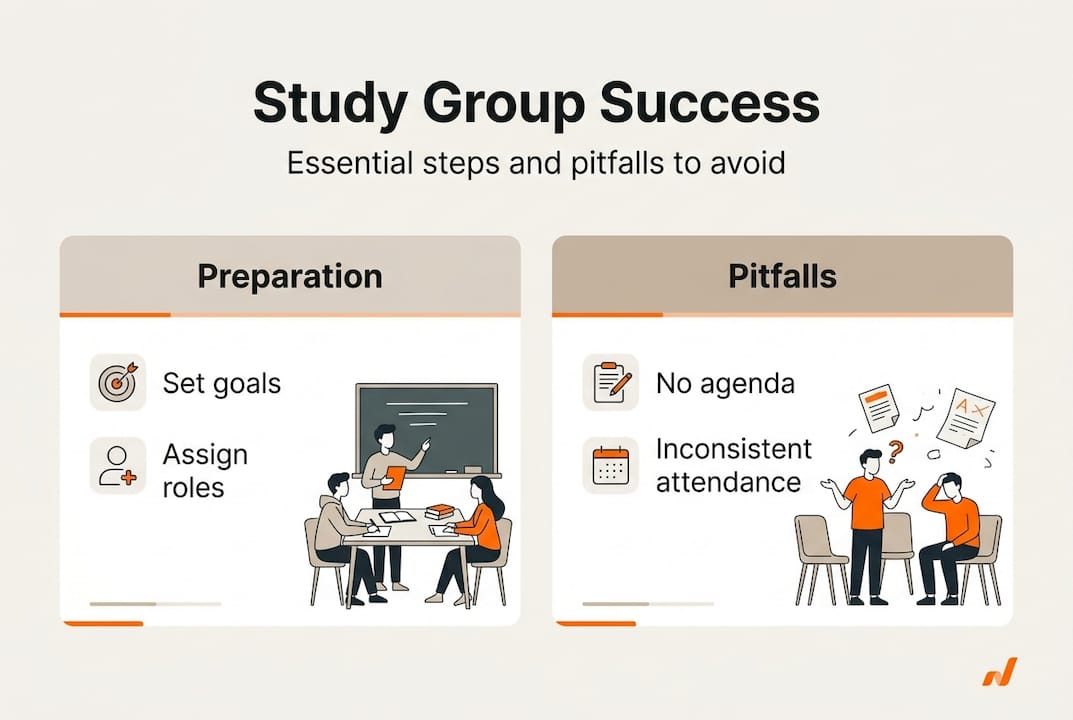
Before your first meeting, laying the groundwork determines whether your study group thrives or fizzles out. Clear goals and member roles are foundational for effective study groups, so invest time upfront to set your team up for success.
Start by identifying 3 to 5 committed members who bring complementary strengths. Look for classmates who take academics seriously but approach problems differently than you do. Someone strong in math might pair well with a skilled writer, creating opportunities for peer teaching that benefits everyone. Avoid inviting friends who prioritize socializing over studying, no matter how much you enjoy their company outside class.
Define specific academic goals before your first session. Rather than vague objectives like “do better in biology,” aim for concrete targets such as “master cellular respiration for next week’s exam” or “complete practice problems from chapters 5 through 7.” This clarity helps everyone prepare relevant materials and stay focused during meetings.
Assigning roles transforms chaotic gatherings into efficient learning machines. Designate a moderator to guide discussions and keep conversations on track, a note taker to document key insights and action items, and a timekeeper to ensure you cover all planned topics. Rotate these responsibilities so everyone develops leadership skills and stays engaged.

Pro Tip: Schedule recurring meetings at the same time and location each week. Consistency builds habits and reduces the mental load of constant coordination.
Decide on meeting frequency based on your academic calendar and workload. Most successful groups meet once or twice weekly, balancing regular collaboration with individual study time. During exam periods, you might increase frequency, while lighter weeks allow for less frequent check ins.
| Preparation Element | Recommended Approach | Common Pitfall to Avoid |
|---|---|---|
| Group size | 3 to 5 members | Too large (over 6) creates coordination challenges |
| Meeting schedule | Same day/time weekly | Irregular scheduling reduces attendance |
| Role assignment | Rotate responsibilities | Same person always leads, others disengage |
| Goal setting | Specific, measurable objectives | Vague aims like “study harder” |
Gather study materials before each session. If you’re tackling chemistry problems, bring your textbook, notes, and calculator. For literature discussions, everyone should complete assigned readings beforehand. When creating study groups, establishing this expectation early prevents frustration and wasted meeting time.
Choose a location that supports focused work. Library study rooms offer quiet spaces with whiteboards, while coffee shops provide a relaxed atmosphere that some groups prefer. Ensure the space accommodates your group size comfortably and has reliable internet if you need digital resources. Consider how creating study schedules around location availability maximizes your productivity.
Executing the study group sessions effectively
Running productive meetings requires structure and active participation from everyone. Structured group sessions with clear agendas improve focus and outcomes, transforming good intentions into measurable academic gains.
Begin each session with a brief agenda review. Spend the first 5 minutes outlining what you’ll cover, allocating time blocks to each topic. For a 90 minute meeting studying for a history exam, you might dedicate 30 minutes to reviewing key dates and events, 40 minutes to discussing essay prompts, and 20 minutes to quizzing each other on important concepts.
Peer teaching creates powerful learning opportunities. Assign each member a topic to explain to the group, forcing them to master the material well enough to teach it. When you articulate concepts in your own words, you identify gaps in understanding and reinforce retention. This approach works especially well for subjects with distinct units or chapters.
Incorporate active learning techniques to maintain engagement:
- Quiz sessions where members test each other on key concepts
- Problem solving competitions that make practice exercises more engaging
- Debate formats for exploring different interpretations of literature or historical events
- Whiteboard explanations where visual learners can diagram complex processes
Manage time strictly to respect everyone’s schedules and maintain energy levels. When discussions run long, the timekeeper should intervene politely but firmly. If a topic proves more complex than anticipated, table it for the next meeting rather than rushing through remaining agenda items.
Pro Tip: Use the Pomodoro technique during study sessions. Work intensely for 25 minutes, then take a 5 minute break. This rhythm prevents burnout and keeps minds fresh.
Leverage digital tools to enhance collaboration. Shared Google Docs let you build collective study guides in real time. Messaging apps like Discord or GroupMe facilitate quick questions between meetings. Citation managers help organize research for group projects. Video conferencing enables remote participation when someone can’t attend in person.
| Session Format | Best For | Key Advantage |
|---|---|---|
| Discussion led | Humanities subjects, essay preparation | Develops critical thinking and multiple perspectives |
| Task focused | Math, science problem sets | Provides immediate feedback and error correction |
| Hybrid approach | Comprehensive exam prep | Balances conceptual understanding with practical application |
Effective group study session strategies adapt to your subject matter and learning objectives. Science courses benefit from working through problem sets together, while literature classes thrive on discussion based analysis. Experiment with different formats to discover what works best for your group’s dynamics and academic needs.
Keep discussions on topic by gently redirecting tangents. When conversations drift toward weekend plans or campus gossip, the moderator should acknowledge the comment briefly then refocus attention on study material. Building in a 10 minute social break midway through longer sessions gives everyone a pressure release valve.
Document insights and action items throughout each session. The note taker should capture key concepts, helpful explanations, and questions that need further research. Share these notes with the group afterward so everyone benefits, even if they missed nuances during discussion. Strong communication strategies in groups ensure information flows smoothly and no one falls behind.
Consider how your physical environment impacts productivity. Organizing study space applies to group settings too. Arrange seating in a circle or around a table so everyone can see each other and materials. Minimize distractions by silencing phones and closing unrelated browser tabs.
Troubleshooting common study group challenges
Even well planned groups encounter obstacles that threaten productivity and morale. Addressing distractions and uneven participation prevents group inefficiency and keeps everyone moving toward academic goals.
Distractions derail focus faster than any other challenge. Social conversations, phone notifications, and off topic debates consume precious study time. Combat this by establishing ground rules during your first meeting. Common agreements include keeping phones face down, limiting social chat to designated breaks, and committing to arrive prepared.
Uneven participation creates resentment and reduces learning quality. When one or two members dominate discussions while others stay silent, the group loses diverse perspectives and some students miss opportunities to deepen understanding. Rotate speaking responsibilities and directly invite quieter members to share their thoughts. Ask open ended questions like “What’s your take on this concept?” rather than yes/no questions.
Inconsistent attendance undermines group cohesion and forces repeated explanations for absent members. Address this early by discussing commitment expectations. If someone consistently misses meetings without notice, have a private conversation about whether the group still fits their schedule. It’s better to have a smaller committed group than a larger unreliable one.
“The strength of a study group lies not in its size, but in the shared commitment of its members to mutual success and accountability.”
Unclear objectives waste time and leave members feeling unproductive. Prevent this by setting specific goals for each session during your agenda review. Instead of “study chapter 4,” aim for “complete all practice problems from chapter 4 and identify three key concepts we struggle with.”
Rotate leadership to prevent burnout and develop everyone’s organizational skills. When the same person always moderates, they shoulder disproportionate responsibility while others become passive participants. Switching roles keeps everyone invested and engaged.
Foster active communication by creating a judgment free environment where questions are welcomed. Students often hesitate to admit confusion, fearing they’ll look uninformed. Model vulnerability by asking questions yourself and praising others who seek clarification. This psychological safety transforms your group into a true learning community.
Take strategic breaks to maintain mental energy during longer sessions. After 45 to 60 minutes of intense focus, spend 10 minutes stretching, grabbing snacks, or chatting casually. These pauses prevent fatigue and actually improve retention compared to marathon study sessions without rest.
Set achievable goals that build confidence and momentum. Breaking large objectives into smaller milestones creates a sense of progress. Rather than “master all of organic chemistry,” target “understand alkene reactions by next meeting.” Celebrating these small wins motivates continued effort.
Developing good study habits individually strengthens what you bring to group sessions. When everyone arrives prepared and focused, collective productivity multiplies. Consider how skills from peer tutoring program steps apply to study groups, particularly around explaining concepts clearly and providing constructive feedback.
Measuring success and maintaining momentum
Tracking progress ensures your study group delivers real academic benefits rather than just feeling productive. Regular evaluation and goal adjustment sustain group productivity over time.
Monitor academic improvements as your primary success metric. Are group members’ test scores rising? Do you feel more confident explaining course material? Track these indicators informally through conversation or formally by comparing grades before and after joining the group. If you’re not seeing improvement after four to six weeks, reassess your approach.
Gather member feedback regularly to identify what’s working and what needs adjustment. Every few weeks, spend 10 minutes discussing group dynamics. Ask questions like “What’s been most helpful?” and “What should we change?” This continuous improvement mindset prevents stagnation and keeps the group responsive to everyone’s needs.
Set SMART goals to create clear targets and accountability:
- Specific: “Improve calculus exam scores” rather than “do better in math”
- Measurable: “Increase quiz average from 75% to 85%”
- Achievable: Based on realistic effort and time investment
- Relevant: Aligned with your academic priorities and course requirements
- Time bound: “By the midterm exam in four weeks”
Celebrate achievements to maintain motivation and group cohesion. When someone aces an exam or the whole group improves on a challenging topic, acknowledge the success. Small celebrations like bringing snacks to the next meeting or taking a group photo create positive associations with studying together.
| Success Indicator | How to Measure | Frequency |
|---|---|---|
| Grade improvement | Compare test scores before/after joining group | After each major exam |
| Participation quality | Self assessment of engagement and contribution | Monthly |
| Goal completion | Track whether session objectives were met | Weekly |
| Member satisfaction | Brief feedback discussions | Every 3 to 4 weeks |
Adapt your meeting structure based on results and changing needs. If practice problems prove more valuable than discussion, shift your format. When exam season intensifies, increase meeting frequency. Flexibility keeps the group relevant throughout the semester’s evolving demands.
Applying organization tips for students helps you balance group commitments with individual responsibilities. Effective study groups complement rather than replace solo study time. Understanding your personal productivity workflow ensures you maximize both collaborative and independent learning.
Recognize when it’s time to evolve or conclude the group. As courses end or members graduate, study groups naturally dissolve. Rather than forcing continuation, acknowledge the group’s contribution to your academic growth and stay connected with members who became friends. The skills you developed around collaboration, communication, and peer teaching transfer to future academic and professional settings.
Enhance your study skills with expert guides and tools
Mastering the study group process represents just one dimension of academic success. Learning with Angie offers comprehensive resources to strengthen your individual study techniques alongside collaborative efforts. Explore effective study techniques for exams to discover methods that complement group learning, from active recall to spaced repetition. Visual learners can dive deeper into study techniques for visual learners that leverage diagrams, color coding, and mind mapping. Visit the Learning with Angie shop for planners, study guides, and productivity tools designed specifically for high school and college students committed to academic excellence.
Frequently asked questions
What is the ideal size for a study group?
The ideal study group size is typically 3 to 5 students, balancing diverse perspectives with manageable coordination. This range allows everyone to participate actively while keeping scheduling and logistics simple. Groups larger than 6 often struggle with distractions and uneven participation, while pairs lack the variety of viewpoints that make collaboration valuable.
How often should study groups meet for the best results?
Meeting once or twice weekly generally proves most effective, balancing consistency with individual study time. This frequency maintains momentum without overwhelming schedules or creating dependency on the group. During exam periods, you might increase to three sessions weekly, while lighter academic weeks allow for reduced frequency based on your collective workload.
What are common mistakes to avoid in study groups?
Avoid lack of focus, inconsistent attendance, unclear goals, and allowing dominant participants to monopolize discussions. These pitfalls undermine productivity and frustrate committed members. Establishing ground rules during your first meeting, assigning rotating roles, and setting specific session objectives help prevent these issues before they damage group dynamics.
How can parents support their student’s study group participation?
Parents can help by providing quiet study spaces at home, respecting scheduled meeting times, and encouraging consistent attendance without micromanaging the process. Offering to host sessions occasionally or providing snacks shows support while allowing students to maintain ownership of their learning. Asking open ended questions about what the group is working on demonstrates interest without being intrusive.