The Essential Guide to the Role of Journaling
More than half of american students struggle to manage stress and emotions effectively, yet many are unaware of simple tools that can truly help. Journaling stands out because it offers a private space for self-reflection, growth, and creative problem-solving. By making time for this practice, anyone can tap into greater self-understanding and find clarity in daily life. Whether you are aiming to improve your learning, mental health, or personal insight, journaling brings real, lasting benefits.
Key Takeaways
| Point | Details |
|---|---|
| Power of Journaling | Journaling aids personal exploration, self-reflection, and emotional processing, making it a valuable tool for growth. |
| Diverse Styles | Different journaling methods, like gratitude or goal-oriented journaling, cater to individual needs and enhance unique skills. |
| Academic Benefits | Journaling improves self-awareness, critical thinking, and memory retention, directly supporting academic success. |
| Overcoming Challenges | To maintain consistency, set small goals and create a welcoming environment, focusing on genuine expression over perfection. |
Defining the Role of Journaling
Journaling is more than just writing in a notebook – it’s a powerful tool for personal exploration and growth that helps you understand yourself better. According to Binghamton University, journaling serves as a critical mechanism for self-reflection, allowing individuals to process daily events and emotions while enhancing personal awareness.
At its core, journaling provides a safe, private space where you can express your deepest thoughts without judgment. Students especially can benefit from this practice, as Kapor Foundation notes that journaling offers a unique platform to connect personal experiences with academic concepts and work through challenges by recording ideas and potential solutions.
The role of journaling extends far beyond simple record-keeping. It acts as a personal development tool that can help you:
- Track your emotional progress
- Identify patterns in your thinking
- Reduce stress and anxiety
- Improve problem-solving skills
- Boost creativity and self-understanding
Whether you’re dealing with school pressures, personal growth, or just want a space to explore your inner world, journaling offers a flexible and powerful approach to self-discovery. Your journal becomes a judgment-free zone where you can be completely honest with yourself and chart your personal journey.

Types of Journaling and Their Benefits
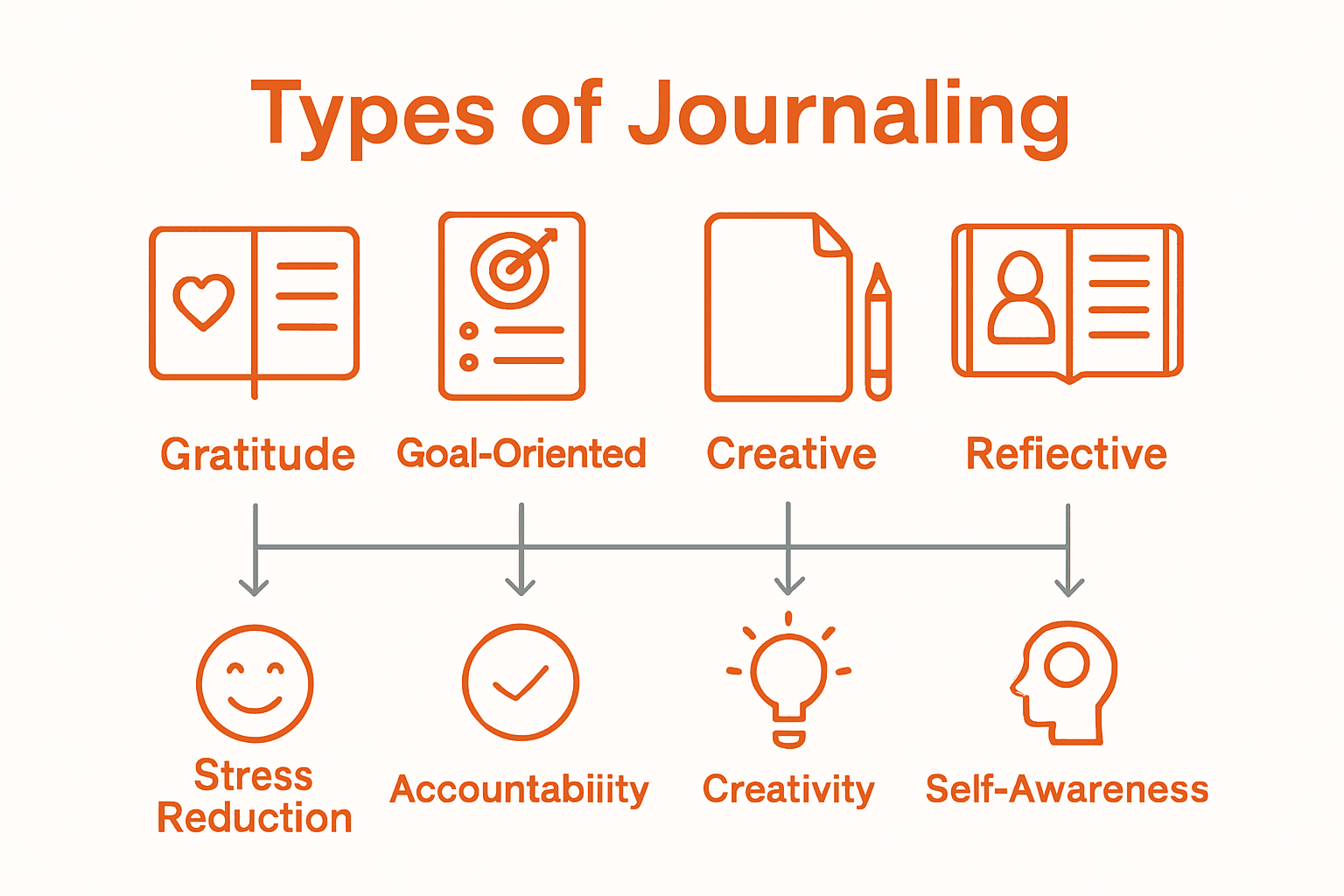
Journaling isn’t a one-size-fits-all activity – there are multiple styles that can help you achieve different personal goals. According to Positivity, various journaling approaches offer unique benefits, from stress reduction to enhanced self-awareness.
Let’s explore some powerful journaling techniques:
Gratitude Journaling: This style focuses on recording things you’re thankful for, helping shift your perspective toward positivity. By consistently noting daily blessings, you train your brain to recognize good moments.
Goal-Oriented Journaling: Perfect for students and ambitious learners, this method involves tracking progress, setting objectives, and reflecting on achievements. You’ll create a roadmap for personal development while maintaining accountability.
Creative Journaling: More than just writing, this approach includes sketching, mind mapping, and free-form expression. It’s a fantastic way to unlock your creativity and process complex emotions.
Reflective Journaling: As Duna Press highlights, this type of writing aids emotional regulation and personal growth. By examining your experiences thoughtfully, you gain deeper insights into your thought patterns and behaviors.
Each journaling style offers unique advantages:
- Reduces stress and anxiety
- Improves emotional intelligence
- Enhances self-awareness
- Boosts problem-solving skills
- Provides a safe space for self-expression
Choose a journaling style that resonates with you and matches your personal goals. Remember, there’s no “perfect” way to journal – it’s about finding what works best for your individual journey.
How Journaling Supports Learning and Well-Being
Journaling is more than just writing down thoughts – it’s a powerful tool for personal and academic growth. According to University of USA, journaling plays a critical role in enhancing self-awareness, boosting memory, and improving critical thinking skills, which directly contribute to academic success.
For students navigating complex academic and personal challenges, journaling serves as a strategic support system. Mental clarity emerges as a key benefit, helping you process emotions, track personal development, and maintain perspective during stressful times. Well-Being Research highlights that regular journaling supports emotional management and cultivates a growth mindset.
The learning benefits of journaling are multifaceted:
- Improves information retention and memory
- Develops stronger critical thinking skills
- Helps track personal and academic progress
- Reduces stress and anxiety
- Enhances self-reflection and emotional intelligence
Think of your journal as a personal development laboratory. It’s a judgment-free space where you can explore your thoughts, document your journey, and gain insights into your own learning patterns. Whether you’re struggling with a complex subject, processing challenging emotions, or simply wanting to understand yourself better, journaling offers a powerful, flexible tool for personal growth.
Best Practices for Effective Journaling
Successful journaling is about creating a consistent, meaningful practice that supports your personal growth. According to National Scholar Council Services, effective journaling goes beyond random writing – it involves strategic tracking of activities, goal setting, and thoughtful reflection that can enhance organization and build confidence.
Establishing a structured approach is key to making journaling a powerful tool. East Central University emphasizes that academic journaling develops metacognitive skills by encouraging students to process thoughts and emotions through regular, intentional writing.
Here are some practical strategies to maximize your journaling effectiveness:
- Choose a consistent time and place for writing
- Set realistic journaling goals (start with 5-10 minutes daily)
- Use prompts to spark reflection when you feel stuck
- Be honest and non-judgmental in your writing
- Review and reflect on your previous entries periodically
Remember that your journal is a personal space for growth. Don’t worry about perfect grammar or writing skills – focus on genuine self-expression. Some days you’ll write pages, other days just a few lines. The magic is in showing up consistently and being kind to yourself throughout the process.
Common Challenges and How to Overcome Them
Journaling isn’t always smooth sailing, and many students struggle with maintaining a consistent practice. Kapor Foundation recognizes that challenges like lack of motivation and time constraints are common obstacles that can derail your journaling journey.
The key to overcoming these challenges lies in making journaling feel less like a chore and more like a personal ritual. Start by lowering your expectations – your journal doesn’t need to be a masterpiece. Some days, writing just a few sentences is a win. Think of it like exercise for your mind: consistency matters more than perfection.
Here are practical strategies to push through common journaling roadblocks:
- Set extremely small, achievable goals
- Keep your journal easily accessible
- Use digital apps if handwriting feels intimidating
- Create a comfortable, inviting journaling space
- Experiment with different journaling styles
- Forgive yourself when you miss days
Remember that journaling is a personal journey, not a competition. Some entries might feel profound, others might seem mundane – and that’s completely okay. The magic happens when you show up for yourself consistently, without judgment. Your journal is a safe space for exploration, growth, and self-discovery.
Boost Your Journaling Journey with Tools Designed for You
If you have ever struggled to keep a consistent journaling practice or found it hard to turn your thoughts into meaningful reflection you are not alone. The article highlights challenges like lack of motivation and time constraints but also shows how journaling can unlock self-awareness and emotional clarity. To make journaling an empowering habit that supports your goals consider exploring specialized methods such as bullet journaling. This approach helps organize your ideas, track progress, and maintain accountability while allowing creative expression.
Create your own productive and inspiring journaling routine with resources from Bullet Journaling – Learning With Angie where you can find practical tools designed especially for students and lifelong learners. Start transforming stress and scattered thoughts into clear plans and personal growth today.
Frequently Asked Questions
What are the benefits of journaling?
Journaling has numerous benefits, including tracking emotional progress, identifying thought patterns, reducing stress and anxiety, improving problem-solving skills, and boosting creativity and self-understanding.
How can I start a journaling practice?
To start journaling, choose a consistent time and place, set realistic goals, use prompts for inspiration, be honest in your writing, and periodically review past entries for reflection.
What types of journaling are available and how do they differ?
There are several types of journaling, including gratitude journaling, goal-oriented journaling, creative journaling, and reflective journaling. Each type offers unique benefits, such as fostering positivity, tracking personal development, unlocking creativity, or aiding in emotional regulation.
How can journaling support academic success?
Journaling enhances self-awareness, boosts memory, and improves critical thinking skills, contributing to academic success. It allows students to process emotions, track personal growth, and maintain perspective during stressful times.
Recommended
- The Art of Journaling for Emotional Resilience
- How to Journal for Self-Growth + Self-Growth Journal Template
- Complete List of Best Bullet Journal Supplies for Beginners
- The Role of Journaling for Students: Understanding Its Benefits
- 7 Essential Tips for Self-Awareness and Growth – Wisdom