
Too Much Knowledge Kills Learning: Complete Guide
Over 60 percent of learners struggle to retain new information when cognitive overload strikes. The modern learning environment throws mountains of facts and concepts your way, and not every brain keeps up with the pace. Knowing the root causes of learning breakdown is crucial for anyone hoping to master new skills or stay ahead in school. This article unpacks the real reasons minds hit their limits and shows how to guard against the most common roadblocks to clear, lasting understanding.
Key Takeaways
| Point | Details |
|---|---|
| Cognitive Overload Triggers | Be aware of factors like mental fatigue, information complexity, lack of context, and poor learning environments that can lead to a breakdown in learning. |
| Chunking and Scaffolding | Use techniques such as breaking information into smaller parts and building on existing knowledge to enhance retention and understanding. |
| Illusion of Understanding | Challenge the false sense of comprehension by engaging actively with the material, explaining concepts, and applying knowledge. |
| Active Recovery Strategies | Implement focused techniques like deliberate reflection, interactive reviews, and short breaks to recover from cognitive overload effectively. |
What Causes Learning Breakdown
Imagine your brain like a computer with limited processing power. Sometimes, it gets overwhelmed, and that’s exactly what happens during learning breakdown. According to EdResearch, cognitive overload occurs when students struggle to process and store new information effectively.
This breakdown happens for several key reasons. Information overload is a major culprit. When you’re bombarded with too much information at once, your brain can’t handle the incoming data. SLU highlights that excessive information can overwhelm your working memory, making it difficult to understand or retain what you’re learning.
Here are the primary causes of learning breakdown:
- Mental Fatigue: Your brain gets tired just like your muscles do
- Information Complexity: Too many complicated concepts at once
- Lack of Context: When new information doesn’t connect with existing knowledge
- Poor Learning Environment: Distractions that fragment your concentration
Understanding these triggers is crucial. When you recognize what causes learning breakdown, you can develop strategies to prevent it. Think of it like being a detective for your own learning process – identifying the obstacles helps you create better study techniques and protect your brain’s amazing ability to absorb knowledge.
How Cognitive Overload Happens
Think of your brain’s working memory like a small desk where you process information. When too many papers get piled up at once, things start getting chaotic. Staff KI explains that cognitive overload happens when your brain receives more information than it can effectively organize and store.
The process of cognitive overload is surprisingly simple. Working memory has limited capacity – imagine it like a tiny storage room with very restricted space. Cambridge highlights that when learners are presented with complex or excessive information, this small mental storage quickly becomes overwhelmed.
Here’s how cognitive overload typically unfolds:
- Information Bombardment: Too many details arriving simultaneously
- Complex Concepts: Highly technical or intricate ideas that require intense processing
- Rapid Information Delivery: Learning environments that move too quickly
- Lack of Prior Knowledge: No existing mental framework to connect new information
Understanding cognitive overload is like learning how your brain’s filing system works. When you recognize the warning signs – confusion, mental fatigue, difficulty concentrating – you can take steps to manage information more effectively and protect your brain’s learning capacity.
Illusion Of Understanding Effects
Have you ever read something and thought you totally got it, only to realize later you didn’t understand a thing? This is the illusion of understanding, a tricky mental trap that happens more often than you might think. Wikipedia explains this phenomenon as a cognitive process where extraneous information creates a false sense of comprehension.
The illusion occurs when our brains trick us into believing we’ve grasped complex information. According to The Organized Mind, information overload can make us feel like experts when we’re actually just skimming the surface. It’s like thinking you know how to cook after watching a few cooking shows – sounds familiar?
Key signs of the illusion of understanding include:
- Superficial Comprehension: Recognizing words but not truly understanding their meaning
- False Confidence: Feeling like an expert without deep knowledge
- Selective Attention: Focusing on interesting details while missing core concepts
- Passive Learning: Consuming information without active engagement
Breaking through this illusion requires honest self-assessment and active learning strategies. Challenge yourself by explaining concepts in your own words, asking questions, and seeking real-world applications. Remember, true understanding isn’t about how much information you consume, but how deeply you process and integrate that knowledge.
Why Too Much Input Misleads
Imagine your brain as a sponge that can only absorb so much liquid before it starts dripping everywhere. Arxiv reveals how the massive influx of information in our digital age contributes to cognitive overload, essentially drowning our mental processing capabilities.
Information saturation can seriously mislead our understanding. EdResearch highlights that excessive information causes learners to struggle with processing and storing new knowledge effectively. It’s like trying to drink from a fire hydrant – you’ll end up more confused than informed.
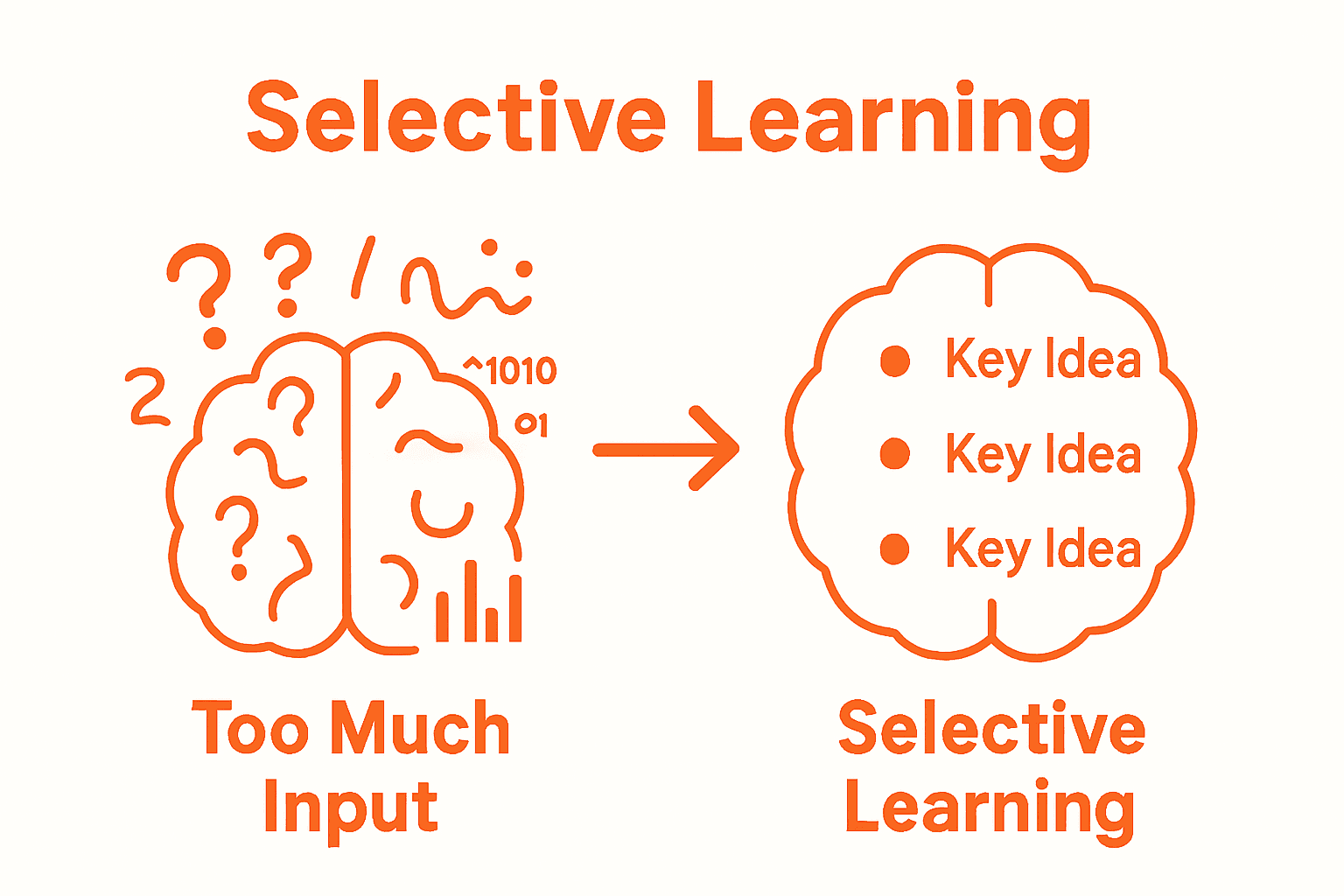
Here are the primary ways too much input misleads you:
- Mental Filtering: Your brain starts selecting random details instead of coherent understanding
- Cognitive Exhaustion: Overwhelmed mental resources lead to poor comprehension
- Decision Paralysis: Too many options create uncertainty and reduce learning efficiency
- Reduced Critical Thinking: Information overload prevents deep analysis
The key is learning to be a selective sponge. Not every piece of information deserves your attention. Develop mental filters, prioritize quality over quantity, and focus on understanding core concepts rather than consuming endless streams of data. Your brain will thank you for being a smart, strategic learner.
How Cognitive Overload Reduces Retention
Think of your brain’s memory like a filing cabinet that gets jammed when too many documents arrive at once. Staff KI explains that cognitive overload directly impairs our ability to process and store new information effectively, creating a serious roadblock in learning.
When your brain experiences information overwhelm, it goes into survival mode. Instead of carefully organizing and storing memories, it starts dropping information like a stressed-out mail carrier. The result? Critical details get lost, connections between concepts become fuzzy, and your ability to recall information dramatically decreases.
Here’s how cognitive overload specifically destroys memory retention:
- Short-Term Memory Collapse: Information gets jumbled before it can be transferred to long-term memory
- Stress Hormone Interference: High cognitive load triggers stress responses that disrupt memory formation
- Attention Fragmentation: Overwhelmed brains can’t focus long enough to create stable memory traces
- Neural Pathway Confusion: Too much input prevents clear, organized memory encoding
The solution isn’t about reducing learning – it’s about learning smarter. Break complex information into smaller chunks, create meaningful connections, and give your brain breathing room to process. Think of learning like cooking: slow, deliberate preparation creates the most delicious results.
Fix Overload With Chunking And Scaffolding
Imagine learning like building a LEGO tower. You don’t dump all the pieces at once – you build step by step. EdResearch explains that chunking and scaffolding are powerful techniques to manage cognitive overload, helping your brain process information more effectively.
Chunking is like organizing a messy room. Instead of seeing chaos, you group similar items together. SLU suggests breaking complex information into smaller, manageable pieces that your brain can easily digest. Think of it as creating mental filing cabinets where each drawer holds related concepts.
Here’s how to implement chunking and scaffolding:
- Group Similar Information: Organize related concepts together
- Create Mental Frameworks: Build connections between new and existing knowledge
- Use Progressive Learning: Start with simple concepts, then add complexity
- Implement Deliberate Pauses: Allow time for mental processing between learning segments
Remember, your brain is a powerful learning machine – but it needs the right approach. Treat learning like a carefully planned road trip. Break the journey into manageable segments, stop to rest and reflect, and you’ll reach your destination without mental burnout.

Reduce Extraneous Load And Distractions
Think of your brain like a superhero with limited energy. Cambridge explains that extraneous cognitive load is like kryptonite – it drains your mental superpowers by bombarding you with unnecessary information that doesn’t contribute to actual learning.
Distractions are brain thieves that steal your focus and learning potential. SLU suggests that minimizing unnecessary stimuli can dramatically improve your ability to process and retain information. It’s like creating a zen garden for your mind, where only essential knowledge is allowed to grow.
Here are practical ways to reduce extraneous load:
- Digital Detox: Turn off notifications during study time
- Simplify Your Environment: Create a clean, minimal workspace
- Use Single-Task Focus: Concentrate on one learning objective at a time
- Eliminate Visual Clutter: Remove unnecessary graphics or decorative elements from learning materials
The goal isn’t perfection – it’s creating a learning environment that respects your brain’s natural processing capabilities. Treat your attention like a precious resource. Guard it carefully, filter out the noise, and watch how much more effectively you can learn and understand.
Build Schema With Worked Examples
Wikipedia reveals a powerful learning secret: worked examples are like treasure maps that guide your brain through complex learning territories. These step-by-step demonstrations help you build mental schemas – think of them as personal filing systems for understanding new concepts.
Schema building is like creating mental LEGO instructions. EdResearch explains that worked examples reduce cognitive load by showing exactly how to solve problems, allowing your brain to focus on understanding rather than figuring out every single step from scratch.
Here’s how to effectively use worked examples:
- Analyze Complete Solutions: Study each step carefully
- Compare Different Problem-Solving Approaches: Understand multiple methods
- Break Down Complex Problems: See how experts tackle challenging tasks
- Practice Explaining the Process: Verbalize what you’re learning
Think of worked examples like having a personal coach walking you through complex skills. They’re not cheating – they’re strategic learning tools that help you understand the ‘how’ and ‘why’ behind solutions, transforming confusion into clear, actionable knowledge.
Recover Through Active, Focused Strategies
Cambridge reveals that active recovery isn’t just about stopping – it’s about strategic redirection. When your brain feels overwhelmed, you need targeted approaches that help reset and recharge your mental processing capabilities.
Focused strategies are like mental first aid. SLU suggests that recovering from cognitive overload requires intentional, interactive techniques that help you regain mental clarity and learning momentum. Think of it as a systematic reboot for your brain.
Here are powerful active recovery techniques:
- Deliberate Reflection: Pause and summarize what you’ve learned
- Interactive Review: Engage with material through questions and discussions
- Sensory Reset: Use brief meditation or deep breathing exercises
- Physical Movement: Take short walks to refresh neural pathways
Recovery isn’t weakness – it’s wisdom. Smart learners know that pushing through mental exhaustion leads to diminishing returns. By implementing these focused strategies, you transform potential burnout into an opportunity for deeper, more meaningful learning.
Overcome Learning Overload and Unlock Your Full Potential
The article reveals how cognitive overload and information saturation can sabotage even the most motivated learners by causing mental fatigue, illusion of understanding, and reduced retention. If you ever feel overwhelmed by too much knowledge hitting your brain at once or find yourself struggling to focus and truly absorb what you are studying, you are not alone. The key is learning smarter with structured methods like chunking and scaffolding, and creating a distraction-free environment that supports deep learning.
Ready to take control of your study routine and power through cognitive overload? Explore proven techniques for time management, productivity, and focused learning at Learning with Angie. Discover practical tools that help you build effective study habits and maintain a balanced lifestyle. Start your journey now and transform information overwhelm into confident mastery with resources made just for learners like you at Learning with Angie. Don’t wait — improve your learning experience today and reach your academic goals with clarity and ease.
Frequently Asked Questions
What is learning breakdown?
Learning breakdown refers to a situation where the brain becomes overwhelmed with information, leading to difficulties in processing and storing new knowledge.
How does cognitive overload affect learning?
Cognitive overload can impair the ability to focus, create connections between concepts, and retain information, ultimately hindering effective learning.
What are effective strategies to manage cognitive overload?
Strategies include chunking information into smaller pieces, creating a distraction-free environment, and using worked examples to understand complex concepts better.
What is the illusion of understanding in learning?
The illusion of understanding happens when individuals mistakenly believe they comprehend information deeply, often due to superficial engagement or information overload.