Logic Puzzles for Kids: The 10-Minute-a-Week Habit That Builds Real Thinking Skills
Ever watched your kid stare at a word problem, sigh, and announce “I don’t get it” before they’ve actually tried anything? That’s not a math problem. That’s a thinking problem, and it’s one of the most fixable things in your whole school year.
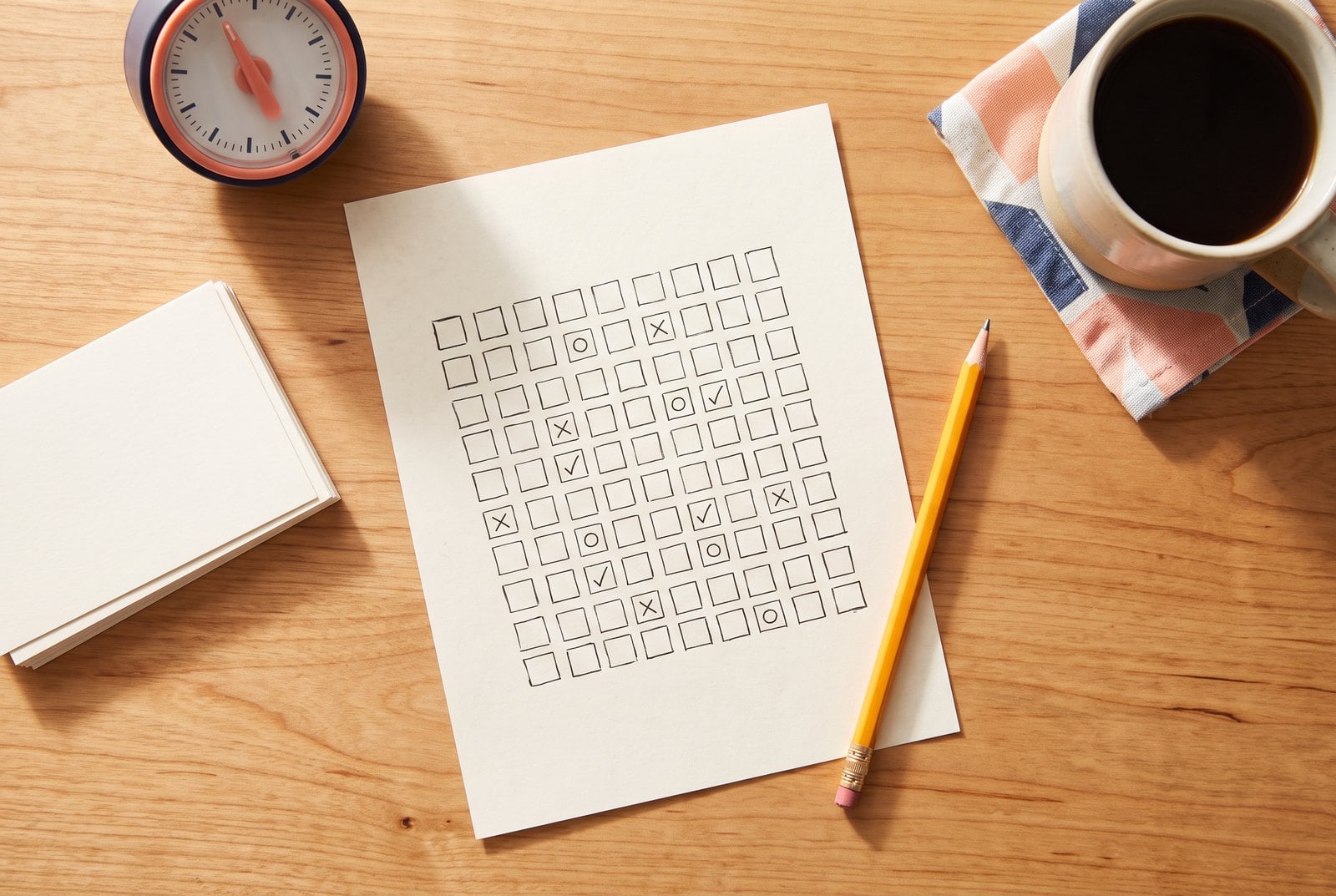
Here’s the plan, and it takes ten minutes a week. Pick one day. Put one logic puzzle on the table. Set a timer. Let your kid wrestle with it. That’s it. No unit, no curriculum, no workbook with 120 pages of fill-in-the-blank. One small standing slot, every week, until it’s simply a thing your family does.
Quick answer: how to do logic puzzles with kids
What: one logic puzzle at the kitchen table: a grid puzzle, a riddle, a pattern game, or a short strategy game, matched to your kid’s age. How long: ten minutes, once a week, on the same day every week. Why weekly beats a big unit: reasoning is a skill you keep, not a topic you cover, and a small slot that actually happens outranks a big plan that doesn’t. Start this Friday.
Why ten minutes a week beats a “critical thinking unit”
Most of us have bought the big workbook. We opened it with good intentions, got eleven pages in, and then a field trip, a sick week, and a science project happened. The workbook is still on the shelf. We’re not telling you that to sting. We’re telling you because the fix is the opposite of trying harder: make the thing so small that no week is too busy for it.
Reasoning isn’t a topic. You don’t “cover” it in October and move on. It’s closer to a muscle, and muscles respond to showing up regularly, not to one heroic session. A ten-minute puzzle every Friday for a school year is roughly thirty-five rounds of practice. A three-week unit that fizzles is three. The weekly slot wins even if every single session is short and a little messy.
There’s a second reason, and it’s the one we care about most. When logic puzzles are a unit, they feel like school: graded, finished, over. When they’re a Friday thing, they feel like a family habit, the same way game night or pancakes do. Kids will argue with you about school. They rarely argue with a habit. If you want the longer version of why habits beat willpower, our post on how to build habits that actually stick walks through the four steps, and every one of them applies here.
This post is the smallest possible piece of a bigger idea. The full picture, including game night, “one problem, three solutions,” and spotting the trap in an ad, lives in our homeschool parent’s guide to teaching critical thinking skills without the boring worksheets. Start here. Go there when the ten minutes is running itself.
Pick the day, and protect it
Call it Puzzle Friday, Logic Lunch, Sunday Stumper, whatever your family will actually say out loud. The name matters less than the fact that it’s always the same day. A few shapes that work:
- Friday, after the last lesson. The week is done, the brain is loose, and a puzzle feels like a reward instead of one more assignment.
- Saturday breakfast. Puzzle on the table next to the pancakes. Everyone’s already sitting down.
- Sunday evening. A quiet ten minutes before the week starts, which also happens to be a nice reset for a kid who dreads Mondays.
Three rules keep the slot alive:
- Same day, same length. Ten minutes. Set a real timer so the end isn’t your call or theirs.
- The puzzle is ready before the slot starts. Two minutes on Thursday night to print one, bookmark one, or pull the game off the shelf. Hunting for a puzzle during the ten minutes is how the ten minutes disappears.
- If a week gets eaten, skip it. Don’t double up the next week to “catch up.” There’s nothing to catch up on. You’re building a habit, not finishing a syllabus.
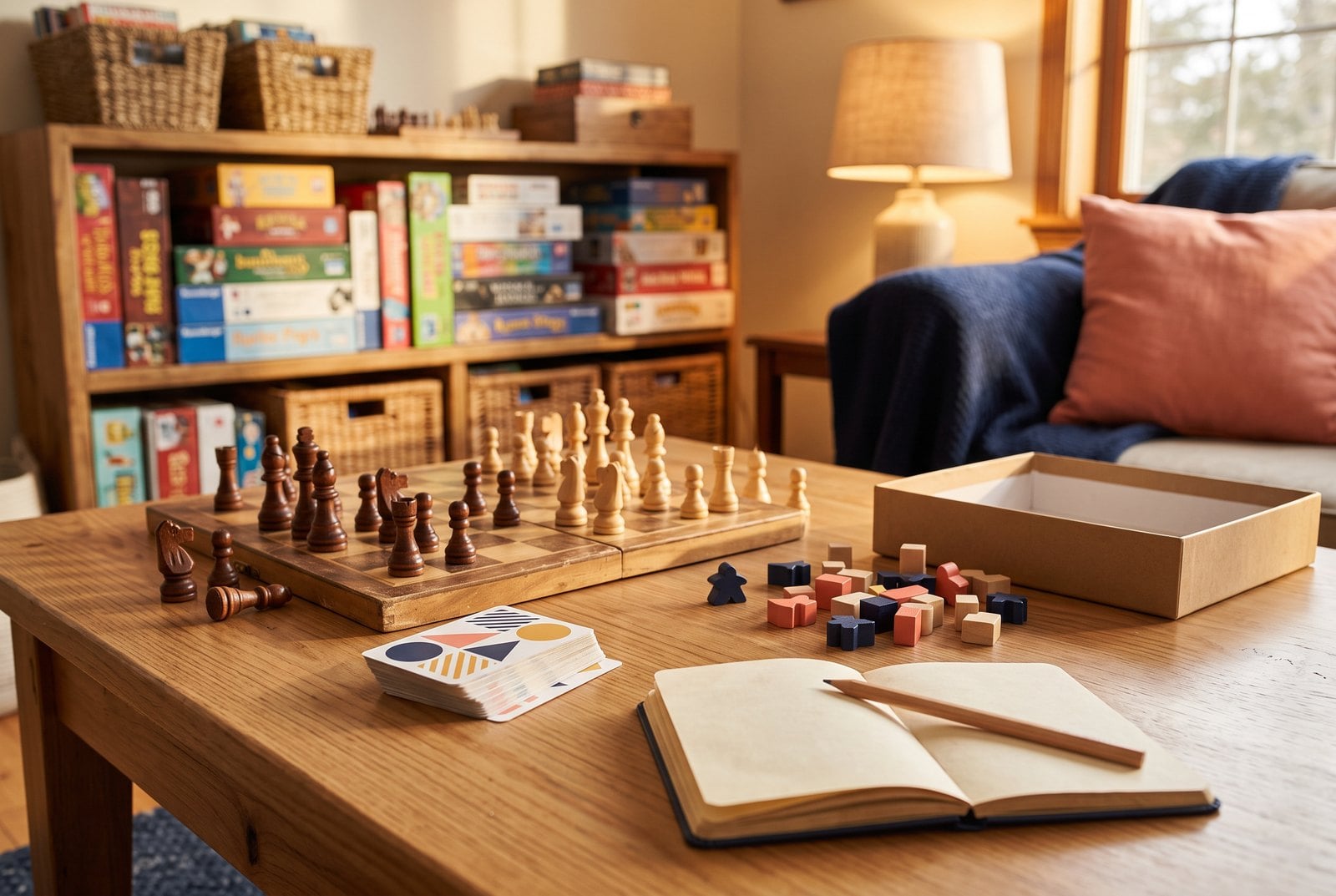
The best logic puzzles for kids, by age
“Logic puzzle” is a big tent. The right one is the one your kid can almost solve: hard enough to make them think, easy enough that they get there most weeks. Here’s where to start, and a few famous games that do the same job without looking like a worksheet.
Elementary (about kindergarten through 5th grade)
- Pattern puzzles. “What comes next?” with shapes, colors, or numbers. Draw them yourself on an index card if you want; you don’t need a printable.
- Which one doesn’t belong? Four pictures or four numbers, one odd one out, and the real question is “why?” Accept any reason they can defend.
- Beginner grid puzzles. Three friends, three pets, three clues. A three-by-three grid is plenty. Save the five-by-five for later.
- Riddles. The classic “I have keys but no locks” kind. Ask them to explain how they got it, not just whether they got it.
- Games that count: Guess Who (ruling things out), Connect Four (planning a move ahead), and SET (pattern spotting, and it scales up to adults).
Middle school (6th through 8th grade)
- Classic logic grid puzzles. Five people, five jobs, five clues. This is the age where the full grid finally clicks, and most free sites have a “medium” level built for it.
- Number logic. Sudoku and KenKen. Not math, exactly. Deduction with numbers as the pieces.
- Lateral-thinking riddles. The “a man walks into a bar and asks for water” type, where they ask yes-or-no questions until the story makes sense. Great for a kid who hates sitting still, because it’s a conversation.
- Chess puzzles. “Checkmate in one move” positions. You don’t have to be good at chess. You just have to be able to check the answer.
- Games that count: Mastermind (pure deduction), Battleship (probability and elimination), and Blokus (spatial planning).
High school (9th through 12th grade)
- Harder grid puzzles and nonograms (the picture-logic grids, sometimes called picross), which reward patience and careful bookkeeping.
- Knights and knaves. The truth-teller and liar puzzles. These are the on-ramp to formal logic, and teens who like them tend to like geometry proofs too.
- Estimation puzzles. “How many pizzas does our town eat in a year?” No right answer; the win is a chain of reasonable steps said out loud.
- Logic in the wild. Pull one ad, one headline, or one viral post and ask: what is this trying to get me to feel or do, and does the evidence actually support it? This is the version that follows them into adult life.
- Games that count: chess (the real thing, not just puzzles), Othello, and Codenames (deduction with other people’s brains in the mix).
One note on games: a strategy game is a legitimate Puzzle Friday. The rule is the same. Ten minutes of play, then two minutes of talking about why a move worked.
How to run the ten minutes so it builds thinking, not frustration
The puzzle is the easy part. The hard part is you, sitting on your hands. Here’s the routine we’d use:
- Put it down and say nothing for two minutes. Set the timer and let them struggle. The urge to jump in at the first sigh is strong. Resist it. Struggle is the part that does the work.
- After two minutes, ask questions instead of giving hints. “What do you know for sure?” “What can you rule out?” “If you had to guess, what would you try first, and why?” Questions keep the thinking on their side of the table.
- When the timer goes off, talk through the reasoning out loud. Right answer or wrong answer, ask them to walk you through how they got there. The explanation is the lesson. A wrong answer with clear reasoning is a better week than a lucky right one.
- Keep a puzzle log. An index card or a page in a notebook: the date, the puzzle, solved or not, and one sentence that starts with “I figured out that…” Over a semester, that log is proof your kid can look at. It’s also the first thing we’d show a skeptical grandparent.
- End on time. Unfinished is fine. “We’ll come back to it next week” is a sentence kids love, and it keeps the slot short enough to survive.
Put Puzzle Friday on the calendar before you do anything else
A habit with no slot is a wish. Grab the free Undated Monthly Planner from our free downloads hub, write your puzzle day on every week of the semester, and stick it on the fridge. Ten minutes a week is easy to keep when it’s already written down.
Free and cheap places to find logic puzzles
You never have to buy anything for this. Every source below was checked and live the day we published this post.
- Puzzle Baron’s logic puzzles. Classic grid puzzles, free to play online, sorted by difficulty. The easier ones suit middle schoolers; the hard ones will keep a teen busy.
- Brainzilla’s logic grid puzzles. Free grid puzzles with answers, and they print cleanly, which matters when you want the puzzle on paper instead of a screen.
- Math is Fun’s puzzle page. Logic puzzles, number puzzles, and riddles sorted by type, each with a solution. Good for the elementary years.
- KenKen. Free number-logic puzzles in several sizes. The three-by-three grids are fine for a fourth grader; the sixes are a real workout.
- Lichess puzzles. Free chess puzzles, no account required, and the site tells you when the move is right.
- Your public library. The children’s section almost always has a shelf of puzzle and brain-teaser books. Ask the librarian for logic puzzles by grade level; it’s a question they get, and they’re good at it.
If you’d rather own one book and be done with it, brainPLAY Trickiest Puzzles Ever from Highlights Press is a solid pick for the seven-and-up crowd: brain teasers, logic puzzles, and games in one book, so a semester of Fridays is covered. As an Amazon Associate we earn from qualifying purchases.
What this looks like after a semester
Nothing dramatic happens in week two. That’s normal. Somewhere around week six or eight, though, you’ll hear it: “Wait, let me rule some of these out first.” That sentence is the whole point. Your kid just reached for a strategy instead of a guess, and they did it without being told to.
Then it starts showing up elsewhere. In the word problem they used to skip. In the history reading, when they notice a claim that doesn’t follow from the evidence. In the argument with a sibling, when they say “that’s not what I said” and are, for once, correct. You won’t be able to prove the puzzle did it. You’ll know anyway.
If your kid is in grades six through eight and the rest of the week needs the same kind of small, repeatable system (mornings, homework, the backpack), our Middle School Launch Kit ($17) is four of those systems in one place, built for the kid and the parent to run together. And we’re building a set of logic discussion cards for exactly this ten-minute slot; until they’re ready, the free sources above are plenty.
Logic puzzles for kids: your questions, answered
What age can kids start doing logic puzzles?
Around five or six, with pattern puzzles, sorting games, and “which one doesn’t belong.” Grid puzzles with clues usually click somewhere between eight and ten. Start with whatever your kid can almost do, and move up when it gets easy.
What if my kid hates puzzles?
Change the format, not the habit. A deduction game like Guess Who or Mastermind is a logic puzzle with better packaging. Lateral-thinking riddles work for the kid who’d rather talk than write. Keep the ten minutes and the day; swap everything else until something sticks.
Should I help when they get stuck?
Wait two minutes first. Then help with questions (“What can you rule out?”) instead of answers. If they’re truly stuck at the end of the ten minutes, that’s fine. Say “we’ll come back to it,” and come back to it next week.
Do logic puzzles actually help with schoolwork?
They practice the same moves schoolwork needs: holding several facts at once, ruling things out, checking an answer against the clues. We won’t quote you a study we can’t stand behind. What we can tell you is that a kid who reasons out loud once a week gets noticeably more willing to reason out loud the rest of the week, and that’s the skill the homework was asking for all along.
Is ten minutes really enough?
For a habit, yes. If your kid wants to keep going, let them, but don’t make the slot longer on purpose. The short slot is what makes it survive the busy weeks, and the busy weeks are most of them.
One day. Ten minutes. One puzzle. Start this week, keep the log, and tell us in a semester what your kid said that surprised you.
Rooting for you,
Team Angie
P.S. Every freebie in our free downloads hub is built the same way as this post: one small system you can start this week, no big overhaul required. Take the planner, take the study plan, take whatever fits the kid in front of you.