
Why Campus Involvement Matters: Boost Success and Wellbeing
Most people think extracurricular activities are just resume padding for college applications. But research reveals something far more powerful: campus involvement improves GPA, test scores, and college attendance while transforming students’ social and emotional lives. Whether you’re a student exploring your options or a parent wondering how to support your child, understanding the real benefits of campus involvement can change everything. This guide breaks down the evidence and gives you practical steps to thrive through meaningful participation.
Key Takeaways
| Point | Details |
|---|---|
| Academic gains | Students involved on campus achieve higher GPAs and graduation rates. |
| Wellbeing boost | Extracurriculars improve mental health, social skills, and life satisfaction. |
| Smart involvement | Choosing 1-2 passion-driven activities maximizes benefits and reduces stress. |
| Parental support | Parents help most by mentoring, not micromanaging student choices. |
| Take action | Start with your interests, balance your schedule, and seek community support. |
What is campus involvement and why does it matter?
Campus involvement means actively participating in the life of your school beyond the classroom. It includes clubs, sports teams, student government, volunteer work, creative arts programs, and more. These activities create a sense of community and belonging that makes school feel like more than just a place to take tests.
Here’s what matters most: involvement isn’t reserved for high achievers or natural leaders. Every student benefits, regardless of their starting point. Evidence shows that extracurricular activities enhance psychosocial outcomes like self-esteem and life satisfaction. Students who participate also show lower rates of risky behaviors and stronger leadership skills.
Typical forms of campus involvement include:
- Academic clubs focused on debate, robotics, science, or language
- Student government and leadership organizations
- Community service and volunteer programs
- Creative arts like theater, band, choir, or visual arts
- Athletics and recreational sports teams
Each type offers unique benefits, but all share one thing: they connect you with peers who share your interests. That connection becomes the foundation for growth. If you’re looking for inspiration, check out these extracurricular activity examples to spark ideas.
Academic benefits of campus involvement
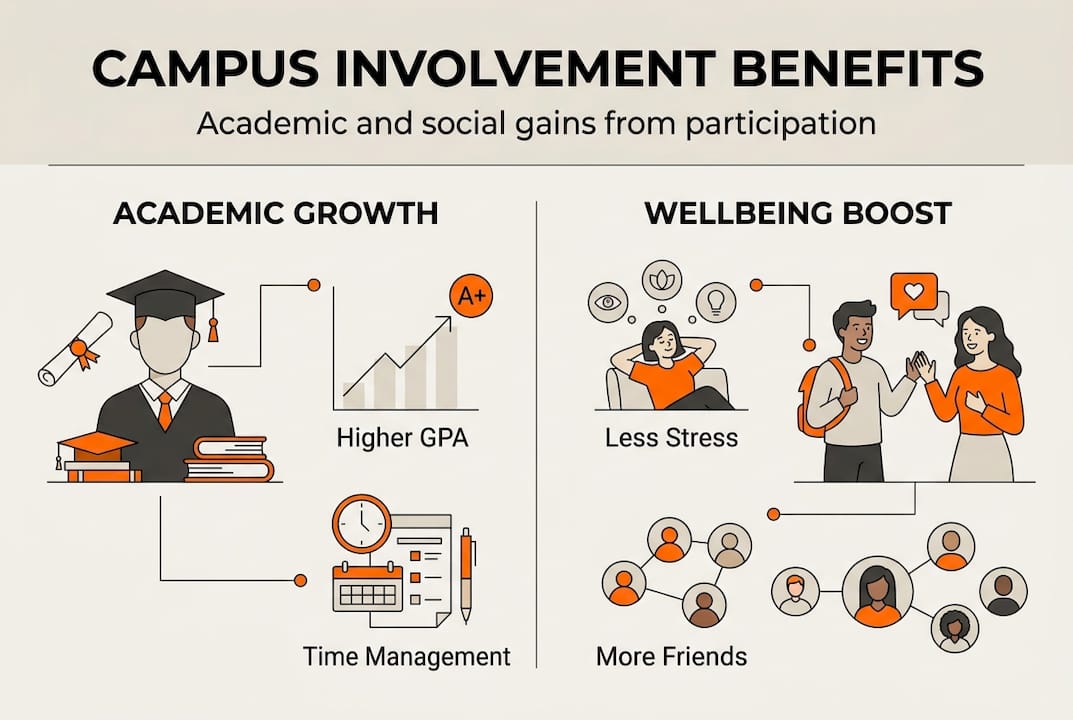
The academic impact of campus involvement isn’t just anecdotal. It’s measurable, significant, and backed by solid research. Students involved in extracurriculars have higher GPAs and college attendance rates compared to their uninvolved peers.
Let’s look at the numbers:
| Student Group | Average GPA | College Attendance Rate |
|---|---|---|
| Involved students | 3.2 | 78% |
| Non-involved students | 2.8 | 63% |
| Student athletes | 3.1 | 75% |
| Volunteers (100+ hours) | 3.4 | 82% |
These differences compound over time. Involved students are 15% more likely to attend college, opening doors to opportunities that shape entire careers. The skills you gain through sustained involvement don’t disappear after graduation. They persist into your professional life, making you more adaptable, collaborative, and resilient.
Why does involvement boost academic performance? It teaches time management, accountability, and goal setting. When you commit to a team or club, you learn to balance competing priorities. You develop organizational systems that help you stay on top of homework while meeting practice schedules or project deadlines.
These aren’t just nice side effects. They’re core competencies that translate directly to academic success. Students who master them through involvement carry those habits into every class, every assignment, and every test. For more ways to build these skills, explore student success strategies that work across all areas of life.
How campus involvement boosts social and emotional wellbeing
Academic gains tell only half the story. The social and emotional rewards of campus involvement are equally transformative and often more immediately felt.
Participation in extracurriculars builds essential life skills:
- Social competence through regular peer interaction and collaboration
- Leadership abilities by taking on roles and responsibilities
- Resilience when facing challenges, setbacks, or competition
- Emotional regulation in high-pressure or team-based situations
Research shows that extracurriculars are linked to improved self-esteem and a 20% decrease in substance abuse. Students report 15% higher life satisfaction when they’re actively involved. These aren’t small improvements. They represent fundamental shifts in how students experience their daily lives.

Involvement decreases isolation by creating natural opportunities for friendship. When you join a club or team, you automatically connect with people who share your interests. Those shared experiences become the basis for genuine relationships. You’re not just sitting next to someone in class anymore. You’re working together toward common goals, celebrating wins, and supporting each other through losses.
These peer networks provide crucial mental health support. Having friends who understand your challenges makes stress more manageable. You’re less likely to feel alone when facing academic pressure, family issues, or personal struggles.
Pro Tip: Prioritize joining at least one activity that emphasizes community and support over competition. The social bonds you form in these spaces protect your mental health during tough times.
For more guidance on maintaining balance while staying involved, read about balancing academics and activities effectively.
Finding your fit: Motivation, balance, and avoiding burnout
Not all involvement is created equal. The reason you join an activity matters just as much as the activity itself. Students motivated by genuine interest experience far greater benefits than those pushed by external pressure.
| Motivation Type | Academic Benefit | Social Benefit | Stress Level |
|---|---|---|---|
| Intrinsic (personal interest) | High | High | Low to moderate |
| Extrinsic (resume building) | Moderate | Low | High |
When you choose activities you actually care about, participation feels energizing rather than draining. You’re more likely to stick with it, go deeper, and develop real expertise. External motivation, like parental pressure or college application anxiety, reduces these positive effects and increases stress.
Balance is critical. Research shows that benefits level off after about 20 hours per week of involvement. Beyond that threshold, over-involvement can increase stress and reduce positive effects, especially for minoritized or lower-income students who may face additional barriers.
Here’s how to find your fit and maintain healthy balance:
- Reflect on your genuine interests without worrying about how they look on paper
- Choose 1-2 activities that align with those interests and your schedule
- Set clear time limits to protect academic performance and personal wellness
- Maintain non-negotiables like sleep, study time, and family connections
- Re-evaluate regularly to ensure your commitments still serve you
Pro Tip: Quality of commitment counts far more than quantity. Deep involvement in one meaningful activity outperforms shallow participation in five. You’ll build stronger skills, form closer relationships, and avoid burnout.
If you’re considering unique options, learn whether internships count as extracurriculars and how they compare to traditional activities. When challenges arise, use these strategies for navigating academic challenges while staying involved.
How parents can support healthy campus involvement
Parents and guardians play a vital role in helping students get the most from campus involvement without crossing into pressure or over-management. The goal is to support while fostering independence.
Parents help by attending events, guiding resource use, and respecting student independence. This balance allows students to develop ownership over their choices while knowing they have backup when needed.
The most effective parent support comes from mentoring rather than directing. Let your student lead their involvement choices while you provide structure, encouragement, and practical help.
Here are specific ways to support without overstepping:
- Offer interest-aligned encouragement by asking what activities excite them
- Provide practical support like transportation, equipment, or attendance at events
- Connect them with resources including school counselors, advisors, and older students
- Discuss wellness openly to help them recognize signs of overload or stress
- Respect their autonomy in choosing activities and deciding when to step back
Recognize that equity matters. Not all students have equal access to involvement opportunities. Transportation, fees, work obligations, and family responsibilities create real barriers. Parents can advocate for more accessible options at school and help their student navigate these challenges without shame.
Encourage your student to use organizational tools and systems. Check out these organization tips for students to help them manage multiple commitments. Remember that involvement should support, not replace, academic goals and college and career readiness.
Taking action: Simple steps for getting involved
Ready to start or deepen your campus involvement? Here’s a clear roadmap that makes the process less intimidating and more intentional.
- Assess your interests honestly by listing activities that genuinely appeal to you
- Explore available options through school websites, activity fairs, and peer recommendations
- Attend first meetings for 2-3 activities to get a feel for the culture and commitment
- Commit thoughtfully to 1-2 activities that align with your schedule and values
- Revisit your choices each semester to ensure they still serve your goals
Don’t hesitate to connect with school counselors or older students for advice. They’ve navigated these decisions before and can offer insights about time commitments, group dynamics, and hidden opportunities.
Use organizational tools to manage your commitments. Checklists, calendar apps, and school resources help you track deadlines, meetings, and events without feeling overwhelmed. The key is building systems that work for your brain and schedule.
Remember that depth in 1-2 activities outperforms shallow engagement in many. Colleges, employers, and graduate programs value sustained commitment and growing responsibility over a long list of brief participations. You’ll also form deeper connections and develop more meaningful skills.
Looking for specific ideas? Browse these options to find new activities that match your interests. Once you’re involved, use smart organization for success to keep everything running smoothly.
Extra resources for students and parents
With a solid action plan for campus involvement, you’re ready to build complementary skills that support both academic and extracurricular success. Managing your time, studying effectively, and maintaining wellness all work together to create a balanced, fulfilling student experience.
The strategies you’ve learned here about choosing activities, setting boundaries, and staying motivated apply to every area of student life. Whether you’re preparing for exams, managing projects, or simply trying to feel less stressed, the same principles of intentionality and balance make the difference.
For students looking to strengthen their academic foundation, explore proven study skills strategies that complement your involvement. Parents and students can work together using practical balance tips for students to ensure nothing falls through the cracks.
Remember, campus involvement isn’t separate from academic success. It’s a powerful tool that enhances learning, builds essential skills, and creates the social connections that make school meaningful. By approaching involvement thoughtfully and maintaining healthy boundaries, you set yourself up for success that extends far beyond graduation.
Frequently asked questions
How many campus activities should I join for the best results?
One or two deeply engaging activities yield the best academic and personal benefits without risking overload. Benefits level off and may reverse after excessive involvement, so prioritize depth over breadth.
Can campus involvement help students with anxiety or social struggles?
Yes, students in activities report better self-acceptance, lower anxiety, and stronger peer support networks. Involvement improves psychosocial outcomes including self-esteem and wellbeing across diverse student populations.
What role should parents play in campus involvement?
Parents should support and guide, but let students lead their choices for maximum growth and motivation. Parents help most by mentoring rather than directing, encouraging resource use and independence.
Does involvement help with college applications and scholarships?
Yes, active participation boosts college attendance rates and makes applications more competitive. Students involved in activities are 15% more likely to attend college, opening doors to scholarship opportunities.
How can I balance extracurriculars with academics?
Set time limits, choose activities carefully, and schedule regular check-ins to maintain academic focus. Balance and mindful choice prevents overload and supports both academic and activity success.
Recommended
- Balancing Lifestyle and Academics for Student Success
- The Ultimate College Bucket List for Students
- How to Make Friends in College: Your Guide to Building Lasting Connections
- Cliques, Friend Groups, and Finding Your People
- Step-by-step guide to work-life balance for students – Optio Station: Best Project Management App for Prioritization