
Step-by-step productivity tips: achieve more every day
You have three assignments due, a group project falling apart, and your phone buzzing every five minutes. Sound familiar? Academic life can feel like a constant race where the finish line keeps moving. The good news is that productivity is not a talent you either have or don’t have. It’s a skill you can build, one step at a time. In this guide, I’m walking you through practical, research-informed strategies to help you take control of your schedule, reduce stress, and actually enjoy the process of getting things done.
Key Takeaways
| Point | Details |
|---|---|
| Preparation is key | A productive workspace and the right tools set the stage for focused work. |
| Follow clear steps | Sequential strategies like prioritizing and using time blocks can transform productivity. |
| Learn from setbacks | Recovery after mistakes is part of building lasting habits. |
| Measure and adapt | Tracking your progress ensures long-term success and improvement. |
Understanding the productivity problem
Before you can fix something, you need to understand what’s breaking it. For most students, productivity struggles come down to a few familiar culprits.
Here are the most common obstacles that get in the way:
- Constant notifications from social media, messaging apps, and email pull your attention away every few minutes
- Procrastination often disguised as “I’ll start when I feel ready” keeps important tasks on hold indefinitely
- Lack of structure means your day fills up with low-priority activities while the important stuff gets pushed aside
- Unrealistic expectations lead to overwhelm when you can’t complete a 10-hour to-do list in one afternoon
These obstacles don’t just hurt your grades. They increase stress, eat into your personal time, and make studying feel like a punishment. Many students struggle to manage time due to conflicting priorities and distractions, and that cycle is exhausting.
“The first step to becoming more productive is recognizing that your current system isn’t working and being willing to try something new.”
The great news? You can absolutely break this cycle. Exploring productivity hacks for students and learning about increase productivity methods gives you a solid starting point to build from.
Getting ready: Tools, mindset, and workspace
Once you recognize your productivity challenges, it’s important to set yourself up for success before diving into new habits. Think of this as your pre-game warm-up.
Here’s what you’ll want to gather and set up:
- A planner or digital calendar to capture tasks, deadlines, and appointments in one place
- A timer (your phone works fine) for structured study sessions
- Phone settings adjusted to limit notifications during study time
- A reliable workspace that is clean, well-lit, and free from clutter
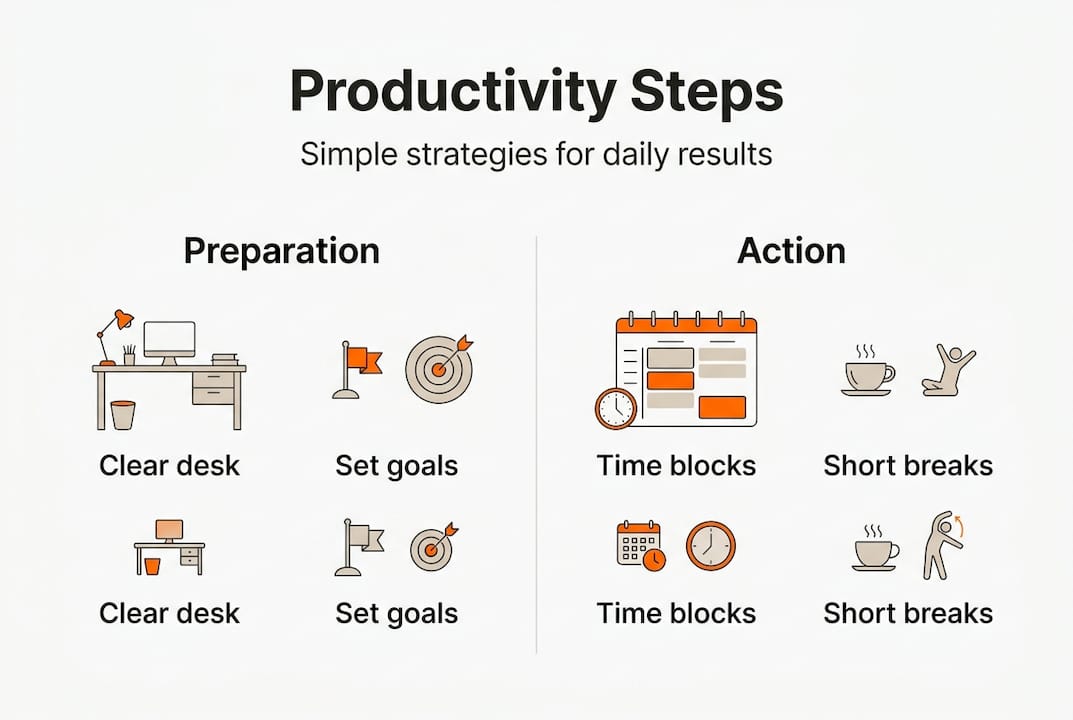
Preparing your workspace impacts focus and overall output more than most students realize. Even small changes like clearing your desk or using a lamp instead of overhead lighting can shift your mindset into study mode.

| Tool | Purpose | Free or paid |
|---|---|---|
| Google Calendar | Schedule and time blocking | Free |
| Notion | Notes, tasks, and planning | Free/Paid |
| Forest App | Focus timer with gamification | Paid |
| Todoist | Task management and reminders | Free/Paid |
| Physical planner | Daily and weekly planning | Varies |
Mindset matters just as much as your tools. Adopting a growth mindset means believing that your study skills can improve with effort. Set realistic goals, not perfect ones. If you’re just starting out, building a study routine is one of the most powerful things you can do. Pair that with a solid study planner checklist and you’ll feel organized almost immediately.
For teens looking to build structure into their daily lives, this routine building for teens resource offers a helpful framework to get started.
Pro Tip: Try the app “Focusmate” for virtual co-working sessions. Knowing someone else is working alongside you (even online) creates accountability and makes it much easier to stay on task.
Step-by-step guide: Productivity strategies that work
Now you’re ready to act. Here’s the proven sequence to boost your productivity step by step.
- Prioritize your tasks with a short to-do list. Write down your top three must-do tasks for the day. Just three. This keeps you focused and prevents the overwhelm of a 20-item list.
- Time block your study sessions using the Pomodoro Technique. Study for 25 minutes, then take a 5-minute break. After four rounds, take a longer 15 to 30 minute break. This method keeps your brain fresh and your focus sharp.
- Eliminate multitasking completely. I know it feels efficient, but multitasking actually slows you down and increases errors. Focus on one subject or task at a time.
- Use productivity apps for reminders and tracking. Apps like Todoist, Notion, or even a simple phone alarm can keep you on schedule and remind you of upcoming deadlines.
- Review and adjust weekly. Every Sunday, spend 10 minutes looking at what worked and what didn’t. Adjust your approach for the coming week.
Breaking work into chunks with specific goals makes large tasks manageable and far less intimidating. Your study schedule guide can help you map this out visually.
“Consistency beats intensity every time. Showing up for 30 focused minutes daily will outperform a single 5-hour cramming session every week.”
Here’s a quick comparison to help you decide which study approach fits your needs:
| Method | Best for | Drawback |
|---|---|---|
| Solo study | Deep focus, complex topics | Can feel isolating |
| Group study | Accountability, discussion-based subjects | Risk of distraction |
| Pomodoro sessions | Short bursts of concentration | Needs consistent timing |
| Time blocking | Full-day planning | Requires discipline |
For a real-world example of how to structure your hours, check out this productive day schedule built specifically for students. And if you want to understand the bigger picture of how tasks flow together, the productivity workflow for students guide breaks it down beautifully.
Pro Tip: Color-code your planner or calendar by subject or priority level. Visual organization makes it easier to spot where your time is going and where you need to adjust.
Troubleshooting: Common mistakes and how to recover
Not every attempt will go smoothly, and that’s completely okay. Here’s how to handle setbacks without losing your momentum.
Watch out for these common productivity mistakes:
- Skipping breaks because you feel like you’re on a roll. Breaks are not optional. They prevent mental fatigue and actually improve retention.
- Chasing perfection on every assignment. Done is better than perfect, especially when you have multiple deadlines competing for your attention.
- Over-scheduling your day with back-to-back tasks and no buffer time. Life happens, and your schedule needs room to breathe.
- Ignoring your well-being by cutting sleep or skipping meals to study more. This backfires quickly.
Recognizing and correcting mistakes like overcommitting and ignoring well-being is crucial for sustained productivity. Burnout is real, and it can set you back far more than a missed study session ever would.
Warning signs of burnout include constant fatigue, loss of motivation, difficulty concentrating, and feeling detached from your goals. If you notice these signs, it’s time to reset, not push harder.
How to get back on track after a setback:
- Start with just one small, easy task to rebuild momentum
- Revisit your goals and remind yourself why they matter to you
- Adjust your schedule to be more realistic going forward
- Talk to a friend, mentor, or counselor if you’re feeling overwhelmed
Pro Tip: Celebrate small wins. Finished a chapter? Completed your to-do list? Acknowledge it. Positive reinforcement builds the habit loop that keeps you coming back. Check out these smart productivity hacks and school productivity hacks for more recovery strategies.
Tracking your progress and sustaining productive habits
Once you’ve started, measuring your improvement is key to staying motivated and growing further. You can’t manage what you don’t measure.
Here are simple ways to track your productivity:
- Daily reflection: Spend 5 minutes at the end of each day noting what you completed and what got in the way
- Weekly habit tracker: Use a simple grid in your planner or a free app to mark off completed habits each day
- Productivity journal: Write brief notes about your energy levels, focus quality, and mood to spot patterns over time
- Study group check-ins: Share your weekly goals with a study partner or group for added accountability
Tracking progress and adjusting strategies improves long-term productivity in a meaningful way. It also gives you something to look back on when you need a confidence boost.
Here’s a simple milestone table you can adapt for your own use:
| Week | Goal set | Goal achieved | What worked | What to improve |
|---|---|---|---|---|
| Week 1 | Study 5 days | 4 days | Pomodoro sessions | Reduce phone use |
| Week 2 | Finish 2 assignments early | Yes | Time blocking | Start earlier in day |
| Week 3 | No all-nighters | Yes | Better sleep schedule | Stick to break times |
| Week 4 | Review all notes weekly | Partial | Sunday review habit | Be more consistent |
Using a study planner checklist makes this tracking process feel organized and satisfying. And if you want to add a social element to your accountability, learning how to create study groups can make the journey a lot more fun and effective.
Take your productivity further with proven resources
You’ve got the foundation now, and that’s genuinely exciting. But building lasting productivity habits takes ongoing support, reflection, and the right tools in your corner. At Learning with Angie, I’ve put together a full library of resources designed specifically for students like you. Whether you want to go deeper with a productivity workflow guide, follow a step-by-step time management plan, or explore even more powerful productivity hacks, there’s something here to help you level up. You don’t have to figure this out alone.
Frequently asked questions
What is the first thing I should do to improve my productivity?
Prioritizing your tasks sets the foundation for effective productivity. Start by writing down your top three most important tasks for the day and tackle those first before anything else.
How do I stay motivated to follow new productivity habits?
Set small, achievable goals you can realistically hit within a week. Tracking your progress regularly has been shown to boost motivation and consistency over time.
What should I do if I get distracted while studying?
Minimizing distractions increases focus and effective study time significantly. Remove physical clutter, use apps to block notifications, and always work in a dedicated study space.
Is it better to study solo or in groups for productivity?
Both approaches have real benefits depending on your learning style and the type of task. Study groups boost accountability for discussion-based subjects, while solo work tends to suit deep focus tasks better.