ADHD Study Strategies That Bring Structure, Not Shame
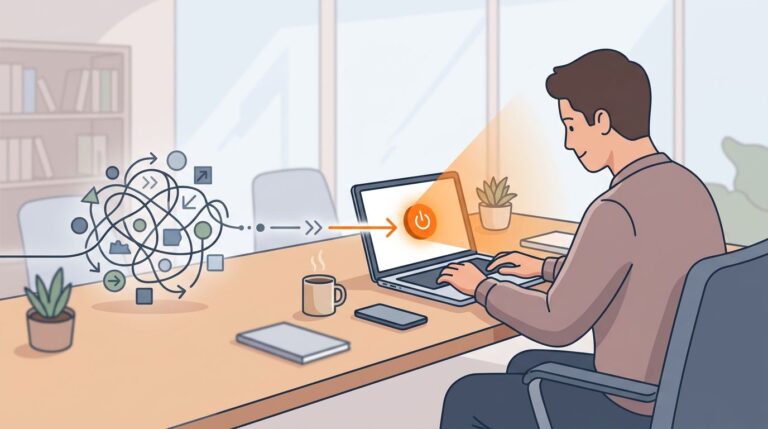
You open your laptop to start homework, then somehow you are watching a video, replying to three texts, and wondering why the assignment still isn’t done. If you find yourself trapped in a cycle of procrastination, you do not need a lecture about trying harder. Instead, you need effective ADHD study strategies that make it easier to begin, easier to return after a distraction, and harder for deadlines to sneak up on you. Improving your time management does not mean your brain is broken; it just means you need a system that functions well without depending on perfect motivation.
Key Takeaways
- ADHD study strategies are most effective when they reduce decisions, visual clutter, and the pressure to do everything at once, which helps support your executive functioning.
- A short, visible plan is far more effective than a giant to-do list hidden away on your phone.
- Starting with a tiny first step can help you bypass the most difficult hurdle, which is often just beginning the task.
- Using active recall and short study blocks is a much more efficient way to learn than rereading notes for hours on end.
- Accessing school support, accommodations, and medical care are valid, essential tools rather than signs that you have failed.
Start With the Right Rule: No Shame, Only Information
Let’s clear something up first. Forgetting an assignment, zoning out during a chapter, or needing five tries to start an essay doesn’t mean you’re lazy. It means a system built around the assumption that you will remember everything and start immediately probably isn’t working for you.
ADHD can affect executive functions like task initiation, time awareness, working memory, and organization. That makes school feel extra annoying because school is essentially a parade of deadlines, instructions, and tiny details. When you struggle with time blindness, these deadlines often feel invisible until the very last second. The Attention Deficit Disorder Association’s study tips put it plainly: distraction and motivation can get in the way of learning, but practical changes can make studying more manageable.
When something goes wrong, skip the self-criticism and ask a better question:
“What made this task hard to start, finish, or remember?”
Maybe the directions were buried in Google Classroom. Maybe your desk had three weeks of clutter on it. Maybe “study for biology” was too vague for your brain to grab onto. That is useful information. By identifying these specific barriers, you can adjust your environment and study systems to better support your working memory and time management needs.
Your goal isn’t to become a person who never gets distracted. Honestly, nobody is that person. Your goal is to build a setup that helps you notice the distraction, reset, and keep moving without turning one rough afternoon into a full academic meltdown.
Build a Weekly Plan You Can Actually See
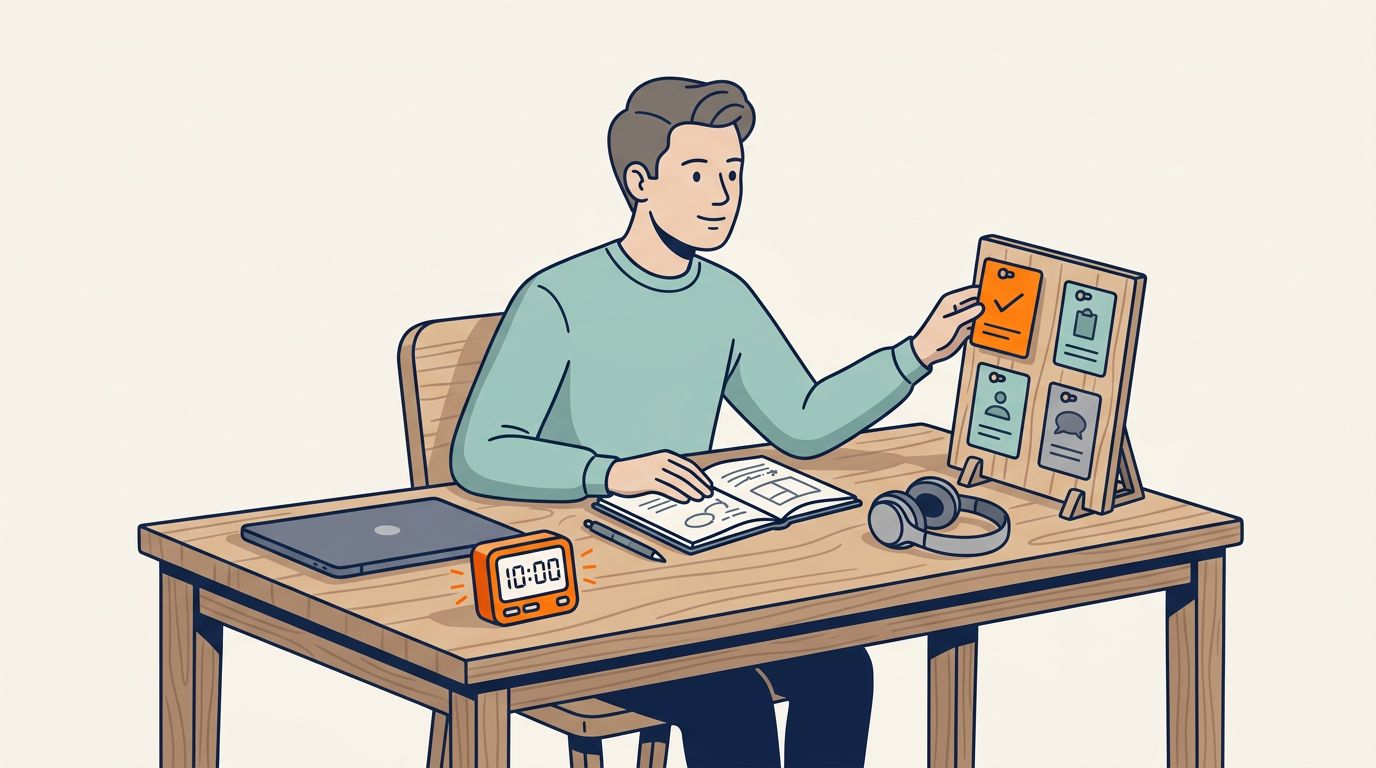
A planner only helps if you look at it. A complicated color-coded system with 14 tabs might look amazing on Pinterest, but it won’t save you if you avoid opening it. By creating visual schedules, such as using a paper planner or a whiteboard near your desk, you keep your goals in sight and reduce the mental load of remembering deadlines.
Pick one home base for school tasks. This can be a physical planner, Google Calendar, Notion, Apple Reminders, or a whiteboard. You do not need every app. You need one place that answers the question, “What is due next?”
Once a week, ideally on Sunday or Monday, spend 10 minutes doing a quick school reset. This session is a vital part of your time management routine. Check your school portal, email, syllabus, and any class group chats where teachers drop surprise reminders. Then, write down every deadline you can find.
Use this simple system:
| What to add | Example |
|---|---|
| Due date | English essay due Friday |
| First tiny step | Open document and write title |
| Work session | Tuesday, 4:30 to 5:00 PM |
| Next checkpoint | Find two sources by Wednesday |
The important part is the work session, not only the due date. “Essay due Friday” is information. “Find two sources Tuesday at 4:30” is a concrete plan.
Big assignments need mini-deadlines because your brain may register “due in two weeks” as “not real yet.” Break a research paper into research, outline, first paragraph, rough draft, editing, and submission. Each part gets its own calendar spot.
If your planner is already a mess, do not restart it with a fancy new system at 11:48 PM. Cross out what no longer matters, list what is due this week, and begin there. A messy plan you use beats a perfect plan you abandon.
Make Starting Almost Ridiculously Easy
The most difficult part of homework is often the moment before you begin. Your brain sees a 12-question math sheet and responds like it has been asked to lift a car.
Don’t tell yourself to finish chemistry. Give yourself a first move so small it feels almost silly.
Try these low-friction starting points:
- Put the worksheet on your desk.
- Write your name at the top.
- Read question one without solving it.
- Set a timer for five minutes.
- Decide what happens after the timer rings.
That last step matters. You can keep working, take a break, or switch tasks. But most of the time, getting started creates enough momentum to continue.
This is also why vague tasks are terrible for ADHD brains. “Study history” gives you no clear doorway. “Answer the first three review questions” gives you somewhere to step.

When you curate your study environment, set it up for the assignment you are doing now rather than every possible project you might do later. Put out one notebook, one pencil, and the materials for the current class. Everything else can stay in your backpack, a drawer, or a separate pile. To further minimize distractions within your space, consider using noise-canceling headphones or playing white noise to help lock in your concentration.
A clean desk won’t magically give you focus. But it removes the visual noise competing for your attention. The University of Illinois ADHD study strategies also recommend a consistent study space and routine, along with frequent breaks.
If your bedroom makes you want to nap, try the kitchen table, library, or a quiet corner of a coffee shop. Sometimes a change of location tells your brain that it is time to work.
Use Short Study Blocks and Active Recall
Studying for four miserable hours is not a badge of honor. It often turns into 45 minutes of staring, 30 minutes of scrolling, and a weird amount of time reorganizing your pens.
Short blocks are friendlier to a brain that needs urgency and variety. Start with 25 minutes of focused work followed by a five-minute break. This is the Pomodoro technique, but you can adjust it to fit your needs. If ten minutes is your realistic starting point, that still counts as progress.
During your break, prioritize physical movement. Stand up, refill your water, do some light stretching, or look out the window. Do not open social media unless you enjoy turning a five-minute break into an accidental 45-minute disappearance.
To maximize your results, move away from passive methods like simply reading or choosing to rewrite notes, which rarely help information stick. Instead, shift your focus to active learning. This approach forces your brain to work harder, which strengthens memory retention.
Try these active learning methods to improve your study sessions:
- Retrieval practice: Close your notes and write down everything you remember about the topic, often called blurting.
- Turn headings into questions and answer them without looking at your source material.
- Use flashcards to test your knowledge, but say the answer out loud before flipping the card.
- Teach the concept to a sibling, friend, stuffed animal, or pet. This is known as the Feynman technique, and it quickly highlights gaps in your understanding.
- Do practice problems before checking the example solution.
If you cannot remember something, it is not proof that you are bad at the subject. It is simply data that tells you exactly what to review next.
For long-term retention, use spaced repetition. Revisit material briefly after class, a few days later, and again the following week. You do not need a three-hour review session every night. Even ten minutes of focused, active work can keep information from vanishing before the test.
Make Distractions Less Convenient
You do not need to have superhuman willpower to resist your phone. Instead, you need to stop putting it in the front row of your study session.
Create a distraction-free study environment by putting your phone across the room, tucking it in a backpack, or leaving it with a parent if that feels helpful. Turn on Do Not Disturb, or use a website blocker during your study block. The goal is to make distractions take one extra step to reach.
Body doubling can also help you stay on track. This means working near another person who is also doing something productive. You do not need to talk. You might sit beside a sibling doing homework, join a virtual study room, or ask a friend to stay on a video call while you both work. The other person’s presence can make a task feel more real, which is a surprisingly effective way to stay accountable.
Additionally, keep a scrap sheet beside you labeled Later. When you suddenly remember you need to search for new headphones, text someone, or look up a random question, simply write it down. Your brain gets the relief of not forgetting, and you do not have to leave your assignment. To further maintain your focus, consider playing brown noise in the background, which can help tune out sensory input while you work.
Ask for Support Before Things Pile Up
You are allowed to need help. If ADHD is affecting your grades, attendance, test-taking, or ability to turn in work, talk with a parent, school counselor, teacher, or learning support staff member.
Depending on your school and your documentation, you may qualify for a 504 Plan, an IEP, or other classroom accommodations. These supports can include extended test time, reduced-distraction testing, written directions, and help breaking down long assignments. You might also ask your teacher to facilitate a study group to build accountability or provide multisensory learning materials that cater to different ways of processing information. These tools make a significant difference in staying organized and engaged.
You do not have to wait until you are failing every class to ask for help. A teacher may not realize that you understood the lesson but lost the assignment under a stack of papers in your backpack.
This article offers general educational ADHD study strategies, not medical advice. A licensed health professional can help with diagnosis, treatment questions, medication concerns, or changes in symptoms. School support and healthcare support can work together to help you succeed.
Frequently Asked Questions
Can I use the same study strategies if I am not medicated for ADHD?
Yes, these strategies are designed to support executive functioning regardless of whether you take medication. The techniques, such as body doubling, active recall, and breaking tasks into tiny steps, work by creating external structure for your brain to follow.
What should I do if I still get distracted even after using a timer?
It is completely normal to lose focus; the goal is simply to notice when it happens and return to the task without self-criticism. When you drift off, just gently reset your timer and try to complete one more small, manageable step.
Is it okay to change my study space if I get bored?
Absolutely, a change of scenery can act as a fresh start for your brain and help you regain focus. If your desk feels stagnant, moving to a library or a quiet kitchen table can provide the necessary environmental shift to re-engage with your work.
How do I stop feeling guilty when I have a productive slump?
Remember that school systems are often built for neurotypical brains, and having an off day is a sign of a challenging task, not a personal failure. Instead of focusing on the slump, treat it as data to help you adjust your environment or plan for next time.
Give Yourself a System You Can Return To
Your study system will not work perfectly every day. You will still forget things sometimes, and you will have weeks when your planner looks abandoned and your backpack contains nothing but a mysterious granola bar.
That does not mean the system failed. It simply means you need a reset, not a punishment.
The best ADHD study strategies are the ones you can restart on a Tuesday afternoon, after a rough quiz, without making yourself feel guilty first. You might incorporate tools like mind mapping to visualize complex concepts or a simple rewards system to keep your motivation high when tasks feel overwhelming. These ADHD study strategies, combined with small plans, visible reminders, and active study sessions, help turn school from a state of constant chaos into something you can handle one step at a time. Always remember that your system is there to support you, not to track your failures.
This post may contain affiliate links. If you make a purchase through these links, I may earn a small commission at no extra cost to you.
Want a head start? The Study Skills System Notion Template is built to hold the structure for you, so you are not relying on remembering the system as well as the material.