
7 Mistakes You’re Making with Your College Financial Plan (And How to Fix Them)
Managing money in college can feel like a full-time job you never applied for. Between tuition spikes, textbooks that cost as much as a new tablet, and the constant pull of social outings, your bank account is under constant pressure. If you feel like your finances are slipping through your fingers, you aren't alone. Most students wait until after graduation to take their money seriously, but that delay is the most expensive mistake you can make.
Are you ready to take control of your financial future before the first loan payment is even due?
By identifying these seven common pitfalls now, you can streamline your spending, maximize your aid, and build a foundation for long-term wealth while you’re still in the dorms.
1. Tracking Your Spending with Mental Math Instead of Tools
One of the quickest ways to drain your account is "mental budgeting." You check your balance, see a few hundred dollars, and assume you’re doing fine. But without a dedicated system, those $5 lattes and $15 Uber rides disappear into a black hole. When you don't track your daily output, you lose the ability to make informed decisions about your future.
How to fix it:
- Implement a Centralized Tracker: Use a tool that consolidates your income and expenses. Whether it's a custom Notion template or a physical planner, seeing your numbers in one place is essential.
- Audit Your Subscriptions: Check your bank statement for recurring charges like gym memberships or streaming services you no longer use.
- Review Weekly: Spend 10 minutes every Sunday morning reviewing what you spent. This keeps your goals top-of-mind and prevents "end-of-month" panic.

2. Borrowing Every Dollar You’re Offered
When your financial aid award letter arrives, it’s tempting to hit "Accept All." The extra loan money feels like a safety net or a bonus for your lifestyle. However, every "extra" dollar you borrow today will cost you double: or more: by the time you pay off the interest years later. Borrowing for a spring break trip or a new wardrobe is a high-interest mistake that your future self will regret.
How to fix it:
- Calculate Your True Needs: Subtract your total costs (tuition, housing, books) from your available cash and grants. Only borrow the gap.
- Return the Surplus: If you receive a refund check that exceeds your educational needs, you can often return it to the lender within a certain timeframe to avoid interest.
- Understand Your Rates: Differentiate between subsidized and unsubsidized loans. Subsidized loans won't accrue interest while you’re in school, making them the superior choice.
3. Treating Your Refund Check Like a Lottery Win
If you receive a financial aid refund check, it’s easy to treat it like "found money." In reality, that check is usually a loan that you have to pay back. Spending it on electronics, trendy clothes, or expensive dinners out is a fast-track to financial stress.
How to fix it:
- Earmark for Essentials: Immediately move that money into a separate account specifically for rent, groceries, and books.
- Pay it Back Early: If you have extra left over at the end of the semester, use it to pay down the principal on your highest-interest loan. This will enhance your long-term savings significantly.
- Automate Your Payments: Use your banking app to set up automatic transfers for your monthly bills so you never see the "extra" money in your main spending account.
4. Stopping the Scholarship Hunt After Freshman Year
Many students think the "Scholarship Hunt" is only for high school seniors. They put in the effort once and then never look again. This is a massive missed opportunity. Thousands of dollars in departmental and local scholarships go unclaimed every year because students assume they aren’t eligible or simply forget to apply.
How to fix it:
- Set a Recurring Task: Block out two hours every month to search for new opportunities. Check your university’s financial aid office and local community foundations.
- Leverage Your Major: As you progress in your degree, you become eligible for specialized departmental scholarships that weren't available to you as a freshman.
- Refine Your Essays: Keep a folder of your strongest application essays. You can effectivey repurpose them for different applications, saving you hours of work. For more tips on this, check out our Parent’s Guide to Winning Aid.

5. Confusing "Wants" with "Essential Needs"
Is a daily energy drink a need? Is the premium version of a study app essential? In the moment, everything feels like a necessity. However, failing to draw a hard line between survival expenses and lifestyle upgrades is how debt quietly accumulates. When you treat "wants" as "needs," you lose the margin required for true financial freedom.
How to fix it:
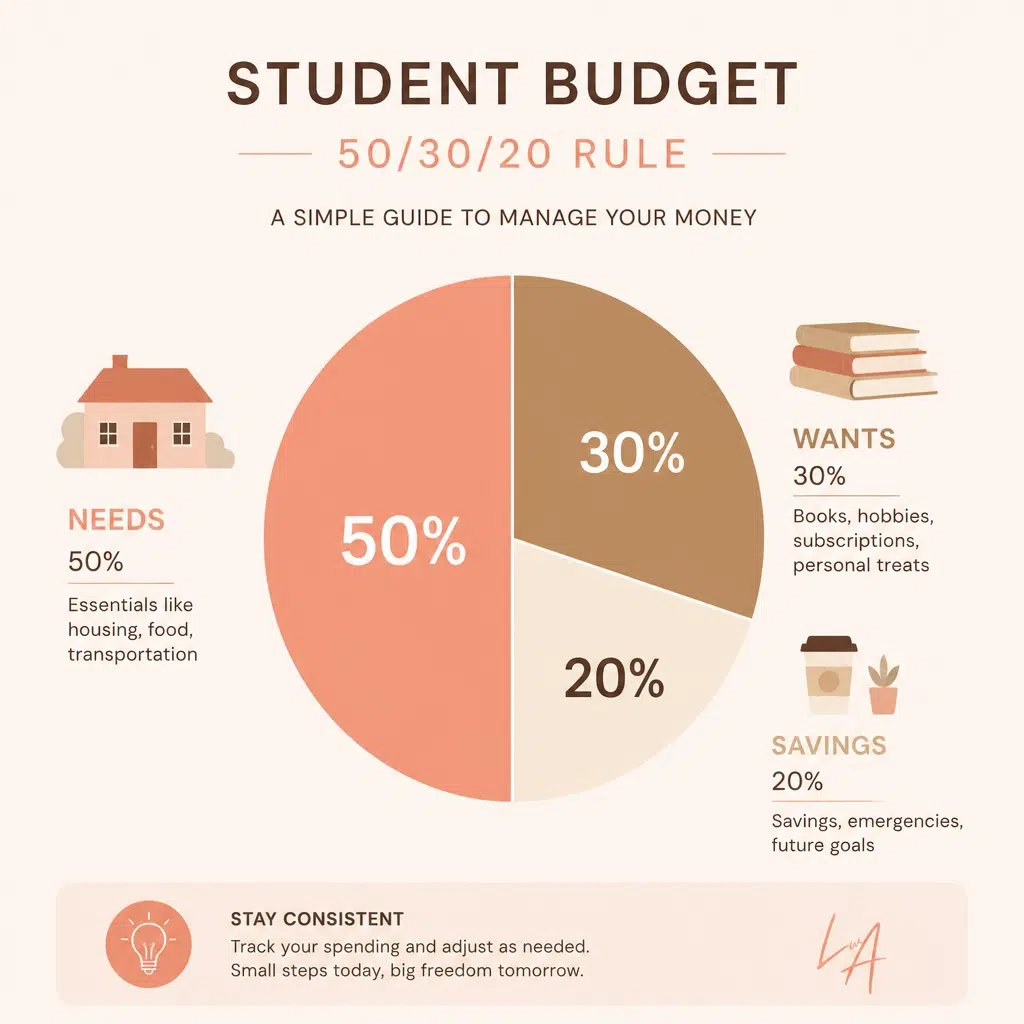
- The 50/30/20 Rule: Aim to spend 50% of your income on needs, 30% on wants, and 20% on savings/debt repayment. Our Student Budgeting 101 guide walks you through setting this up step by step.
- The 48-Hour Rule: If you see something you want to buy, wait 48 hours. If you still feel it’s essential after two days, check your budget before purchasing.
- Host No-Spend Nights: Challenge yourself to stay in once a week. This simple habit can save you hundreds over a semester. See our guide on No-Spend Nights for creative ideas.
6. Neglecting Your Emergency Fund
Most students live on a "break-even" cycle, meaning every dollar coming in is already spent. But what happens when your laptop breaks or you have an unexpected car repair? Without an emergency fund, you’ll be forced to rely on high-interest credit cards or take out more loans, digging a deeper hole.
How to fix it:
- Start Small: You don't need $5,000 today. Aim for a "Starter Fund" of $500. This covers the most common student emergencies.
- Automate Savings: Set your bank to transfer $10 or $20 from every paycheck or allowance into a separate savings account.
- Define an "Emergency": A sale at your favorite store is not an emergency. A medical bill or a required textbook is. Protect your fund fiercely.

7. Carrying a Monthly Credit Card Balance
Credit cards are excellent tools for building a credit score, but they are dangerous if misused. If you only pay the "Minimum Amount Due," you are signing up for years of high-interest payments. It’s easy to swipe the card now and tell yourself you’ll pay it off when you have a "real job," but the interest will grow faster than your entry-level salary.
How to fix it:
- Pay in Full Every Month: If you can't afford to pay the full balance by the due date, don't buy the item. Period.
- Set Low Limits: Call your bank and ask for a lower credit limit (e.g., $500). This prevents you from accidentally spending more than you can realistically pay back.
- Use Alerts: Set up text notifications for every transaction. This keeps your spending visible and helps you catch any fraudulent activity immediately.
[STOP THE REFUND TRAP]
If your refund check keeps disappearing faster than expected, you need a system that helps you plan before the money hits your account. The Student Refund & Loan Manager ($12) is designed to help you organize your refund, map out essential spending, and avoid turning short-term cash into long-term stress.
Take Control of Your Refund and use it with purpose:
- Track your refund clearly to make sure your money goes to books, rent, groceries, and other real essentials
- Plan loan usage intentionally to avoid borrowing more than you actually need
- Stay organized semester by semester so you can make smarter money decisions with less stress
Join The Community
Financial literacy is a lifelong journey, but the habits you build in college will define your 20s and 30s. Don't wait for graduation to start making smart moves.
Ready to level up your entire student lifestyle? Join our community to receive biweekly tips on productivity, life skills, and student success directly in your inbox. We provide the tools you need to stay organized and thrive, from smart organization tips to money management guides for kids.
Let's build your success story together.
Want a head start? The Ultimate Student Planner in my shop was made for exactly this — it’ll save you a ton of time.