Looking For College Scholarships? Here Are 10 Things You Should Know to Win More Money
Are you tired of worrying about how you’ll pay for next semester? Most students view scholarships as a "maybe" or a "someday," but the reality is that there is billions of dollars in free money sitting on the table every single year. The difference between the students who graduate debt-free and those who struggle often comes down to one thing: personal organization.
Winning scholarships isn't just about being the top of your class; it’s about being the most prepared. Ready to become the student who gets paid to learn? Here are 10 essential things you need to know to maximize your scholarship winnings and streamline your money management for students.
1. Start Your Search Way Earlier Than You Think
If you wait until the spring of your senior year to look for scholarships, you’ve already missed hundreds of opportunities.
- Year-Round Cycle: Scholarships have deadlines every single month, not just in the spring.
- Junior Year Strategy: High school juniors should start building their lists early. You can often apply for "early bird" awards before you even step into your senior year.
- The "Four-Year" Mentality: Don't stop searching once you get into college. Many awards are specifically for current college students, so keep your college application checklist updated throughout your entire degree.
2. Treat Scholarship Hunting Like a Part-Time Job
You cannot expect to win thousands of dollars by putting in twenty minutes of work once a month. The most successful scholarship winners treat the process with professional discipline.
- Schedule Deep Work: Dedicate 2–5 hours every single week to searching and applying.
- Consistency Wins: Applying to two scholarships a week adds up to over 100 applications a year. Even a 5% success rate on $1,000 awards means $5,000 in your pocket.
- Set Reminders: Use a digital planner or calendar to block out "Scholarship Hours" where you do nothing but write and research.

3. Prioritize Your "Small Ponds" First
It is tempting to go for the famous $50,000 national scholarships, but those are the hardest to win. To enhance your chances, you need to look where fewer people are looking.
- Local Organizations: Check with your local Rotary Club, Lions Club, or community foundations.
- Employer Benefits: Ask your parents if their companies offer scholarships for children of employees.
- Niche Interests: Are you a left-handed knitter who loves underwater basket weaving? There is probably a scholarship for that. The more specific the requirements, the lower the competition.
4. Build a Centralized Scholarship Toolkit
Stop hunting for your transcript every time you find a new application. Organization is the foundation of money management for students.
- Standardize Documents: Keep a folder on your desktop with your latest transcript, high-resolution headshot, and a copy of your FAFSA submission summary.
- The "Brag Sheet": Maintain a running list of your extracurricular activities and community service hours so you can copy and paste them instantly.
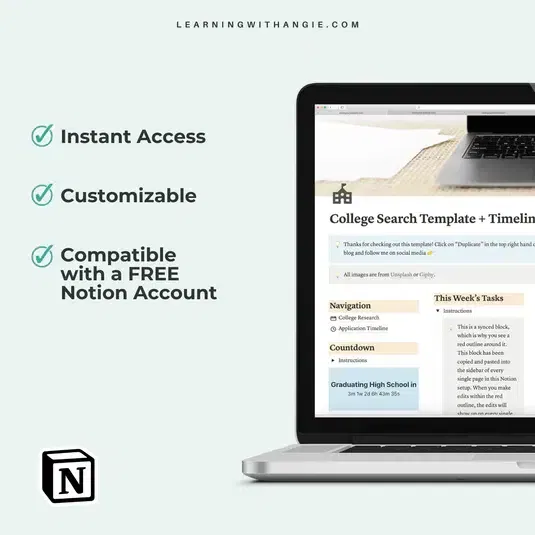
- Use a Tracker: Use our Notion College Search Template to track deadlines, login credentials, and application statuses in one place.
5. Master the Art of the "Repurposable" Essay
You don't need to write a brand-new essay for every application. Most scholarship prompts fall into three categories: personal challenges, future goals, or community impact.
- Create Templates: Write three high-quality "base" essays that tell your story effectively.
- Refine and Adjust: When a new prompt arrives, tweak the introduction and conclusion of your base essay to fit the specific mission of the scholarship provider.
- Quality Over Quantity: It is better to have three incredible, polished essays than ten mediocre ones.

6. Audit Your Digital Footprint
Did you know that scholarship committees often Google their finalists? Your social media is part of your application, and it can also be a powerful way to find scholarship opportunities you might otherwise miss.
- Professionalize Your Profiles: Ensure your Instagram and TikTok don't contain anything that would make a donor hesitate to give you $5,000.
- Google Yourself: See what comes up. If you find something questionable, remove it or set your profiles to private.
- LinkedIn Presence: Start a LinkedIn profile to showcase your professional side. It shows maturity and readiness for the "real world."
7. Focus on "Stackable" Small Awards
Don't turn your nose up at a $500 scholarship. These are often easier to win and, most importantly, they are usually "stackable."
- The Compound Effect: Winning five $500 scholarships covers your books and a good chunk of your meal plan for the year.
- Build Momentum: Winning a small, local scholarship looks great on your resume and gives you more confidence (and content) for the bigger national ones later.
- Direct Application: Small scholarships often have simpler application processes, meaning your "hourly rate" for the work performed is actually very high.

8. Get Better Letters of Recommendation
A generic letter of recommendation is a "participation trophy" in the scholarship world. You need letters that advocate for you with specific details.
- Provide a Summary: When asking a teacher or mentor for a letter, give them a bulleted list of your accomplishments in their class or organization.
- Ask Early: Give your recommenders at least three weeks' notice. Rushed letters are rarely good letters.
- Diverse Perspectives: Get one letter from an academic source and one from a community source (like a coach or supervisor) to show a well-rounded personality.
9. Avoid the "Scholarship Scam" Trap
If a scholarship requires you to pay an "application fee" or "processing fee," run away.
- Legitimate Sources Only: Use trusted databases like BigFuture, Fastweb, or our curated resources at Learning With Angie.
- No "Guarantees": No one can guarantee you a scholarship. Anyone who claims they have "secret information" for a fee is trying to scam you.
- Protect Your Data: Be wary of sites that ask for your Social Security number or bank account information too early in the process.
10. Complete the FAFSA Every Single Year
Many scholarships: even those that aren't based on financial need: require you to have a FAFSA (Free Application for Federal Student Aid) on file.
- The Baseline: The FAFSA is your entry point for federal grants, work-study, and school-specific aid.
- Renewal is Mandatory: You must fill this out every year you are in school, not just once.
- Efficiency: Keep your parents' tax information handy to streamline the process each October when the form typically opens.

Your Scholarship Success Checklist
To ensure you stay on track, keep this college application checklist visible in your study space:
- October: Submit the FAFSA and finalize your "Brag Sheet."
- November-January: Focus on high-value college-specific institutional scholarships.
- February-April: Attack local and community-based awards.
- May-August: Search for "rolling" and monthly niche scholarships.
- Weekly: Spend 3 hours in your scholarship tracker updating statuses.
Turn your scholarship search into a system. Track every deadline and draft in one place so you never miss out on free money again. Get the Scholarship Hunt Command Center ($15). Start Tracking
Join The Community
Success in the scholarship game is easier when you aren't doing it alone. We provide the tools, templates, and encouragement you need to stay organized and motivated. Ready to take control of your academic future?
Join our biweekly newsletter to get the latest study hacks, productivity templates, and student success resources delivered straight to your inbox. Let's make this your most productive year yet!
Want a head start? The Ultimate ‘To College & Beyond’ Bundle in my shop was made for exactly this — it’ll save you a ton of time.