Most students discover that simply writing down what they hear rarely helps them remember it later. With over 60 percent of learners struggling to recall important details after class, finding the right note-taking technique becomes a secret weapon for academic success. The right strategy not only makes lessons clearer and more organized but also turns overwhelming information into knowledge you can actually use. Learn how smart note-taking approaches can make your study sessions more effective and memory-friendly.
Key Takeaways
| Note-Taking Technique | Description |
|---|---|
| Diverse Techniques | Various note-taking methods exist, including Linear, Mind Mapping, Cornell, Outline, and Charting, each catering to different learning styles. |
| Handwritten vs. Digital | Handwritten notes promote deeper engagement and retention, while digital notes offer organization and quick editing, suggesting a hybrid approach may be beneficial. |
| Avoid Common Mistakes | Key pitfalls include over-copying, lack of organization, and passive note-taking; students should focus on capturing essential concepts and maintaining context. |
| Effective Review Strategies | Active engagement through methods like spaced repetition, active recall, and teaching others can enhance long-term retention of information. |
What Are Note‑Taking Techniques
Note-taking techniques are strategic methods students use to capture, organize, and remember important information during learning. Think of them like secret study superpowers that help transform random lectures and textbook pages into clear, memorable knowledge you can actually use later.
Note-taking techniques are more than just writing stuff down. They’re intentional strategies designed to help your brain process and retain information more effectively. Different techniques work better for different people and learning styles. Some focus on visual mapping, others on detailed written notes, and some blend multiple approaches to maximize understanding.
Here are the primary types of note-taking techniques students commonly use:
- Linear Notes: Traditional method of writing down information sequentially
- Mind Mapping: Creating visual diagrams that connect ideas graphically
- Cornell Method: Dividing paper into specific sections for notes, questions, and summaries
- Outline Method: Organizing information hierarchically with main topics and subtopics
- Charting Method: Creating tables to categorize and compare information
The goal of these techniques isn’t just copying words verbatim. They’re about actively engaging with the material, identifying key concepts, and creating a personal reference that makes sense to you. When you choose a note-taking technique that matches your learning style, studying becomes smoother and more effective.
Remember, no single technique works perfectly for everyone. Experiment with different approaches, mix and match methods, and find what helps you understand and remember information best. Your perfect note-taking strategy is out there waiting for you to discover it.
Common Note‑Taking Methods Explained
Note-taking methods are diverse strategies that help students transform information into memorable, organized knowledge. Whether you’re sitting in a lecture hall or studying from a textbook, choosing the right note-taking technique can make a huge difference in how well you understand and remember important details.
Linear Notes are the most traditional method, where you simply write down information sequentially as it’s presented. Think of this like creating a written timeline of the lecture or reading. While straightforward, linear notes can sometimes miss the bigger picture by focusing too much on individual details.
Here are some popular note-taking methods with their unique strengths:
- Cornell Method: Divides your page into three sections
- Notes section for main information
- Cue column for questions and keywords
- Summary section at bottom for key takeaways
- Mind Mapping: Creates visual diagrams connecting ideas
- Great for visual learners
- Shows relationships between concepts
- Helps see overall structure of information
- Outline Method: Organizes information hierarchically
- Uses indentation to show main topics and subtopics
- Creates clear, structured notes
- Easy to review and understand later
Some students prefer Charting Method, which involves creating tables to categorize and compare information. This works exceptionally well for subjects with lots of data, like history or science, where you want to track multiple characteristics simultaneously.
Remember, 15 Creative Note-Taking Techniques Every Student Should Try can help you experiment and find your perfect strategy. No single method works for everyone, so don’t be afraid to mix and match techniques until you find what clicks for your learning style.
Digital Versus Handwritten Notes
The debate between digital and handwritten notes is more than just a technological preference – it’s about how our brains process and retain information. According to research, the method you choose can significantly impact your learning and memory retention.
Wikipedia studies have found that students who take handwritten notes often perform better on examinations. This is potentially because handwriting forces you to be more selective and engage more deeply with the material. When you write by hand, you can’t type as fast as you can think, which means you naturally summarize and process information instead of mindlessly transcribing every word.
Here’s a breakdown of the pros and cons:
Handwritten Notes Advantages:
- Encourages active listening and summarization
- Helps with memory retention
- Reduces digital distractions
- Allows for more creative note-taking like drawing diagrams
Digital Notes Advantages:
- Easily searchable and organizeable
- Can be quickly edited and revised
- Allows for instant cloud backup
- Enables quick copy and paste of important information
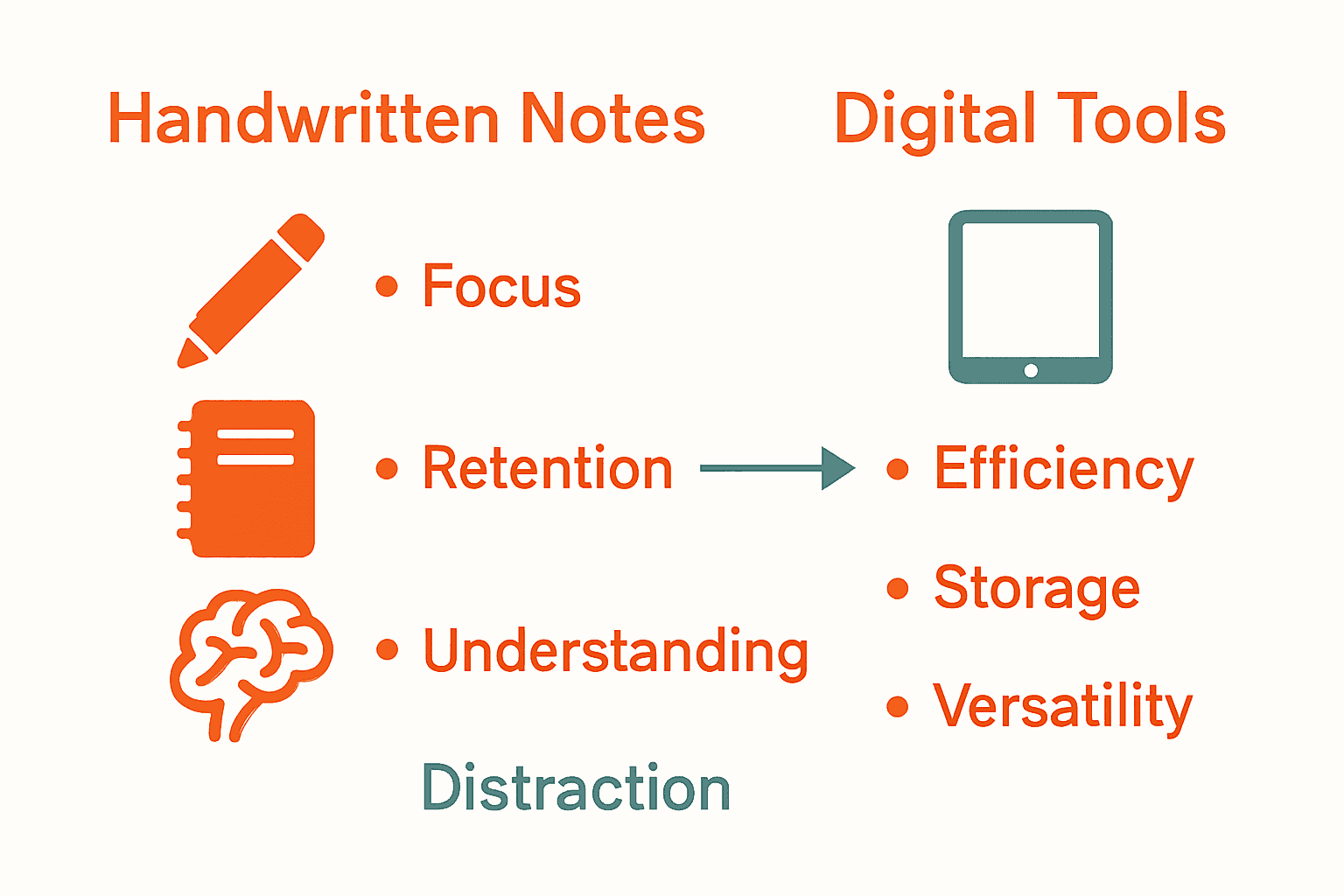
Southwestern Illinois College research suggests that handwriting notes results in better comprehension because it requires you to process and reframe information in your own words. Digital typing, in contrast, often leads to verbatim copying without deeper understanding.
Ultimately, the best note-taking method is the one that works for you. Some students find a hybrid approach most effective – using digital tools for organization and handwritten notes for deep learning. Experiment and find your personal sweet spot between technology and traditional note-taking.
Avoiding Common Note‑Taking Mistakes
Note-taking might seem straightforward, but many students fall into traps that can seriously undermine their learning and retention. Recognizing and avoiding these common mistakes can transform your note-taking from a passive activity to a powerful learning strategy.
Over-copying is one of the most frequent errors students make. When you try to write down every single word, you’re not actually processing the information – you’re just mechanically transcribing. This approach leaves little mental space for understanding and analyzing the material. Instead, focus on capturing key concepts, main ideas, and critical details.
Here are the most common note-taking pitfalls to watch out for:
- Verbatim Transcription: Writing down everything word-for-word
- Lack of Organization: No structure or system in your notes
- Passive Note-Taking: Not actively engaging with the material
- Ignoring Visual Cues: Missing important signals from instructors
- Not Reviewing Notes: Forgetting to revisit and process your notes
Another major mistake is neglecting context. Your notes should tell a story, not just list random facts. Always include context, such as how different ideas connect, why something matters, or how a concept relates to broader themes. If you learn to take notes in APUSH, you’ll quickly realize that understanding the ‘why’ is just as important as the ‘what’.
The key is to develop an active, thoughtful approach to note-taking. Think of your notes as a conversation with the material, not just a mindless recording. Ask questions, make connections, and create a personal learning tool that actually helps you understand and remember.
Improving Retention With Review Strategies
Reviewing your notes isn’t just about reading them again – it’s about actively engaging with the material to transform short-term information into long-term memory. Think of note review like a workout for your brain, where each review session strengthens your neural connections and deepens your understanding.
Spaced repetition is a powerful strategy that involves reviewing information at gradually increasing intervals. Instead of cramming all your review into one marathon session, you’ll break it up into shorter, more frequent review periods. This approach helps your brain move information from short-term to long-term memory more effectively.
Here are some proven review strategies to boost your retention:
- Active Recall: Test yourself on the material without looking at your notes
- Mind Mapping: Recreate your notes as visual concept maps
- Teach-Back Method: Explain the concepts to someone else
- Summarization: Condense your notes into key points
- Question Generation: Create potential exam questions from your notes
The key to effective review is making it an interactive process. Don’t just passively read your notes – engage with them. Create connections, ask questions, and challenge yourself to understand the deeper meaning behind the information. Some students find that learning specific note-taking techniques for APUSH can significantly improve their overall review strategy.
Remember, retention is about quality, not quantity. Short, focused review sessions are far more effective than long, monotonous study marathons.
 Experiment with different techniques, find what works best for you, and turn your review time into a powerful learning experience.
Unlock Your Full Learning Potential With Smart Note-Taking Solutions
Struggling with mastering note-taking techniques like the Cornell Method or Mind Mapping can hold back your ability to retain and organize important information. If you find yourself frustrated by disorganized notes or the challenge of turning lectures into clear summaries, you are not alone. Many learners face these exact hurdles highlighted in the guide, including avoiding over-copying, engaging deeply with material, and boosting retention through active review strategies.
You deserve a study routine that empowers your success and fits your unique style. Explore practical tools and insights designed for students just like you. Start transforming your notes from scattered words into a powerful learning asset by visiting our site to discover techniques and resources that turn note-taking challenges into academic confidence. Take control of your learning today by checking out best study strategies and dive into actionable tips that make reviewing and remembering easier than ever.
Frequently Asked Questions
What are some effective note-taking techniques?
Some effective note-taking techniques include Linear Notes, Mind Mapping, Cornell Method, Outline Method, and Charting Method. Each technique has its strengths and can be tailored to match your learning style.
How can I improve my note-taking skills?
To improve your note-taking skills, focus on active listening, avoid verbatim transcription, ensure your notes are organized, and regularly review them. Experiment with different methods to find what works best for you.
What are the benefits of handwritten notes compared to digital notes?
Handwritten notes encourage active engagement, better memory retention, and reduce distractions, while digital notes are easily searchable, editable, and can be backed up in the cloud. The choice depends on your personal preferences and learning style.
How can I enhance retention when reviewing my notes?
To enhance retention, use strategies like spaced repetition, active recall, mind mapping, the teach-back method, and summarization. Engaging actively with your notes makes the review process more effective.
Recommended
- Complete Guide to Good Note Taking Skills
- The Boxing Method of Note-Taking in 6 Simple Steps
- 15 Creative Note-Taking Techniques Every Student Should Try
Want a head start? The Ultimate Student Planner in my shop was made for exactly this — it’ll save you a ton of time.