
The Role of Journaling for Students: Understanding Its Benefits
Journaling might sound like just writing down your thoughts, but students who keep a regular journal tap into something much deeper. Studies show that journaling actually stimulates both sides of the brain, lighting up areas linked to memory and creativity at the same time. Surprisingly, the real magic is not just about improving grades or organizing ideas—it is about building lifelong skills in self-awareness and emotional strength that textbooks alone can never teach.
Quick Summary
| Takeaway | Explanation |
|---|---|
| Journaling enhances cognitive skills. | Regular journaling activates multiple brain regions, improving memory and analytical thinking. |
| It supports emotional regulation. | Journaling provides a structured outlet for exploring feelings, reducing anxiety and increasing self-awareness. |
| Different styles suit different needs. | Students can choose various journaling methods based on their personal goals and cognitive preferences. |
| Journaling aids academic performance. | It improves information retention and comprehension, making it an effective study tool. |
| Real-world applications extend beyond academics. | Journaling fosters personal growth and professional development, enhancing lifelong learning skills. |
What is Journaling and Its Purpose for Students?
Journaling represents a powerful personal writing practice where students systematically record thoughts, experiences, reflections, and observations in a dedicated notebook or digital platform. Far more than simple note-taking, journaling serves as a transformative tool for academic and personal development, offering students a structured method to explore their inner world while enhancing cognitive skills.
Understanding the Core Purpose of Student Journaling
For students, journaling transcends traditional writing. It becomes a multifaceted instrument for self-discovery, learning enhancement, and emotional regulation. The purpose of journaling extends well beyond documenting daily events. Students utilize this practice to:
- Process complex academic concepts and learning experiences
- Develop critical thinking and self-reflection skills
- Create a safe space for emotional exploration and stress management
The Psychological and Academic Benefits of Journaling
Research consistently demonstrates that journaling provides significant psychological and academic advantages. When students engage in regular writing, they activate multiple cognitive processes that support learning and personal growth. Neurologically, journaling stimulates both hemispheres of the brain, encouraging integrated thinking and deeper information processing.
By documenting their educational journey, students gain remarkable insights into their learning patterns, emotional responses, and personal development.
Discover more about self-growth strategies through dedicated journaling techniques that can transform academic performance and personal understanding.
Journaling offers a unique opportunity for students to transform passive learning into an active, introspective experience. Whether using traditional paper journals or digital platforms, the practice remains a powerful tool for academic success and personal empowerment.
Why Journaling Matters: Benefits for Students’ Minds
Journaling is more than a simple writing exercise. It is a profound mental health and cognitive development tool that offers students a unique pathway to understanding themselves, managing academic stress, and enhancing overall mental resilience. By engaging in consistent reflective writing, students unlock powerful psychological mechanisms that support their emotional and intellectual growth.
Cognitive Enhancement Through Reflective Writing
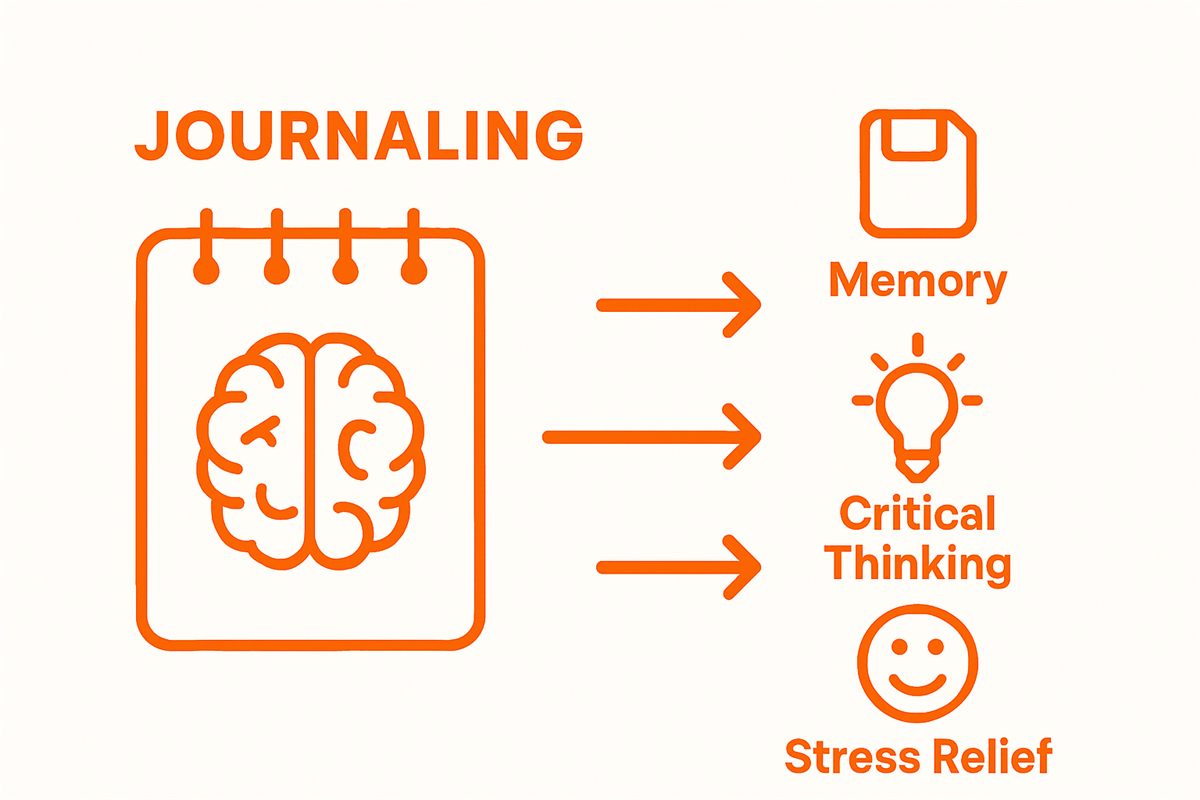
The mental benefits of journaling extend far beyond basic record-keeping. Neurological research demonstrates that journaling activates multiple brain regions simultaneously, promoting integrated thinking and deeper cognitive processing. Students who journal regularly experience significant improvements in:
- Memory consolidation and information retention
- Complex problem-solving capabilities
- Analytical thinking and metacognitive skills
Emotional Intelligence and Stress Management
Journaling serves as a critical emotional regulation mechanism for students navigating complex academic and personal challenges. By providing a structured space for emotional exploration, students develop heightened self-awareness and emotional intelligence. Writing becomes a therapeutic process that helps process complex feelings, reduce anxiety, and build psychological resilience.
Explore strategies for emotional resilience through intentional journaling practices that transform mental health and academic performance.
The act of journaling creates a powerful feedback loop. As students consistently reflect on their experiences, they gain deeper insights into their learning patterns, emotional triggers, and personal growth trajectories. This self-understanding becomes a foundational skill that extends well beyond academic settings, preparing students for lifelong personal and professional development.
How Journaling Works: The Process and Its Effects
Journaling is a dynamic cognitive process that transforms abstract thoughts and experiences into structured written narratives. Unlike casual writing, journaling follows a deliberate approach that engages multiple psychological mechanisms, enabling students to convert internal experiences into meaningful insights and personal growth opportunities.
The Neurological Mechanics of Journaling
Journaling activates complex neural pathways, creating a sophisticated dialogue between different brain regions responsible for memory, emotion, and analytical thinking. When students write reflectively, they stimulate neural networks that support:
- Information processing and integration
- Emotional regulation and stress management
- Enhanced memory consolidation
Psychological Processing and Cognitive Transformation
The journaling process operates through a sophisticated psychological mechanism where students externalize internal experiences. By translating thoughts and emotions into written language, individuals create mental distance that allows for objective analysis and deeper understanding. This process helps students recognize patterns, identify emotional triggers, and develop more nuanced self-awareness.
Learn about self-growth journaling techniques that can transform your personal and academic development.
Research demonstrates that consistent journaling rewires cognitive processing, enabling students to develop more adaptive thinking strategies. The practice transforms passive experiences into active learning opportunities, helping students convert challenges into opportunities for growth and self-discovery. Through systematic reflection, students build resilience, emotional intelligence, and a more comprehensive understanding of their personal and academic journey.
Key Concepts in Journaling: Techniques and Styles
Journaling is not a one-size-fits-all practice but a versatile method of personal documentation with numerous approaches tailored to individual learning styles and emotional needs. Students can explore different journaling techniques that align with their unique cognitive preferences and personal growth objectives.
Fundamental Journaling Approaches
Journaling encompasses diverse methodological frameworks that help students structure their reflective writing. Different styles offer unique benefits for mental processing and academic development. Key journaling approaches include:
- Reflective journaling that encourages deep introspection and personal analysis
- Stream of consciousness writing that captures unfiltered thoughts
- Gratitude journaling focusing on positive experiences and emotional well-being
Selecting the Right Journaling Style
Choosing an appropriate journaling technique depends on individual goals, personality, and academic context. Some students prefer structured prompts that guide their writing, while others thrive with free-form exploration of thoughts and emotions. The most effective journaling style is one that feels natural and sustainable.
Explore comprehensive self-growth journaling strategies that can enhance your personal development journey.
Successful journaling requires consistent practice and a willingness to experiment with different approaches.
To help clarify the various journaling techniques available to students, the table below compares several fundamental journaling approaches and highlights their primary focus and common benefits.
| Journaling Approach | Main Focus | Common Benefits |
|---|---|---|
| Reflective Journaling | Deep introspection, analysis | Enhanced self-awareness, critical thinking |
| Stream of Consciousness | Free thought expression | Creativity boost, emotional processing |
| Gratitude Journaling | Positive experience focus | Improved mood, emotional resilience |
| Guided Prompt Journaling | Structured responses to prompts | Targeted reflection, academic growth |
| Digital Journaling | Flexible format, organization | Accessibility, easier data management |
| By understanding various techniques and remaining open to adaptation, students can transform journaling from a simple writing exercise into a powerful tool for personal growth, academic success, and emotional intelligence. |
Real-World Applications: Journaling in Education and Beyond
Journaling transcends traditional academic boundaries, offering transformative applications that extend far beyond classroom learning. Students who develop journaling skills discover powerful tools for personal development, professional growth, and lifelong learning strategies that can be applied across multiple domains of life.
Academic Performance and Learning Enhancement
Journaling serves as a strategic academic intervention that supports comprehensive learning processes. Students utilize journaling techniques to improve critical academic outcomes such as:
- Enhancing information retention and comprehension
- Developing sophisticated critical thinking skills
- Creating personalized study resources and learning reflections
Professional and Personal Development
Beyond academic settings, journaling becomes a sophisticated mechanism for tracking personal growth, setting goals, and developing self-awareness. Professionals across various fields use reflective writing to document experiences, analyze challenges, and create strategic personal development plans. Systematic journaling transforms subjective experiences into structured insights that drive meaningful personal and professional evolution.
Discover creative note-taking techniques that can complement your journaling practice and enhance overall learning strategies.
The real-world impact of journaling extends into mental health, career planning, and continuous personal improvement. By cultivating a consistent journaling practice, individuals develop enhanced self-reflection capabilities, emotional intelligence, and a deeper understanding of their personal and professional trajectories. Journaling emerges not just as a writing exercise, but as a comprehensive tool for holistic personal development.

Unlock Your Academic Potential Through Journaling
Are you struggling to keep track of your learning, manage stress, or make your study sessions more effective? The article highlights how journaling can transform these challenges into opportunities for self-growth and stronger academic performance. If you want to move from feeling overwhelmed to feeling empowered, integrating proven journaling techniques can make a real difference in your daily life.
Discover student-focused journaling tools and guides that help you organize your thoughts, reflect on progress, and master essential habits quickly and simply.
Frequently Asked Questions
What are the main benefits of journaling for students?
Journaling helps students enhance cognitive skills, develop emotional intelligence, and manage stress. It promotes self-reflection and improves memory retention, leading to better academic performance.
How can students start a journaling practice effectively?
Students can start journaling by setting aside dedicated time each day, choosing a comfortable format (traditional or digital), and selecting a journaling style that fits their personal preferences, such as reflective or gratitude journaling.
What types of journaling techniques are beneficial for academic growth?
Effective journaling techniques include reflective journaling to deepen understanding, stream of consciousness writing for free expression, and gratitude journaling to maintain a positive mindset, all of which support academic and personal development.
How does journaling enhance emotional regulation in students?
Journaling provides a structured space for students to explore their emotions, helping them process complex feelings, reduce anxiety, and develop greater self-awareness, which fosters emotional resilience and improved mental health.