
Why Create Study Routines: The Essential Guide
Did you know that students with regular study routines are up to 40 percent more likely to remember what they learn? Building habits around when and how you study can make a real difference in how much you understand and keep over time. By understanding the core purpose of a strong study routine, you can shape your approach to learning, sharpen your focus, and feel less stressed as you tackle schoolwork.
Key Takeaways
| Point | Details |
|---|---|
| Purpose of Study Routines | Study routines help reduce procrastination and distractions, create consistent habits, and manage academic stress effectively. |
| Customization is Key | Different study routine approaches exist; students should personalize their strategies to match their unique learning styles. |
| Balanced Productivity and Wellbeing | A routine should incorporate breaks and self-care to maintain mental health and long-term performance. |
| Avoid Common Pitfalls | Manage digital distractions, set realistic goals, and allow flexibility to adapt your routine for sustained effectiveness. |
Definition And Core Purpose Of Study Routines
A study routine is like a personal roadmap for learning that helps you stay focused and organized. According to research from Focus Keeper, a study routine involves creating a structured approach that schedules specific learning times, incorporates breaks, and prepares your study environment to maximize productivity.
At its core, a study routine serves several critical purposes:
- Reduces procrastination by providing a clear learning pathway
- Creates consistent learning habits
- Minimizes distractions and improves concentration
- Helps manage academic stress more effectively
Think of your study routine like a workout plan for your brain. Just as athletes have training schedules, students need learning schedules. Learn more about applying habit techniques to studying, which can help you transform studying from a chore into a predictable, manageable process.
Successful study routines aren’t about studying harder – they’re about studying smarter. By intentionally designing your learning approach, you create a system that supports your academic goals, reduces mental fatigue, and makes learning feel more achievable. The key is finding a rhythm that works uniquely for you and staying consistent.
Types Of Study Routines And Approaches
Study routines aren’t one-size-fits-all. Different approaches work for different learners, which means you get to customize your learning strategy to match your unique brain and learning style. Discover your unique study style with our comprehensive quiz, which can help you identify your optimal learning method.
Here are some popular study routine approaches:
Here’s a comparison of popular study routine approaches:
| Routine Type | Key Features | Best For |
|---|---|---|
| Pomodoro Technique | 25-min study blocks Short breaks |
Focused bursts Preventing fatigue |
| Interleaved Practice | Mixed topics/problems per session | Versatile learners Deep understanding |
| Time Blocking | Set time slots for each subject | Structure-seekers Busy schedules |
| Active Recall | Self-testing Quizzes and flashcards |
Memorization Long-term retention |
| Spaced Repetition | Reviews at increasing intervals | Mastering facts Ace tests |
- Pomodoro Technique: Study in focused 25-minute blocks with short breaks
- Interleaved Practice: Vary study topics and problem types to enhance learning
- Time Blocking: Assign specific time slots for different subjects
- Active Recall: Regularly test yourself on learned material
- Spaced Repetition: Review material at increasing intervals
According to research on varied practice, switching between different tasks or content during study sessions helps learners confront novel situations and strengthen learning distinctions. This means mixing up your study approach can actually help your brain become more adaptable and retain information more effectively.
Choosing the right study routine is about understanding yourself. Some students thrive with strict schedules, while others need more flexibility. The goal isn’t perfection – it’s finding a system that keeps you motivated, engaged, and continuously learning. Experiment with different approaches, track what works best for you, and don’t be afraid to adjust your strategy as you grow and change.

How Study Routines Boost Retention And Focus
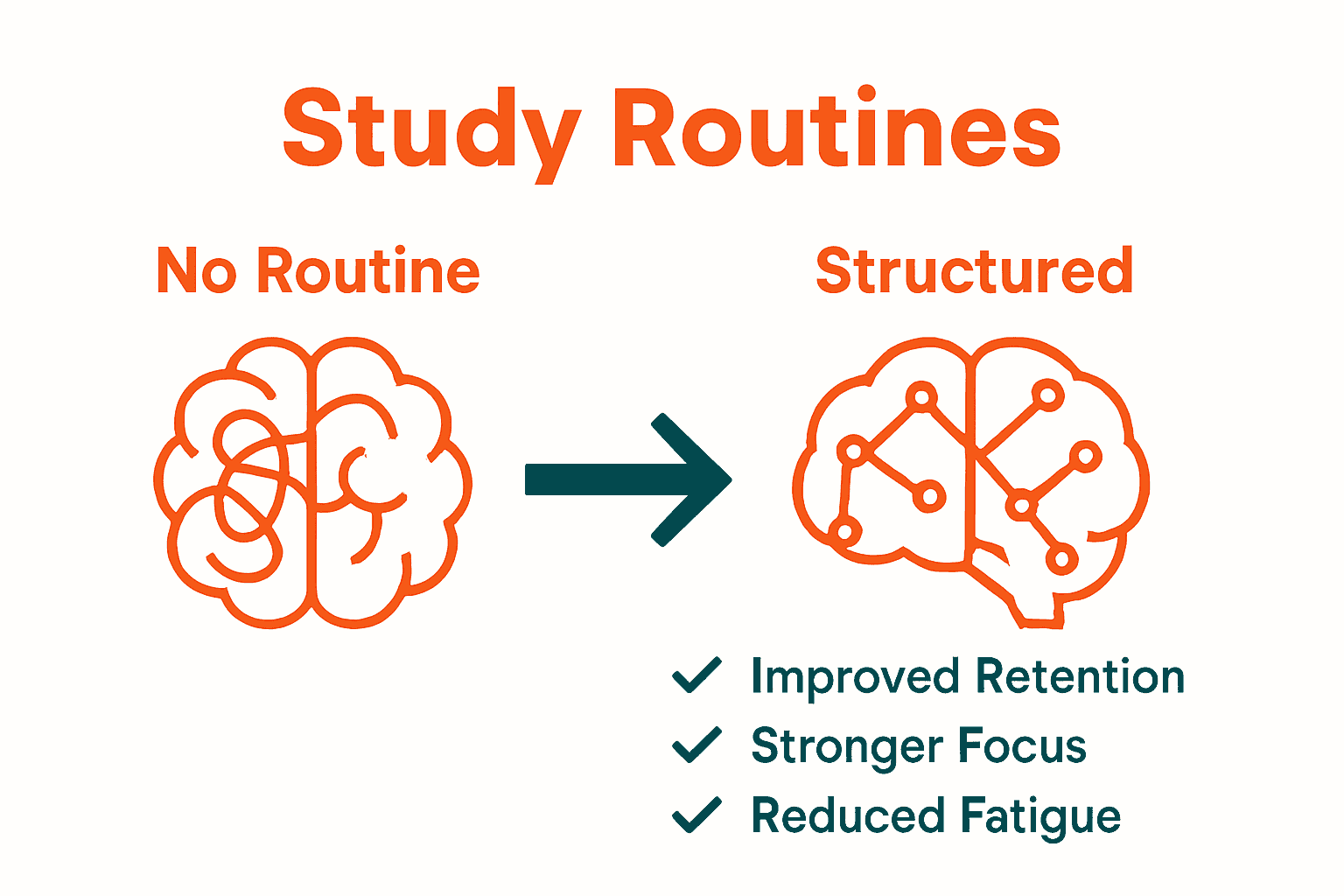
Your brain is like a muscle that gets stronger with consistent exercise. According to research from Academia Today, establishing consistent study times literally conditions your brain for more focused learning. This means when you stick to a routine, your mind starts anticipating and preparing for concentrated study sessions.
Here are key ways study routines enhance your learning potential:
- Neural Pathway Strengthening: Repetitive learning reinforces memory connections
- Reduced Mental Fatigue: Structured breaks prevent burnout
- Improved Concentration: Regular study times train your brain’s attention span
- Better Information Retention: Consistent review helps move knowledge into long-term memory
Learn how to make flashcards that supercharge your retention, which can complement your study routine and make memorization more effective. The science is clear: spaced repetition and structured learning dramatically improve how quickly and deeply you absorb information.
Research shows that integrating techniques like the Pomodoro method – studying in focused intervals with strategic breaks – can prevent mental exhaustion and maintain high-quality learning. Your brain isn’t designed for marathon study sessions, but for focused, intentional learning bursts. By creating a routine that respects your brain’s natural rhythms, you’re not just studying harder, you’re studying smarter.
Balancing Productivity And Wellbeing With Routines
Productivity isn’t about pushing yourself to the limit – it’s about working smarter, not harder. According to research from Academia Today, designing a study routine that includes strategic breaks and self-care activities is crucial for maintaining long-term performance and mental health.
Key strategies for balancing productivity and wellbeing include:
- Scheduled Breaks: Use techniques like Pomodoro to prevent burnout
- Self-Care Integration: Include mental health activities in your routine
- Realistic Goal Setting: Create achievable daily objectives
- Flexibility: Allow room for adjustments and personal needs
Check out our guide on night routines that boost student productivity, which can help you design a holistic approach to studying. Research consistently shows that consistent study habits not only improve learning but also reduce stress and build confidence.
Remember, a great study routine is a personalized system that supports both your academic goals and your mental wellbeing. It’s not about perfection, but about creating a sustainable approach that helps you grow, learn, and take care of yourself. By prioritizing both productivity and self-care, you’ll develop habits that serve you far beyond just academic success.
Common Mistakes When Creating Study Routines
Creating a study routine sounds simple, but many students stumble into common traps that derail their learning progress. According to research from Academia Today, one of the biggest pitfalls is failing to manage digital distractions that constantly compete for your attention.
Here are the most critical mistakes students make when designing study routines:
- Digital Overload: Allowing constant notifications and social media interruptions
- Lack of Flexibility: Creating rigid schedules that don’t adapt to changing circumstances
- Unrealistic Expectations: Setting goals that are too ambitious or vague
- No Accountability: Skipping built-in motivation and tracking mechanisms
Learn strategies for developing a productive day schedule that helps you avoid these common pitfalls. Research indicates that without proper motivation and accountability strategies, students frequently lose momentum and abandon their carefully crafted routines.
The key is understanding that a study routine isn’t a one-time setup, but an evolving system. It requires regular evaluation, honest self-reflection, and willingness to adjust. Your routine should feel supportive, not restrictive – a personalized framework that empowers your learning journey rather than creating additional stress.
Ready to Make Your Study Routine Work for You?
Building a consistent study routine can feel overwhelming, especially when distractions keep popping up and motivation fades away. In this guide, you learned how routines reduce procrastination, help you manage academic stress, and turn study time into a habit instead of a struggle. But knowing what to do and actually doing it every day are two very different challenges. That gap is where many students get stuck.
If you want expert advice specifically designed for high school and college students, check out the practical resources in our College study tips and High School success guides. Explore fresh ideas on time management, productivity boosters, and proven tactics that make sticking to your routine easier. For even more personalized tools and inspiration, visit our main site at Learning With Angie. Start building a study schedule that finally fits your life—and accomplish more every single day by taking action now.
Frequently Asked Questions
What is a study routine?
A study routine is a structured approach to learning that schedules specific study times, incorporates breaks, and prepares your environment to maximize productivity.
Why are study routines important for students?
Study routines help reduce procrastination, create consistent learning habits, minimize distractions, and manage academic stress more effectively.
What are some effective study routine approaches?
Some effective approaches include the Pomodoro Technique, Interleaved Practice, Time Blocking, Active Recall, and Spaced Repetition. Each caters to different learning styles and needs.
How can I balance productivity and well-being in my study routine?
To balance productivity and well-being, schedule regular breaks, integrate self-care activities, set realistic goals, and maintain flexibility in your routine.
Recommended
- Aesthetic Morning Routine for College Students Who Are Busy
- How to Apply Atomic Habits to Studying to Get Better Grades
- 9 Best Night Routines for Students to Skyrocket Productivity
- How To Fix Your New Year’s Resolution – Denver Personal Trainer
- Resetting Your Skincare Routine: The Complete 2025 Guide