
Test Taking Tips: Boost Scores and Confidence Fast
Test days can feel overwhelming for many high school students, but understanding how your brain works under pressure can change everything. Many believe that test anxiety is always harmful, yet research from the Harvard Academic Resource Center shows that some anxiety can actually keep you sharp and focused during exams. By learning to manage stress and debunking common myths about testing, you can develop more confident and effective test-taking strategies.
Key Takeaways
| Point | Details |
|---|---|
| Understanding Anxiety | Test anxiety can be beneficial when managed effectively, helping maintain focus during exams. |
| Strategic Preparation | Tailor your study strategies to match different test types for improved performance. |
| Consistent Study Habits | Establish structured study routines to enhance knowledge retention and reduce stress. |
| Mistakes to Avoid | Be aware of common pitfalls in exam preparation to ensure a more effective study approach. |
Test Taking Basics and Common Myths
Test taking isn’t just about memorizing information – it’s about understanding how your brain works during high-pressure academic moments. Many students approach exams with unnecessary anxiety and misconceptions that actually hurt their performance.
Most students believe that test anxiety is purely negative, but this isn’t true. Research from academic experts shows that some anxiety can actually help you stay focused and alert during exams. The key is managing that anxiety effectively.
Here are some common test taking myths that can sabotage your success:
- Myth: Longer study hours guarantee better grades
- Myth: Cramming the night before works just as well as consistent preparation
- Myth: Stress is always bad during exams
- Myth: Natural talent matters more than preparation
Realistic test performance depends on understanding how your mind processes information under pressure. Successful students develop strategies that help them stay calm, focused, and confident.
Anxiety isn’t your enemy – it’s a signal that you care about your performance.
Coping with exam pressure requires understanding that your mental approach matters as much as your study habits. Every student can improve their test performance by learning how to manage stress and approach exams strategically.
Pro tip: Practice deep breathing techniques and positive visualization before entering the exam room to reset your mental state and reduce performance anxiety.
Different Test Types and Key Strategies
Understanding the various types of tests you’ll encounter is crucial for developing targeted study strategies. Academic assessments aren’t one-size-fits-all, and each test format requires a unique approach to maximize your performance and comprehension.

Academic testing experts recognize several primary assessment categories that demand different preparation techniques. These include standardized tests, diagnostic evaluations, formative assessments, summative exams, and performance-based assessments.
Here’s a breakdown of common test types and their specific strategies:
-
Standardized Tests
- Focus on time management
- Practice with official sample materials
- Learn test-specific question patterns
-
Multiple Choice Exams
- Read all answer options carefully
- Eliminate obviously incorrect choices
- Flag questions you’re unsure about for review
-
Essay Tests
- Create quick outlines before writing
- Address all parts of the question
- Use clear, structured paragraphs
-
Short Answer Assessments
- Be concise and direct
- Include key technical terms
- Show understanding, not just memorization
Comprehensive exam strategies reveal that math and science tests often require additional specialized techniques. These typically involve showing your work, understanding formula applications, and demonstrating problem-solving processes.
Here is an overview contrasting common test types and what each demands from students:
| Test Type | Core Skill Needed | Mental Approach | Common Challenge |
|---|---|---|---|
| Standardized Exams | Fast, strategic thinking | Stay alert, pace well | Managing time pressure |
| Multiple Choice | Analytical elimination | Stay focused | Avoiding careless mistakes |
| Essay Assessments | Structured expression | Organize thoughts | Covering all question aspects |
| Short Answer | Precision and clarity | Stay concise | Balancing detail and brevity |
Your test strategy should match the exam’s specific requirements and format.
Successful students recognize that different test types demand unique mental approaches. By understanding each assessment style, you can develop targeted preparation methods that improve your confidence and performance.
Pro tip: Create a personalized study guide for each test type, focusing on the specific skills and knowledge required for that particular assessment format.
Building Effective Study and Review Habits
Mastering effective study habits isn’t about working harder – it’s about working smarter. Successful student research reveals that consistent, strategic approaches can dramatically improve learning outcomes and reduce academic stress.
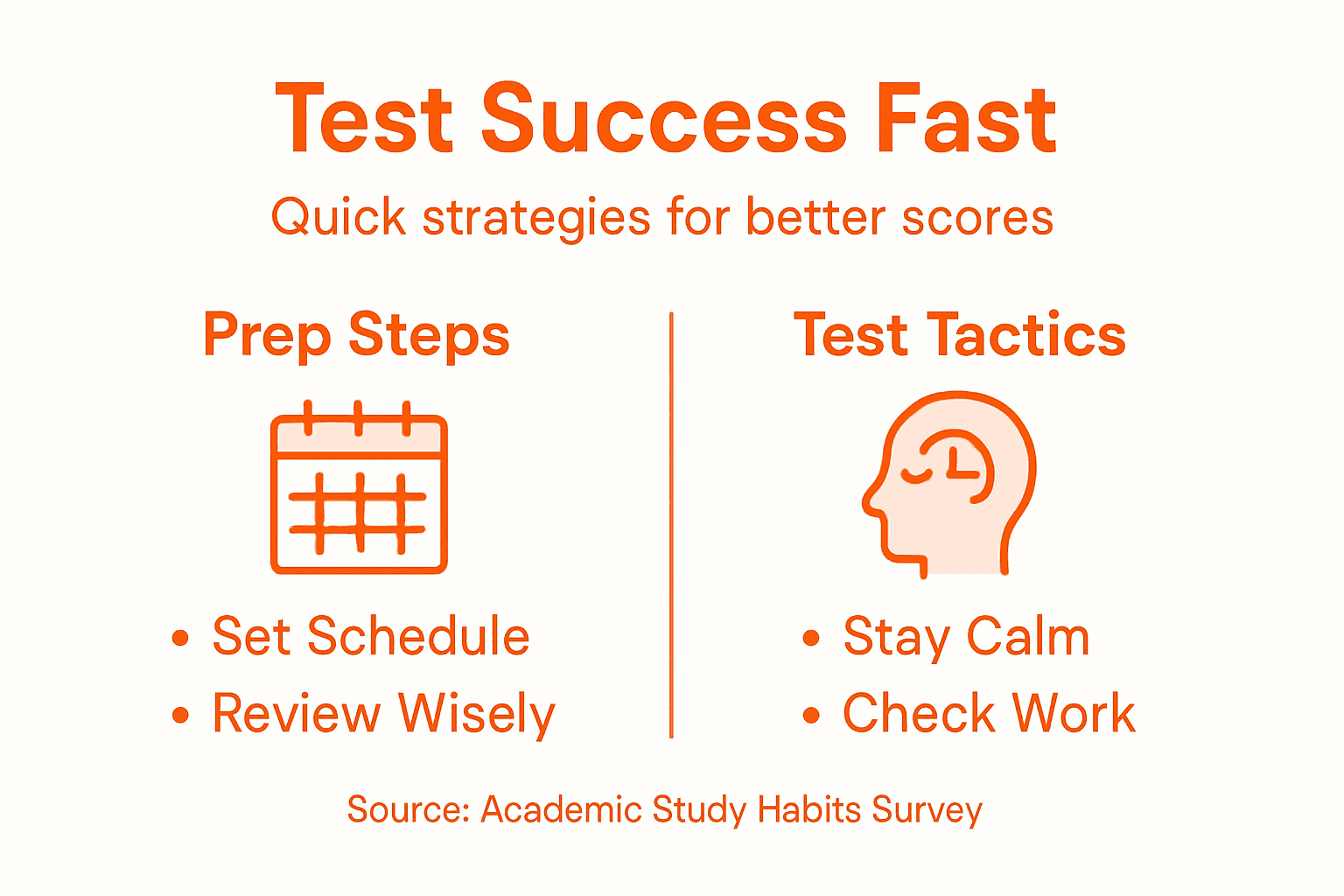
Understanding the science behind learning is crucial. Students who develop structured study routines create neural pathways that make information retention easier and more efficient. This means transforming studying from a dreaded chore into an automatic, productive process.
Key strategies for building powerful study habits include:
-
Time Management
- Create a dedicated study schedule
- Break large tasks into smaller, manageable chunks
- Use time-blocking techniques
-
Active Learning Techniques
- Engage with material through questioning
- Use practice tests and self-quizzing
- Teach concepts to someone else
-
Environment Optimization
- Choose consistent, distraction-free study spaces
- Maintain proper lighting and comfortable seating
- Keep study materials organized and accessible
Transforming study routines requires understanding that habits are built through consistent, intentional practice. The most successful students treat studying like a skill to be developed, not just a task to complete.
Consistency is the secret ingredient that transforms good intentions into powerful learning habits.
By implementing these strategies systematically, you can create a personalized study approach that maximizes your learning potential and reduces academic anxiety. Remember, effective studying is a skill anyone can develop with the right mindset and techniques.
Here is a summary of impactful study habits and their effect on learning:
| Study Habit | Benefit to Learning | Example Adjustment |
|---|---|---|
| Consistent Scheduling | Higher information retention | Daily set study blocks |
| Active Engagement | Improved concept mastery | Use self-testing and teaching |
| Environment Optimization | Increased concentration | Dedicated quiet workspace |
| Self-Review Techniques | Identifies knowledge gaps | Monthly technique effectiveness |
Pro tip: Design a study routine that feels natural and enjoyable, making consistent learning feel less like work and more like a personal growth opportunity.
Managing Test Anxiety and Staying Focused
Test anxiety is a real challenge for many students, but it doesn’t have to control your academic performance. Research on exam pressure reveals that understanding and managing anxiety is key to maintaining focus and confidence during tests.
Understanding the physical and mental symptoms of test anxiety is the first step toward managing it effectively. Your body’s stress response can trigger racing thoughts, increased heart rate, sweating, and difficulty concentrating – all of which can dramatically impact test performance.
Powerful strategies for managing test anxiety include:
-
Mental Preparation Techniques
- Practice positive self-talk
- Visualize successful test completion
- Develop a pre-exam calm-down routine
-
Physical Stress Management
- Practice deep breathing exercises
- Get adequate sleep before exams
- Maintain proper nutrition and hydration
-
Cognitive Refocusing Strategies
- Recognize and interrupt negative thought patterns
- Break complex problems into smaller steps
- Use mindfulness techniques to stay present
Academic resource experts recommend developing a comprehensive approach to managing test anxiety that combines mental preparation, physical self-care, and strategic thinking.
Anxiety is not a weakness – it’s a signal that you care about your performance.
By implementing these strategies consistently, you can transform test anxiety from a debilitating challenge into a manageable part of your academic journey. Remember, every student experiences stress, but not every student lets it control their potential.
Pro tip: Create a personalized pre-exam ritual that combines deep breathing, positive visualization, and systematic preparation to reset your mental state and boost confidence.
Smart Approaches for Exam Day Success
Smart test-taking is about more than just knowing the material – it’s about strategic performance and mental preparation. Student success strategies reveal that your approach during the exam matters just as much as your preparation beforehand.
Your exam day strategy should be a carefully crafted plan that addresses both mental and practical challenges. Successful students understand that peak performance requires a holistic approach that combines cognitive readiness, emotional control, and practical test-taking techniques.
Key strategies for exam day success include:
-
Mental Preparation
- Arrive early to settle your nerves
- Practice quick mental relaxation techniques
- Maintain a confident, calm mindset
-
Strategic Test Navigation
- Read all instructions carefully
- Scan the entire exam before starting
- Allocate time for each section strategically
-
Performance Optimization
- Start with questions you know best
- Use all available time for checking answers
- Stay hydrated and maintain focus
Practicing these techniques transforms exam taking from a stressful experience into a manageable challenge. The most successful students approach exams with a systematic, confident mindset that allows them to showcase their true knowledge.
Your preparation meets opportunity in the moments of the exam.
Remember that exam success is a skill that can be learned and improved. Every test is an opportunity to demonstrate your understanding and grow as a student.
Pro tip: Create a personal exam day checklist the night before, including all materials, mental preparation strategies, and a calm morning routine to set yourself up for success.
Mistakes to Avoid and Trusted Resources
Navigating exam preparation requires strategic awareness of potential pitfalls that can derail your academic success. Common exam preparation mistakes reveal critical areas where students often stumble, preventing them from reaching their full potential.
Understanding these mistakes is the first step toward developing a more effective study approach. Many students unknowingly sabotage their performance by adopting ineffective learning strategies or failing to recognize their own study limitations.
Key mistakes to avoid during exam preparation include:
-
Study Planning Errors
- Neglecting comprehensive syllabus mapping
- Avoiding practice with mock tests
- Failing to analyze previous performance gaps
-
Resource Management Mistakes
- Overwhelming yourself with too many study materials
- Inconsistent study schedules
- Ignoring personalized learning needs
-
Mental Preparation Pitfalls
- Procrastinating critical study topics
- Underestimating exam difficulty
- Lacking confidence and positive mindset
Trusted resources can transform your study approach, providing structured guidance and targeted support. Successful students leverage multiple learning platforms, practice tests, and expert-curated materials to enhance their preparation.
Learning from mistakes is the fastest path to academic improvement.
Building a robust study strategy means continuously adapting, learning from past experiences, and remaining open to new approaches that can enhance your academic performance.
Pro tip: Create a monthly review system where you systematically analyze your study techniques, identifying what works and what needs improvement.
Boost Your Test Performance with Proven Support and Smart Strategies
Facing test anxiety and struggling to develop effective study habits can feel overwhelming. This article highlights how managing stress, tailoring your approach to different test types, and building consistent study routines are essential for boosting confidence and improving scores. If you want to build these critical skills and overcome common challenges like time pressure and negative thinking, you need resources that guide you step-by-step.
At Learning with Angie, we specialize in helping students transform anxiety into focus and transform scattered study efforts into efficient, personalized plans. Discover strategies for mastering time management, productivity, and mental preparation while maintaining a balanced lifestyle that supports academic success. Take control today by exploring our trusted approach to learning and growth at Learning with Angie. Your new path to test day confidence starts here.
Frequently Asked Questions
How can I manage test anxiety effectively?
Managing test anxiety involves mental preparation techniques such as positive self-talk, visualization of success, and developing a calming pre-exam routine. Physical self-care, like adequate sleep and nutrition, also plays a crucial role.
What are the key strategies for different types of tests?
Each test type requires unique strategies. For example, standardized tests emphasize time management, while essay tests benefit from structured outlines. It’s crucial to tailor your study methods to the test format for optimal performance.
What are some effective study habits to improve learning outcomes?
Effective study habits include consistent scheduling, active engagement with the material through practice tests, and optimizing your study environment to minimize distractions. These practices enhance knowledge retention and reduce stress.
How should I approach exam day to ensure success?
On exam day, arrive early to settle your nerves, read all instructions carefully, and strategically allocate your time during the test. Focus on answering questions you know first, and use available time to review your answers.
Recommended
- Create Your Success: Ultimate Goal Setting Checklist
- “Don’t Cram” Week: Free AI Study Plan Generator (High School & College Tool)
- What Do Colleges Look for? A Step-by-Step Guide to Getting Into Your Dream College
- 15 Reasons the Feynman Technique Is a Game-Changer for Students
- Spielerisches Lernen: Kreative Aktivitäten für Kinder 2025 – Edory AI – Edukative Kindergeschichten