
How to Study Effectively at Home for Better Grades
Over 60 percent of American students report struggling to concentrate at home, and the way you set up your study environment often determines your results. Whether you are aiming for higher grades or simply want to feel less stressed, a dedicated and well-organized space can transform how you study. These practical steps reveal how small changes can help any American learner maximize focus, boost motivation, and see real progress.
Quick Summary
| Key Insight | Explanation |
|---|---|
| 1. Establish a Focused Study Area | Create a quiet, organized space that promotes concentration and productivity. Choose comfortable seating and personalize the area for motivation. |
| 2. Organize Study Materials | Use effective organization techniques like color-coded folders and consistent file naming for quick access to materials and reduced mental clutter. |
| 3. Develop a Realistic Study Schedule | Assess your energy levels to schedule study times. Break tasks into manageable chunks and maintain consistency with study hours. |
| 4. Minimize Distractions Effectively | Identify and eliminate distractions, both digital and physical. Create a clean workspace and use tools like noise-canceling headphones to maintain focus. |
| 5. Track Progress and Adjust Strategies | Regularly monitor your academic performance and adapt your study methods. Set clear goals and reflect on what techniques are most effective for you. |
Step 1: Set Up a Dedicated Study Space
Creating a focused study area is your first move toward academic success. Think of this space as your personal productivity zone where learning happens magic.
When setting up your study spot, start by finding a quiet location with minimal interruptions. Stanford recommends choosing a comfortable area that signals your brain it’s time to concentrate. This might be a corner of your bedroom, a home office, or even a peaceful section of your kitchen table.
Pay attention to your physical setup. Your chair should support good posture, with your feet flat on the ground. Position your desk near natural light if possible, but avoid direct glare on your computer screen. Keep your workspace clean and organized, removing unnecessary items that could distract you. Your goal is creating an environment that helps you stay focused and motivated.
Ergonomics matter too. Adjust your chair height so your elbows bend at roughly 90 degrees when typing. Place your computer screen at eye level to prevent neck strain. Effective University suggests personalizing your space to make it inviting – maybe add a small plant, a motivational poster, or keep a water bottle nearby.
Here is a quick comparison of effective study space enhancements and their cognitive benefits:
| Enhancement | Example Feature | Cognitive Benefit |
|---|---|---|
| Ergonomic chair | Lumbar support | Reduces fatigue, improves focus |
| Natural lighting | Desk near window | Boosts alertness, reduces eyestrain |
| Organization tools | Minimal clutter, folders | Enhances concentration |
| Personal touches | Plant or poster | Increases motivation, comfort |
Pro Tip: Create a dedicated “study only” zone that your brain associates exclusively with learning and productivity. Avoid using this space for other activities like watching TV or scrolling social media.
Step 2: Organize Learning Materials Efficiently
Taming your study materials is key to academic success. Imagine transforming your scattered notes and random papers into a streamlined system that actually helps you learn.

Stanford recommends keeping similar items together to maximize accessibility and minimize mental clutter. Start by gathering all your learning materials textbooks, notebooks, digital files and create a logical organization system. Consider using color coded folders for different subjects or digital folders on your computer that mirror your physical filing system.
Digital organization matters just as much as physical organization. Create a consistent file naming convention that helps you quickly identify documents. For instance use formats like “SubjectName_AssignmentType_Date” so you can find exactly what you need in seconds. Kansas State University suggests creating designated drop zones for your study materials to reduce time spent searching.
Break down your organizational strategy by subject. Use accordion folders for each class or create digital folders with clear hierarchical structures. For physical materials use dividers or separate binders. For digital files create main subject folders with subfolders for specific units or assignments.
Pro Tip: Review and declutter your study materials every two weeks to prevent overwhelming buildup and maintain an efficient organizational system.
Here is a summary of digital vs. physical organization strategies for study materials:
| Strategy Type | Key Tools Introduced | Primary Benefit |
|---|---|---|
| Digital | File naming conventions, folders | Quick access, easy search |
| Physical | Color-coded folders, binders | Visual clarity, tactile separation |
| Regular decluttering | Bi-weekly reviews | Prevents buildup, maintains efficiency |
Step 3: Create a Realistic Study Schedule
Crafting a study schedule that actually works means understanding yourself and your unique learning rhythm. Your goal is creating a plan that fits your life rather than fighting against it.
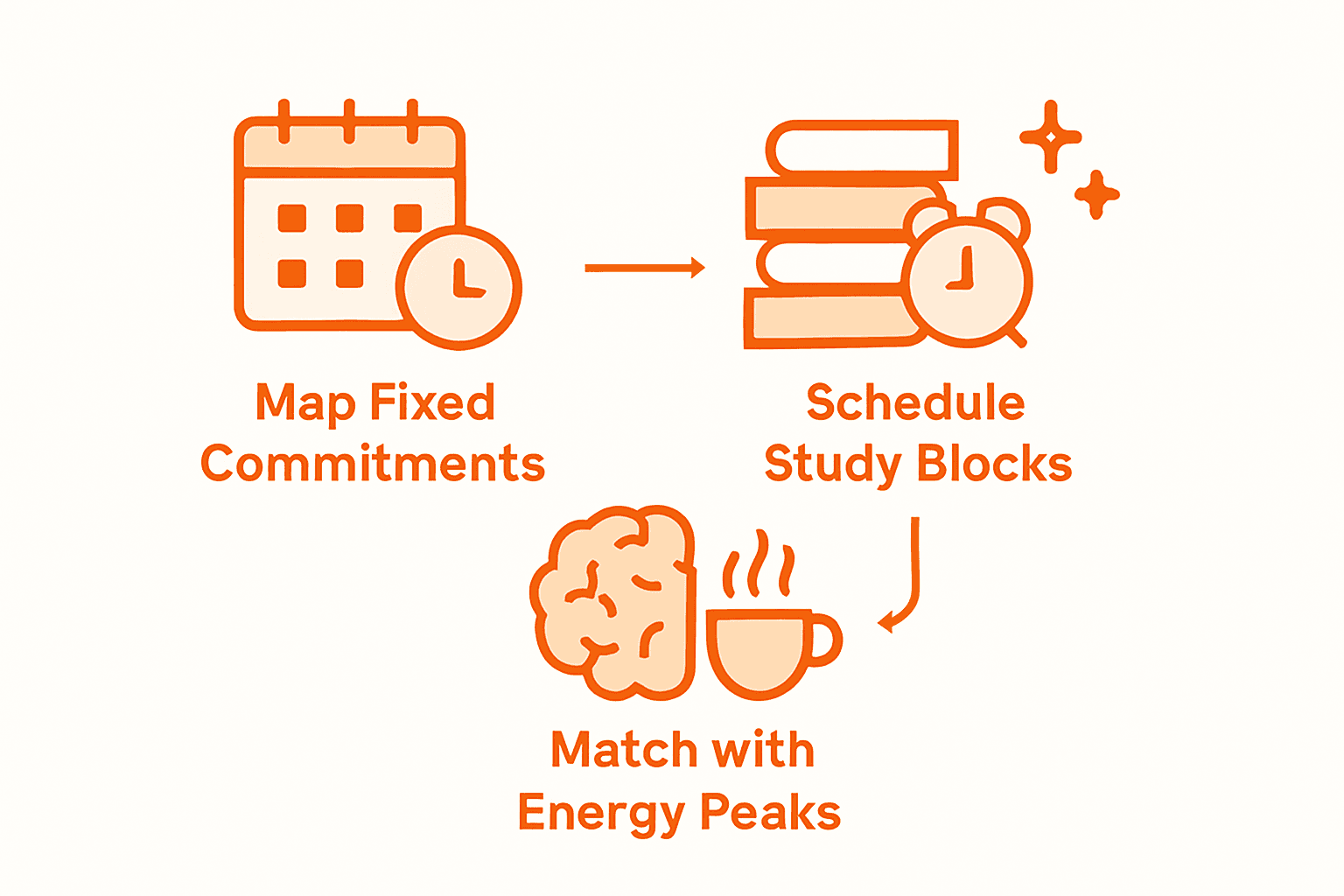
University of Arkansas recommends assessing your available time and energy levels before diving into scheduling. Start by tracking when you feel most alert and productive. Are you a morning person who crushes study sessions before breakfast? Or do you come alive intellectually in the late evening? Your natural energy cycles are your secret weapon.
Begin by mapping out your fixed commitments like classes, work shifts, and family responsibilities. Then strategically block study time around these non negotiable items. Break larger projects into smaller chunks that feel manageable. For instance, instead of scheduling a marathon six hour study session, plan three two hour blocks with breaks in between.
Rutgers University suggests establishing consistent work hours that train your brain to focus. This means studying at similar times each day helps create a mental routine. Use digital or physical calendars to record test dates and assignment deadlines. Color code your schedule color represents different subjects or priority levels making your study plan visually intuitive.
Pro Tip: Schedule your most challenging subjects during your peak energy times and save easier review sessions for when your mental stamina is lower.
Step 4: Minimize Distractions for Focus
Creating a distraction free study zone is your secret weapon for academic success. Think of your attention as a precious resource you need to protect and nurture.
Start by identifying your personal distraction triggers. Is it your smartphone constantly buzzing with notifications? Social media scrolling? Background noise? Create a digital detox strategy by silencing notifications and placing your phone in another room during study sessions. Use airplane mode or apps that block social media during designated study times.
Physical environment matters immensely. Choose a quiet space where you can control external interruptions. If you live with family or roommates, communicate your study schedule and request minimal disruptions. Use noise canceling headphones or soft background music without lyrics to maintain focus. Consider using white noise apps or ambient sound playlists that help mask distracting sounds.
Technology can be both a distraction and a productivity tool. Close unnecessary browser tabs, log out of chat applications, and use website blockers that prevent access to time wasting sites during your study blocks. Create a clean digital workspace that supports concentration by organizing your computer desktop and using productivity apps that track your focus time.
Pro Tip: Implement the 20 minute focused work rule where you study intensely without any interruptions and then take a 5 minute break to reset your mental energy.
Step 5: Monitor Progress and Adjust Methods
Tracking your academic journey is like being the coach of your own learning team. Your goal is understanding what works best for you and continuously improving your study strategies.
Create a study planner checklist to systematically track your academic performance. Start by setting clear measurable goals for each study session. These could be completing specific chapters, solving practice problems, or reviewing key concepts. At the end of each week, review your progress objectively. Did you meet your targets? Where did you struggle? What study techniques felt most effective?
Develop a simple tracking system using a notebook or digital spreadsheet. Record your study hours, grades, comprehension levels, and personal reflections. Look for patterns in your learning. Maybe you absorb information better through visual diagrams or practice tests. Perhaps you learn more effectively in short intense bursts rather than long marathon sessions. Be honest with yourself about what strategies are working and which need adjustment.
Remember that learning is an adaptive process. No single study method works perfectly for everyone. Be willing to experiment and pivot. If flashcards aren’t helping you retain information, try mind mapping. If solo studying feels ineffective, consider group study sessions. Regularly reassess and recalibrate your approach based on your academic performance and personal learning style.
Pro Tip: Schedule a monthly self review where you critically analyze your study methods and make intentional adjustments to optimize your learning strategy.
Take Control of Your Study Success Starting Today
Struggling to create a distraction-free space or organize your study materials effectively can make reaching better grades feel out of reach. This article lays out crucial steps like setting up ergonomic study zones, crafting realistic schedules, and minimizing distractions to help you unlock your full academic potential. If you want to transform these strategies into lasting habits, then mastering productivity and balanced learning is the key.
Discover tailored solutions that support your unique learning style and daily routines on Learning With Angie. Whether you need guidance on time management, study aesthetics, or maintaining focus, our resources are built to empower students like you. Visit Learning With Angie now to start embracing smarter study habits and achieve your academic goals with confidence. Don’t wait—invest in your success today and make effective studying a part of your everyday life.
Frequently Asked Questions
How can I create an effective study space at home?
Creating an effective study space involves finding a quiet location free from distractions and setting up your area for comfort. Ensure that your chair supports good posture and your desk is well-organized.
What should I include in my study materials organization system?
You should include folders or binders for each subject, color coding to differentiate topics, and a digital filing system with clear naming conventions. This will help you quickly locate materials and maintain a clutter-free workspace.
How do I set a realistic study schedule?
To set a realistic study schedule, identify your peak productivity times and integrate your fixed commitments like classes and jobs. Break larger study tasks into smaller, manageable sessions spread throughout the week.
What strategies can I use to minimize distractions while studying?
To minimize distractions, silence notifications on your devices and create a study environment free from interruptions. Consider using noise-canceling headphones or playing ambient sounds to maintain focus.
How can I monitor my progress during my study sessions?
You can monitor your progress by setting measurable goals for each study session, such as completing specific chapters or practice problems. At the end of each week, review your achievements and adjust your strategies as needed.
How often should I reassess my study methods?
You should reassess your study methods regularly, ideally on a monthly basis. During this time, reflect on what has worked well and what could be improved to optimize your study strategies.