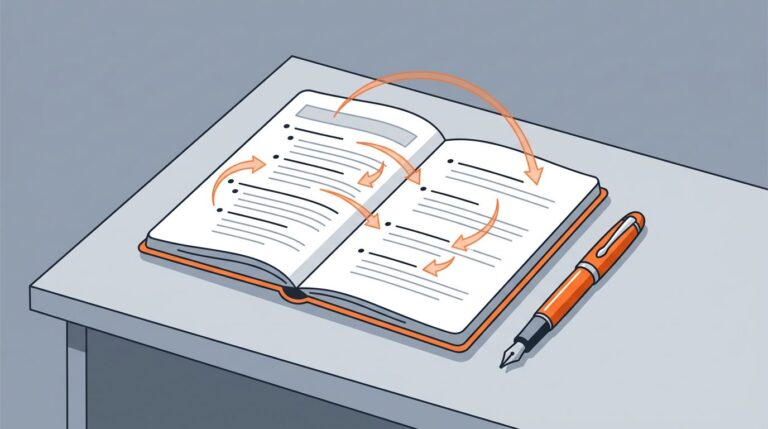
7 Effective Examples of Active Learning for Students
Over 60 percent of american students report that interactive learning methods help them remember information longer than traditional lectures. In a world filled with distractions, building strong learning strategies matters more than ever. Whether you are trying to sharpen your thinking or prepare for real world challenges, using hands-on techniques like group discussions, problem solving, and peer teaching can make a real difference in your success.
Quick Summary
| Takeaway | Explanation |
|---|---|
| 1. Actively Engage in Group Discussions | Engaging with diverse viewpoints fosters critical thinking and communication skills, essential for deep learning. |
| 2. Embrace Problem-Based Learning | Tackling real-world problems boosts practical skills and promotes independent learning by treating learning as an adventure. |
| 3. Utilize Mind Maps for Concepts | Visualizing information through mind maps enhances memory retention and helps organize thoughts in an engaging manner. |
| 4. Practice Peer Teaching for Understanding | Teaching peers forces you to clarify concepts and find gaps in your understanding, enriching the learning experience. |
| 5. Reflect on Experiences Through Journaling | Reflective journaling helps process experiences and stimulates self-discovery, promoting growth and enhanced critical thinking. |
1. Participating in Group Discussions to Sharpen Ideas
Improving your thinking happens best when you learn from others. Group discussions are powerful learning tools that help you explore new perspectives and challenge your own ideas.
When you join group discussions, you are not just listening. You are actively engaging with different viewpoints and learning how to communicate effectively. According to Stanford Mobile Inquiry based Learning Environment, these interactive sessions transform traditional learning by encouraging students to ask, share, answer, and evaluate questions.
Here are some ways to make the most of group discussions:
- Ask thoughtful questions that explore deeper meanings
- Listen carefully to understand different perspectives
- Respect other people’s opinions even when you disagree
- Share your own insights clearly and confidently
Group discussions work like mental gymnastics for your brain. They push you to think critically, articulate your thoughts, and develop stronger communication skills. Whether you are in a classroom, study group, or online forum, participating actively can help you learn faster and more effectively.
Remember. The goal is not to win an argument but to expand your understanding. Every discussion is an opportunity to grow your knowledge and sharpen your thinking skills.
2. Using Problem-Based Learning for Real-World Skills
Imagine learning that feels like solving a real puzzle instead of memorizing boring facts. Problem based learning turns education into an exciting adventure where you become the detective of your own knowledge.
Problem based learning (PBL) is a powerful approach that challenges you to tackle authentic, complex problems just like professionals do in the real world. According to research from BMC Medical Education, this method significantly enhances your problem solving skills, critical thinking, and ability to learn independently.
Here are some key strategies to make PBL work for you:
- Start with a challenging scenario that requires multiple steps to solve
- Break down complex problems into smaller manageable parts
- Research and gather information from various sources
- Collaborate with classmates to explore different solution approaches
- Reflect on your learning process after completing each challenge
A randomized study published in PMC showed that students using PBL develop stronger practical skills compared to traditional learning methods. This means you are not just learning information you are training your brain to think like a professional.
The magic of problem based learning is that it prepares you for real world challenges. You are not just memorizing textbook facts. You are becoming a creative problem solver who can analyze situations, think critically, and develop innovative solutions.
3. Creating Mind Maps to Visualize Key Concepts
Your brain loves pictures. Mind mapping transforms boring information into colorful, connected visual landscapes that make learning fun and memorable.
According to the Worked Example Effect, visual organization helps learners understand and retain complex concepts more efficiently. Mind maps are like secret weapons that unlock your brain’s ability to connect ideas in creative and powerful ways.
Here are some awesome tips for creating mind maps that actually work:
- Start with a central topic in the middle of your page
- Use different colors to represent different types of information
Creating a mind map is like building a personal knowledge highway. You connect ideas through branches, giving your brain multiple paths to remember information. Challenge Based Learning research suggests that visual mapping helps students solve problems by seeing connections they might otherwise miss.
When you draw a mind map, you are not just taking notes. You are creating a visual story that helps your brain understand and remember information faster. Think of it like drawing a treasure map where each branch leads you to another exciting discovery.
Pro tip: Dont worry about making your mind map perfect. The process of creating it is just as important as the final result. Your brain learns by connecting ideas, drawing lines, and exploring information in a way that makes sense to you.
4. Practicing Peer Teaching to Deepen Understanding
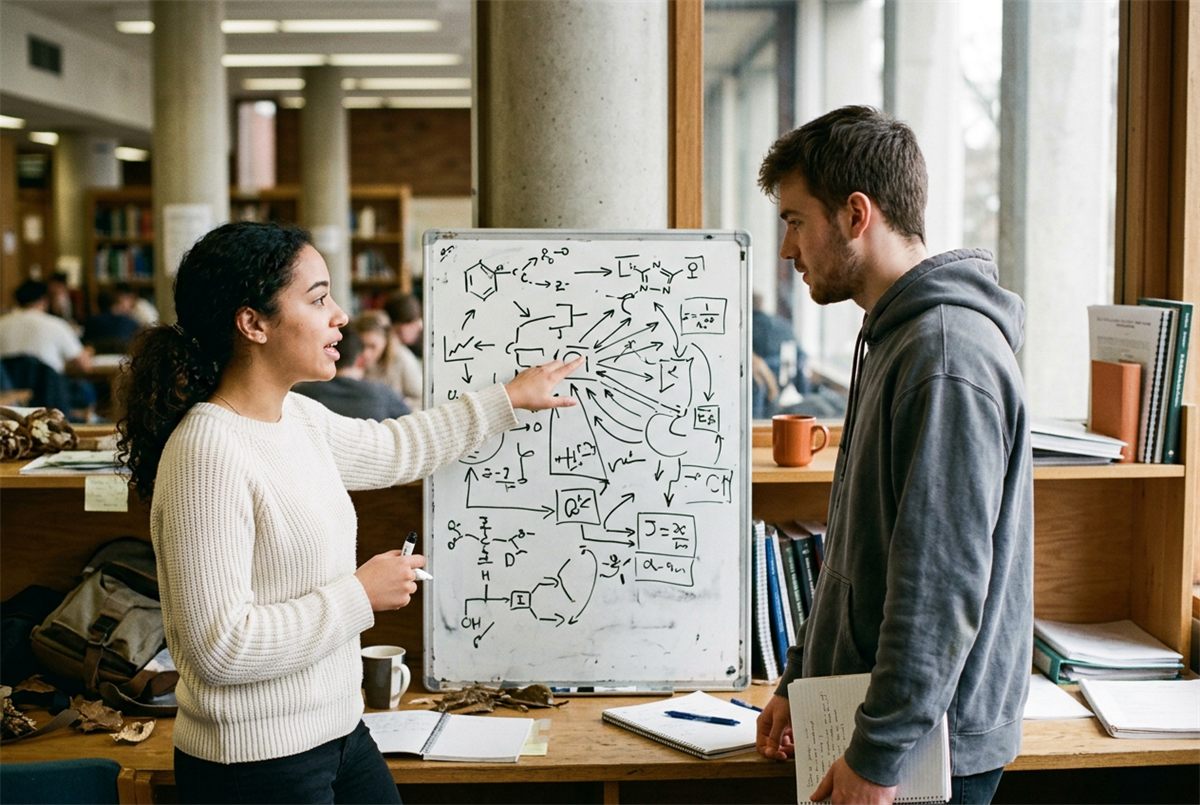
Immagine learning something so well that you can explain it to someone else. Peer teaching is like having a superpower that helps you understand complex topics in a totally different way.
According to Stanford Mobile Inquiry based Learning Environment, students learn best when they actively create and evaluate their own questions. When you teach a concept to a classmate, you are forced to break down complicated ideas into simple terms that make sense.
Here are some powerful strategies for effective peer teaching:
- Choose a topic you want to understand better
- Break the concept down into simple steps
- Practice explaining it out loud
- Ask your peer for feedback and questions
- Listen carefully to how they understand the concept
Research in Challenge Based Learning shows that working together to solve problems and teach each other deepens critical thinking skills. When you become the teacher, something magical happens. You suddenly see the information from a completely different perspective.
Think of peer teaching like being a knowledge translator. You are taking complex information and transforming it into something your brain can truly understand. The act of explaining forces you to organize your thoughts, identify gaps in your understanding, and connect ideas in new and exciting ways.
Remember. You dont have to be an expert to teach something. Sometimes the most powerful learning happens when you are just a few steps ahead of someone else.
5. Applying Knowledge Through Hands-On Projects
Learning is not about memorizing facts. It is about doing something awesome with what you know. Hands-on projects are your ticket to transforming boring information into real world skills.
Research from ArXiv shows that hands-on projects supercharge your ability to learn by engaging you in actual tasks that develop multidisciplinary skills. When you create something with your own hands, you are not just studying. You are becoming a problem solver.
Here are powerful strategies for creating meaningful hands-on projects:
- Choose projects related to your interests
- Start small and build complexity gradually
- Document your process and learnings
- Share your project with others for feedback
- Reflect on what you learned during the process
A compelling study on computing education from ArXiv reveals that hands-on projects dramatically increase student engagement and learning outcomes. These projects create authentic experiences that bridge the gap between theoretical knowledge and practical application.
Think of hands-on projects like creating your own learning adventure. You are not just following a map. You are drawing the map as you go. Each project becomes a unique journey where you discover skills you never knew you had.
Remember. Perfect is the enemy of done. Your first project might be messy. But that messiness is where the real learning happens.
6. Engaging in Reflective Journaling for Self-Growth
Your mind is like a garden. Reflective journaling is the tool that helps you understand, cultivate, and grow your inner landscape of thoughts and experiences.
Research from BMC Medical Education shows that reflective journaling is a powerful way to enhance critical thinking and self directed learning. When you write about your experiences, you are not just recording events. You are processing them and discovering insights about yourself.
Here are some game changing strategies for effective reflective journaling:
- Write without judgment
- Ask yourself deep questions
- Explore your emotions and reactions
- Look for patterns in your experiences
- Celebrate your growth and learning
A study on pharmacy education from PMC highlights how reflective practices contribute to continuous self improvement. You can learn more about creating your personal journaling practice in our guide on journaling for self-growth.
Think of your journal as a conversation with yourself. Some days you might write a lot. Some days just a few lines. The magic is in the consistency and honesty of your reflection.
Remember. Your journal is a safe space. No one else needs to read it. Just be real with yourself.
7. Solving Case Studies to Develop Critical Thinking
Immagine being a detective who solves real world mysteries using your brain power. Case studies are like intellectual puzzles that train you to think deeper and smarter.
According to research from BMC Medical Education, solving case studies is a powerful way to enhance critical thinking skills. By analyzing complex scenarios, you learn to connect theoretical knowledge with practical challenges.
Here are powerful strategies for mastering case study analysis:
- Read the entire scenario carefully
- Break down the problem into smaller parts
- Consider multiple perspectives
- Use evidence to support your conclusions
- Reflect on potential alternative solutions
A meta analysis from PMC reveals that case studies significantly improve problem solving abilities. When you work through these scenarios, you are not just learning information. You are training your brain to think like a professional.
Think of case studies as mental workout sessions. Each scenario challenges you to look beyond surface level information and dig deeper into complex situations. You are developing skills that go far beyond textbook learning.
Remember. There are no perfect answers. The magic is in how you think through the problem.
Below is a comprehensive table summarizing the strategies and benefits of various learning methods discussed throughout the article.
| Method | Key Strategies | Benefits |
|---|---|---|
| Group Discussions | Ask thoughtful questions, listen carefully, respect opinions, share insights | Enhances communication, critical thinking, and broadens understanding |
| Problem-Based Learning | Start with a challenging scenario, break into parts, research, collaborate, reflect | Develops real-world problem-solving and critical thinking skills |
| Mind Mapping | Central topic, use colors, connect ideas | Improves memory, helps visualize and understand complex concepts |
| Peer Teaching | Break down concepts, explain simply, ask for feedback, listen | Deepens understanding, enhances teaching and communication skills |
| Hands-On Projects | Choose interest-related projects, start small, document process | Bridges theory and practice, increases engagement and learning outcomes |
| Reflective Journaling | Write without judgment, ask deep questions, celebrate growth | Enhances critical thinking and self-awareness |
| Case Studies | Read carefully, analyze, consider perspectives, use evidence | Strengthens problem-solving, connects theory with real-world scenarios |
Boost Your Learning with Proven Active Techniques
Are you struggling to engage deeply with your studies or feeling stuck using traditional methods? The article highlights challenges like developing critical thinking, applying knowledge, and retaining information through active learning approaches such as group discussions, problem-based learning, and peer teaching. These methods push you beyond passive memorization and help sharpen your understanding. If you want to turn these powerful strategies into your personal study routine and feel confident tackling real-world problems, you are not alone.
Explore tailored solutions that support high school and college students just like you. Our High School – Learning With Angie and College – Learning With Angie collections dive into practical study tips, time management hacks, and productivity boosts designed to help active learners thrive. Do not wait to transform your learning experience into one filled with clarity and success. Visit Learning With Angie now and take the first step toward mastering the art of active learning today.
Frequently Asked Questions
What are some examples of active learning techniques for students?
Active learning techniques include participating in group discussions, using problem-based learning, creating mind maps, practicing peer teaching, applying knowledge through hands-on projects, engaging in reflective journaling, and solving case studies. Explore these methods to enhance your understanding and retention of complex concepts.
How can I effectively engage in group discussions to improve my learning?
To engage effectively, ask thoughtful questions and listen carefully to understand others’ perspectives. Practice sharing your insights clearly and respectfully to foster a collaborative learning environment.
What steps should I take to implement problem-based learning in my studies?
Start by identifying a challenging real-world scenario that interests you. Break the problem down into manageable parts and collaborate with peers to research and develop solutions, reflecting on your learning process afterward.
How can creating mind maps enhance my studying?
Creating mind maps helps visualize and organize information, making complex concepts easier to understand and remember. Begin by setting a central topic and branching out with related ideas, utilizing colors to differentiate information.
What are the benefits of peer teaching in my learning journey?
Peer teaching allows you to deepen your understanding of a topic by explaining it to others, which helps identify gaps in your knowledge. Choose a subject you want to master, break it down into simple concepts, and practice explaining it clearly to a peer for valuable feedback.
How can reflective journaling benefit my academic performance?
Reflective journaling helps you process your experiences, enhancing critical thinking and self-awareness. Set aside time regularly to write about your thoughts and insights, focusing on your emotions and what you’ve learned to promote personal growth.
Recommended
- 15 Reasons the Feynman Technique Is a Game-Changer for Students
- Unique Gifts for Students That Encourage Learning
- 16 Essential College Care Package Ideas to Support and Inspire Students
- Breaking Down Complex Concepts with Simple Study Strategies
- 7 Interactive Classroom Ideas for Engaging Learning – Projector Display
Want the shortcut? The Feynman Study System is active learning turned into a template you can run on any subject.