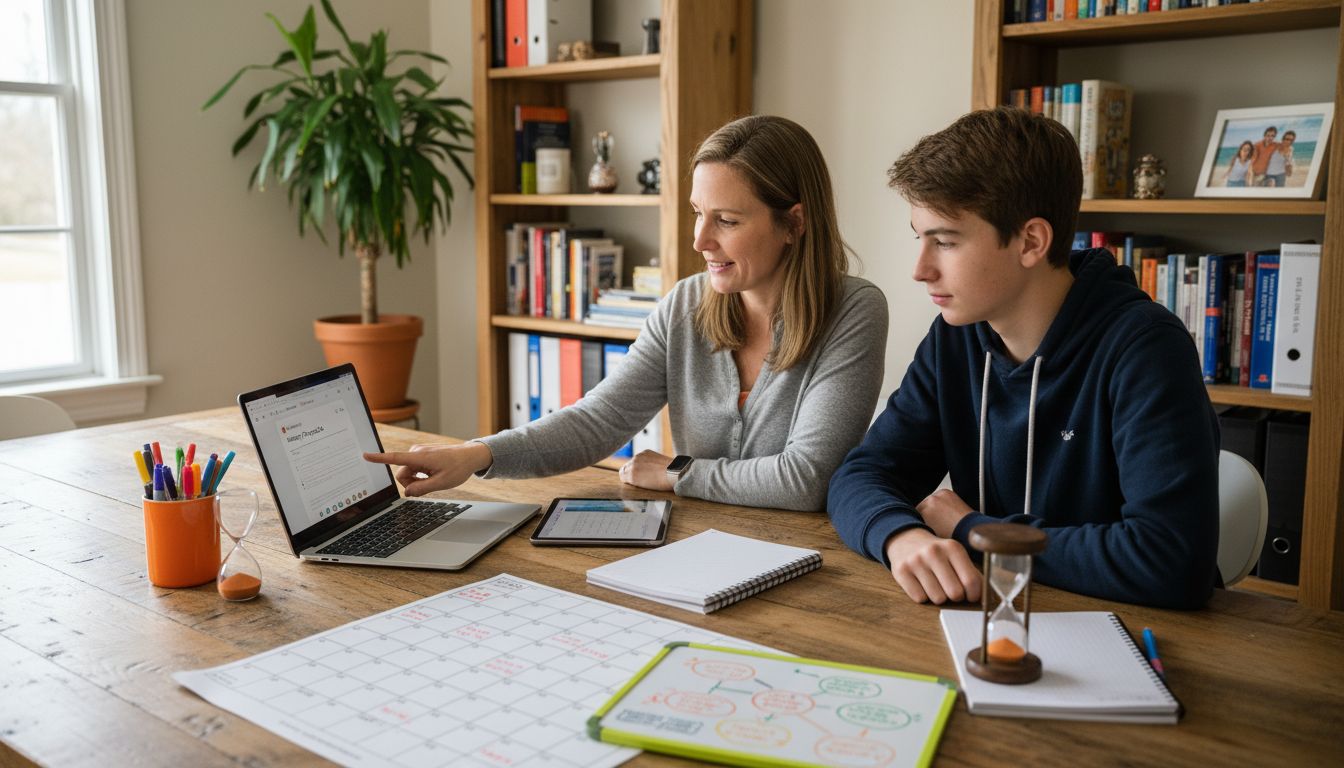
Complete Guide to Most Effective Home School Routines
Over 70 percent of parents say that building a daily routine is the hardest part of home schooling. A predictable rhythm can make learning feel organized and reduce stress for both students and caregivers. By focusing on routines that blend structure with flexibility, you can support stronger academic outcomes and a happier home life. Discover the strategies that help families craft routines which actually work, not just on paper but in real life.
Key Takeaways
| Point | Details |
|---|---|
| Consistent Routines | Establishing daily routines improves learning experiences by providing structure and security. |
| Personalization | Tailor home school routines to individual learning styles and energy levels for optimal effectiveness. |
| Balance | Integrate time management, self-care, and flexibility to maintain academic achievement alongside personal well-being. |
| Avoid Pitfalls | Be mindful of consistency, avoid burnout, and set clear boundaries to foster a productive learning environment. |
Defining Effective Home School Routines
Creating home school routines isn’t just about scheduling – it’s about building a supportive learning environment that helps you succeed academically and personally. According to research from Cornell Cooperative Extension, establishing consistent daily patterns can dramatically improve your learning experience.
Effective home school routines typically involve three critical components:
- Morning Preparation: Wake up at the same time daily, complete personal care tasks, and organize study materials
- Study Schedule: Designate specific hours for focused learning and homework
- Evening Wind-Down: Create predictable nighttime rituals that support academic performance
The magic of successful home school routines lies in their predictability. As Harvard Graduate School of Education notes, consistent routines help students feel secure and comfortable, which directly supports skill and knowledge acquisition. Think of your routine like a roadmap – it guides you, reduces stress, and helps you navigate your academic journey more smoothly.
Remember, there’s no one-size-fits-all approach. Your ideal routine should be personalized to match your learning style, energy levels, and personal responsibilities. Start by experimenting with different schedules, track what works best for you, and be willing to make adjustments. The goal isn’t perfection, but progress.
Popular Home School Routine Structures
Home school routine structures are not one-size-fits-all but rather flexible frameworks designed to optimize learning and personal development. As research from the University of Guam suggests, successful home schooling relies on three key principles: Routine, Resourcefulness, and Reflection.
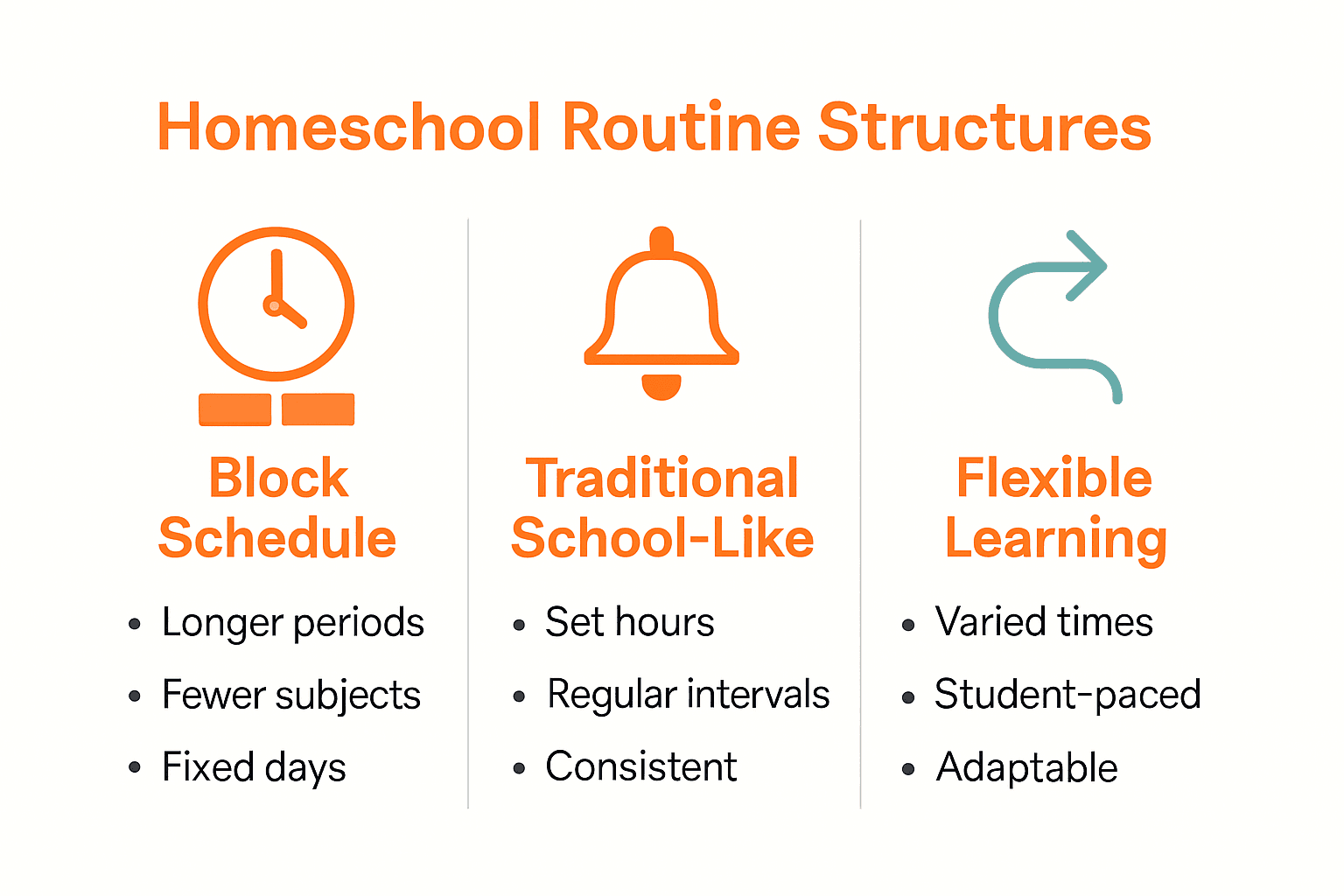
Here are three popular home school routine structures:
- Block Schedule Structure
- Divide day into 90-minute learning blocks
- Focus on different subjects during each block
- Include short breaks between learning sessions
- Allows deep, concentrated learning
- Traditional School-Like Structure
- Mimic traditional classroom schedules
- Start early morning, end mid-afternoon
- Follow structured subject progression
- Include lunch and recess breaks
- Flexible Learning Structure
- Customize learning times based on student’s energy levels
- Allow more self-directed learning
- Mix online and offline learning activities
- Adapt schedule to individual learning preferences
Old Dominion University’s T-TAC emphasizes that predictable routines are crucial because they reduce anxiety, increase student engagement, and foster independence. Whichever structure you choose, the key is consistency and adaptability. Your routine should feel like a supportive guide, not a rigid constraint.
Remember, the best home school routine is the one that works for you. Experiment, track your progress, and be willing to make adjustments. Learning is a journey, and your routine is simply the map that helps you navigate.
Essential Tools and Scheduling Methods
Creating an effective home school routine requires more than just good intentions – it needs the right tools and strategic planning. Washington State University recommends developing schedules collaboratively, ensuring everyone in the family has input and feels invested in the learning process.
Essential Digital and Physical Tools for Home Schooling:
- Digital Planning Tools
- Google Calendar for scheduling
- Trello for project tracking
- Todoist for task management
- Zoom for virtual learning sessions
- Physical Organization Tools
- Large wall planners
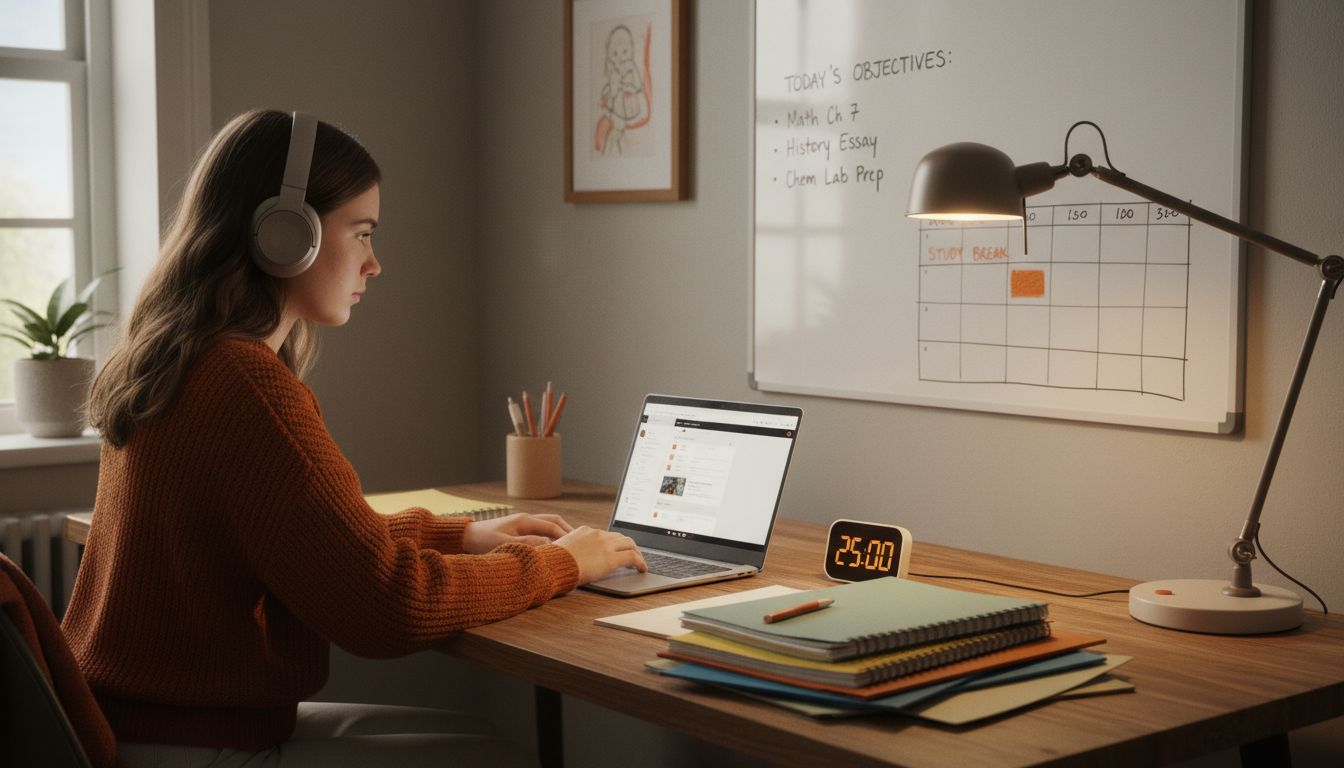
- Whiteboards for daily objectives
- Color-coded folders
- Bulletin boards for tracking progress
- Time Management Accessories
- Digital timers
- Noise-canceling headphones
- Adjustable desk lamp
- Comfortable, ergonomic study chair
According to University of Michigan, creating visual schedules is crucial for maintaining structure and promoting intellectual growth. These visual aids help students understand expectations, track progress, and feel more in control of their learning journey.
Remember, the best scheduling method is one that fits your unique learning style and family dynamics. Experiment with different tools, be flexible, and don’t be afraid to adjust your approach. Your home school routine should feel supportive, not restrictive. With the right tools and mindset, you’ll create a learning environment that’s both productive and enjoyable.
Balancing Academics and Personal Life
Home schooling demands a delicate balance between academic achievement and personal well-being. Oregon Health & Science University emphasizes the critical importance of maintaining attainable routines that support both educational goals and personal growth.
Key Strategies for Balance:
- Time Management Techniques
- Use time-blocking methods
- Allocate specific hours for studying
- Schedule dedicated personal time
- Create clear boundaries between work and leisure
- Self-Care Priorities
- Regular physical exercise
- Mental health breaks
- Sufficient sleep
- Healthy nutrition
- Social interactions
- Flexible Learning Approach
- Adjust schedule based on energy levels
- Incorporate hobby time
- Allow spontaneous learning moments
- Recognize individual learning rhythms
Research from Fort Lewis College highlights the significance of setting boundaries and practicing self-care. Your home school routine isn’t about constant studying – it’s about creating a holistic environment that nurtures both academic potential and personal happiness.
Remember, balance is a skill you’ll develop over time. Be patient with yourself, remain flexible, and continuously reassess what works best for your unique learning style and personal needs. The goal is progress, not perfection.
Common Pitfalls and How to Avoid Them
Home school routines can quickly derail without careful planning and self-awareness. Fairfax County Public Schools highlight that many families struggle with consistency and structure, two critical elements of successful home learning environments.
Top Home School Routine Pitfalls:
- Lack of Consistency
- Irregular wake-up times
- Unpredictable study schedules
- Inconsistent expectations
- Frequent last-minute changes
- Overloading and Burnout
- Unrealistic academic expectations
- No buffer time between activities
- Neglecting personal wellness
- Constant high-pressure learning
- Poor Boundary Management
- Blurred lines between study and leisure
- No dedicated learning space
- Constant distractions
- Mixing family and academic time
Research from Vanderbilt University reveals that unpredictable routines can lead to significant behavioral challenges. The key is creating a structured yet flexible environment that provides clear expectations while allowing room for individual learning styles and personal growth.
Remember, perfection isn’t the goal – progress is. Be willing to adapt, communicate openly with yourself and your family, and view challenges as opportunities to refine your home school approach. Every misstep is a chance to learn and improve your routine.
Master Your Home School Routine with Trusted Support
Struggling to build a consistent and effective home school routine can leave you feeling overwhelmed and uncertain. This guide highlights common challenges like managing time, balancing academics with personal life, and avoiding burnout. You deserve a routine that brings clarity and boosts your productivity while keeping your well-being intact. Focus on establishing predictable daily patterns and personalized strategies that match your unique learning style.
Ready to transform your approach and create a balanced, productive routine? Explore practical tools and expert insights at Learning with Angie to enhance your study skills and time management. Don’t let inconsistency hold you back. Start your journey now and discover how simple adjustments can maximize your academic success and personal happiness.
Frequently Asked Questions
How can I create an effective home school routine?
To create an effective home school routine, start by establishing consistent daily patterns, which include morning preparation, a dedicated study schedule, and evening wind-down activities. Personalize your routine to match your learning style and energy levels, and be willing to adjust as needed.
What are some common structures for home school routines?
Common structures for home school routines include block schedule structures (90-minute learning blocks), traditional school-like structures (mimicking classroom schedules), and flexible learning structures that accommodate individual energy levels and preferences.
What tools can I use to organize my home school routine?
Useful tools for organizing a home school routine include digital planning tools like Google Calendar and Trello, physical organization tools like wall planners and whiteboards, and time management accessories such as timers and ergonomic study chairs.
How can I balance academics and personal life in a home school setting?
To balance academics and personal life, utilize time management techniques like time-blocking, prioritize self-care with regular breaks and exercise, and maintain a flexible approach that allows for spontaneous learning and personal interests.
Recommended
- Productive Daily Routine of a Student at Home
- 15 Reasons the Feynman Technique Is a Game-Changer for Students
- Productive Day Schedule For Students—Be Productive 12+ Hours a Day!