Sunday can disappear fast. One minute you’re catching up on sleep, the next you’re staring at Monday’s homework, an empty laundry basket, and three messages you forgot to answer.
A Sunday reset checklist gives you a small plan for creating a clean slate before Monday, before the chaos gets louder. You don’t need a picture-perfect room, six hours of meal prep, or a color-coded life. You need a few moves that support your mental health and make Monday feel less like a surprise.
Pick what fits your actual week, then leave room to be a person.
This post may contain affiliate links. If you make a purchase through these links, I may earn a small commission at no extra cost to you.
Key Takeaways
- A reset should remove friction from your week, not turn Sunday into another school day.
- Check deadlines, work shifts, practices, and appointments before you make a to-do list.
- Choose a few easy meals, clean only the spaces that affect your day, and prepare Monday’s essentials.
- Put study time and rest on your calendar. Both deserve a spot.
- If you’re exhausted, use the 30-minute version. A small reset still counts.
What a Sunday Reset Routine Is Really For
A Sunday reset routine is a simple weekly time management check-in. You look at what’s ahead, handle a few practical tasks, and give your brain fewer loose ends to hold onto.
It can be Sunday afternoon, Sunday night, or Monday morning before school. The name matters less than having a repeatable moment to pause.
Use it to reduce friction, not earn rest
You don’t need to finish every chore before you’re “allowed” to relax. Rest isn’t a prize for being productive enough.
Instead, ask: What would make tomorrow easier? Maybe that’s charging your laptop, finding your gym clothes, or checking whether a project is due Wednesday instead of Friday. Tiny details can create big Monday panic when they pile up.
A good reset helps you see your week clearly. It doesn’t ask you to become a different person by 8 p.m.
Match your reset to your energy
Some Sundays, you’ll have time to wash sheets, plan meals, and organize your notes. Other Sundays, getting your backpack ready is the win.
Try one of these reset levels:
- Full reset: You have one to two hours and enough energy for planning, food, laundry, and a quick clean.
- Regular reset: You have about 45 minutes for school planning, one household task, and Monday prep.
- Minimum reset: You have 15 to 30 minutes and focus only on deadlines, your bag, and sleep.
Consistency beats the giant reset you do once and then avoid for a month. A repeatable reset can support small daily habits without turning Sunday into another workday.
Start With a Realistic Look at Your Week
Before you clean anything, review your commitments. As the first step in weekly planning, catch the “Oh wait, I have a lab at 7 a.m.” moments before they become a Monday morning emergency.
Review what is fixed first
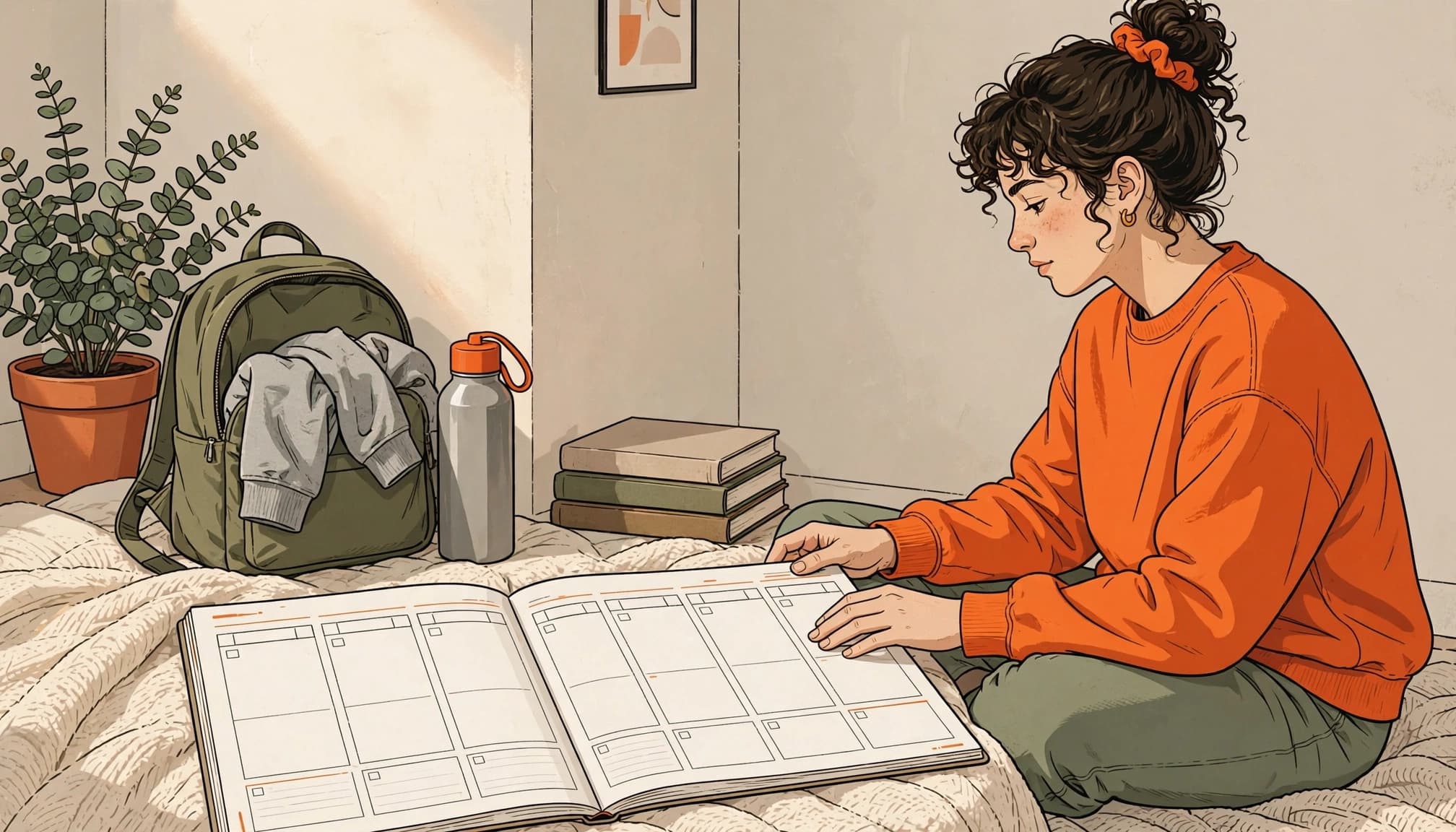
Set a 10-minute timer. Open your paper planner, bullet journal, or planning app, along with your school portal, email, and calendar. Check the next seven days only.
Write down classes, tests, quizzes, assignment deadlines, work shifts, practices, family plans, and appointments. If your dates live in different places, it may help to integrate your class schedule with Google Calendar so you can see the whole week at once.
Don’t try to solve the entire semester tonight. You’re looking for what needs your attention this week.
Pick your top three and add breathing room
Choose three academic priorities. Pick work with a close deadline, a large grade impact, or material that will take real brainpower.
Then write the next physical action for each one on your to-do list. “Work on history” is fuzzy. “Find two sources for the history essay” gives you a place to begin.
Leave 15-minute buffer blocks between classes or commitments when you can. Walking across campus, eating lunch, and finding a charger all take time. Your calendar shouldn’t pretend you teleport.
If every open hour is filled with work, your plan has no room for a bad bus ride, a longer practice, or a normal human off day.
Your Sunday Reset Checklist for Busy Students
Use this list to organize home tasks and school basics without trying to finish everything. Keep it flexible. You don’t need to complete every item each Sunday. Check off the tasks that will help most this week.
These selected household chores focus on useful tidying and preparation, not a complete cleaning session.
Handle school and home basics
- Check your calendar and deadlines (10 minutes). Add new assignments, quizzes, readings, and forms from your school portal or syllabus.
- Choose study sessions (10 minutes). Block time for the first step of your top three priorities. You can use 60 to 90-minute sessions with 10 to 15-minute breaks if that works for your focus.
- Do one visible tidy (10 to 15 minutes). Clear your desk, nightstand, floor, or bathroom counter. Pick the spot that bugs you most.
- Empty and reset your backpack (5 minutes). Toss trash, file papers you need, and restock pens, chargers, and headphones.
- Start doing the laundry if you need clean clothes (5 minutes active time). Clean clothes can prevent Monday stress. Fold them later while listening to music or watching something low-key.
If a paper planner feels better, use it. If you prefer an app, use that. The best system is the one you will open on a tired Tuesday.
For longer sessions, build a consistent study routine around the times when you usually have the most energy, not the times that look impressive on paper.
Set up Monday without overdoing it
- Pack your bag and charge your devices (5 minutes).
- Choose clothes or set aside what you need (3 minutes).
- Put water, lunch money, transit pass, or keys where you can see them (2 minutes).
- Write one Monday priority (2 minutes). Keep it small enough to start.
That last step matters. Monday doesn’t need a heroic comeback story. It needs a clear first move.
If assignments are scattered across classroom tabs and screenshots, you can also create a Notion assignment tracker that shows what’s due in the next week.
Plan Food Without Making Sunday Harder
Meal planning can save you from the 4 p.m. “there is nothing to eat” situation. But it shouldn’t turn into a cooking show challenge when you have homework waiting.
Check what you already have
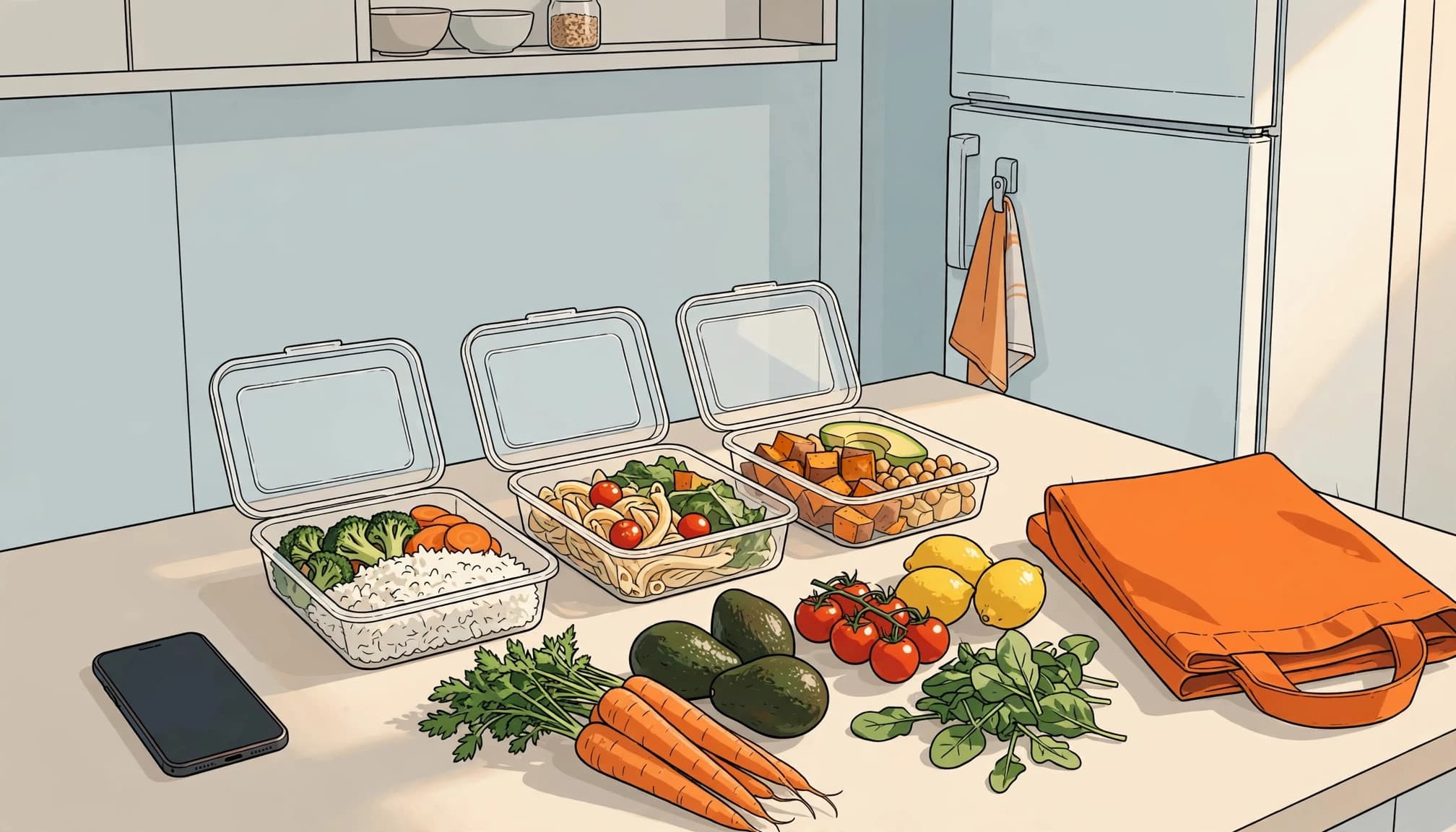
Look in the fridge, freezer, and pantry before grocery shopping or making a grocery list. Choose two or three easy options that use what is already there.
Think sandwiches, pasta, eggs, yogurt, rice bowls, frozen vegetables, soup, fruit, or snack plates. Keep meal planning simple with two or three repeatable meals. You don’t need seven different dinners. Repeating a meal is allowed. Your future self will not complain.
If you’re a parent helping a younger student, let them pick one lunch and one after-school snack they can make or grab easily.
Choose convenient over complicated
Prep one helpful thing, not ten. Wash fruit, portion snacks, cook rice, or make overnight oats. That’s enough.
Keep a few low-effort backups around for busy weeks, especially during exams or sports seasons. Grocery shopping helps when it removes weekday decisions, but a quick store run or delivery order can work too.
Keep the Relaxation Part of Sunday
A reset works better when it includes rest on purpose. Life balance matters, too. Otherwise, you might clean for two hours, avoid homework for three more, then feel guilty while doom scrolling at midnight. Not exactly the cozy Sunday vibe.
Put a boundary around your phone
You don’t have to ban your phone. Try a short digital detox by putting it face down in another room for 20 minutes while you plan, tidy, or pack your bag.
Set a timer before you open TikTok, YouTube, or group chats. When it rings, decide if you want more screen time instead of sliding into it by accident. That small pause can interrupt doom scrolling and give you a choice.
Pick self-care that feels like actual rest
Your self-care routine doesn’t need to involve buying anything. Read a chapter, take a shower, call a friend, stretch, play a game, listen to music, or watch one comfort show episode.
Aim for sleep, too. Getting at least seven hours is a solid target when you can manage it. Sleep and restorative downtime support your mental health. A calmer evening routine can also make bedtime feel easier. Your Monday self deserves more than a rushed morning and a giant coffee.
Build a workout schedule if it helps you stay consistent, but keep it realistic. A 15-minute walk counts. So does rest when your body needs it.
The 30-Minute Quick Reset for Overloaded Weeks
Some weeks are a lot. Maybe you worked all weekend. Maybe family stuff happened. Maybe your brain is done. Use this quick reset instead of skipping everything. It’s one of the simplest productivity tips because it lowers the starting barrier.
- Spend 10 minutes checking school platforms and your calendar. Write down only what is due in the next seven days.
- Spend 10 minutes preparing Monday. Pack your bag, charge your device, and set out what you need. This removes decisions from your morning routine.
- Spend 10 minutes doing one relief task. Start laundry, shower, clear your desk, or make a simple food plan.
Then stop.
You can plan your week as a student in more detail when you have the time. For now, give yourself a decent starting point and get some rest.
FAQ
What if Sunday is already packed with work, sports, or family plans?
Move your reset to Friday afternoon, Saturday evening, or Monday morning. A reset is a weekly tool, not a rule tied to one day. Even 10 minutes before bed can help you catch deadlines and prepare your bag.
Do I need to meal prep every week?
Nope. Meal planning can be as simple as checking what food is available and choosing a few easy options. During a packed week, stock a couple of snacks and know your quickest meal choices. That still counts.
What if doom scrolling takes over my Sunday?
Start again without guilt. Set a short timer, take a phone-free break, or move your reset to another day. One missed Sunday doesn’t erase your progress.
How do I know if my reset is too long?
If you dread it, keep postponing it, or finish Sunday feeling more exhausted, cut tasks. During your weekly review, ask what helped, what felt unnecessary, and what created more stress than it removed.
Your routine should support your life, not take it over.
A Better Monday Starts Small
The point of a Sunday reset checklist isn’t to control every minute of your week. It’s a small clean slate that gives Monday a softer landing.
Check what is coming, prepare a few basics, and protect time to rest. When life gets busy, return to the minimum version. A reset that fits your real life is the one you’ll keep using.