Why Take Effective Notes: Boosting Memory and Focus
Most American students do not realize how much their academic success depends on effective note-taking. Mastering this skill goes far beyond copying everything a teacher says. In fact, students using organized note strategies can see a dramatic improvement in retention and understanding compared to passive listeners. By learning what makes notes truly effective and why they matter, you gain tools that will boost your learning in class and beyond.
Key Takeaways
| Point | Details |
|---|---|
| Effective Note-Taking Enhances Learning | Good notes are essential for understanding and remembering key concepts, transforming passive listening into active engagement. |
| Different Methods Cater to Varied Styles | Experiment with different note-taking techniques, such as outlining or mind mapping, to find what works best for your learning style. |
| Good Notes Improve Memory and Focus | Taking effective notes helps reinforce memory retention and keeps you actively engaged during lectures. |
| Avoid Common Mistakes | Steer clear of passive note-taking, disorganization, and perfectionism to create notes that truly aid your comprehension. |
What Are Effective Notes and Their Purpose
Taking effective notes is more than just writing down everything you hear in class. It’s about creating a strategic system that helps you understand, remember, and review important information. Effective note-taking is a crucial skill that actively engages you with learning material, transforming passive listening into an interactive learning experience.
At its core, effective notes capture key concepts, organize information logically, and help you connect different ideas. Think of your notes like a personal roadmap through complex subjects. When done right, they become powerful tools that boost your comprehension and memory retention. Research shows that good note-taking practices can significantly improve academic performance by enhancing focus and understanding.
Good notes serve multiple purposes beyond just recording information. They help you:
- Concentrate during lectures
- Break down complex topics into digestible chunks
- Create personal study guides
- Identify important concepts quickly
- Prepare more efficiently for exams
Remember, effective note-taking isn’t about writing down every single word. It’s about being selective, understanding the material, and creating a personal reference that makes sense to you. Your notes are your learning secret weapon – use them wisely!
Different Note-Taking Methods Explained
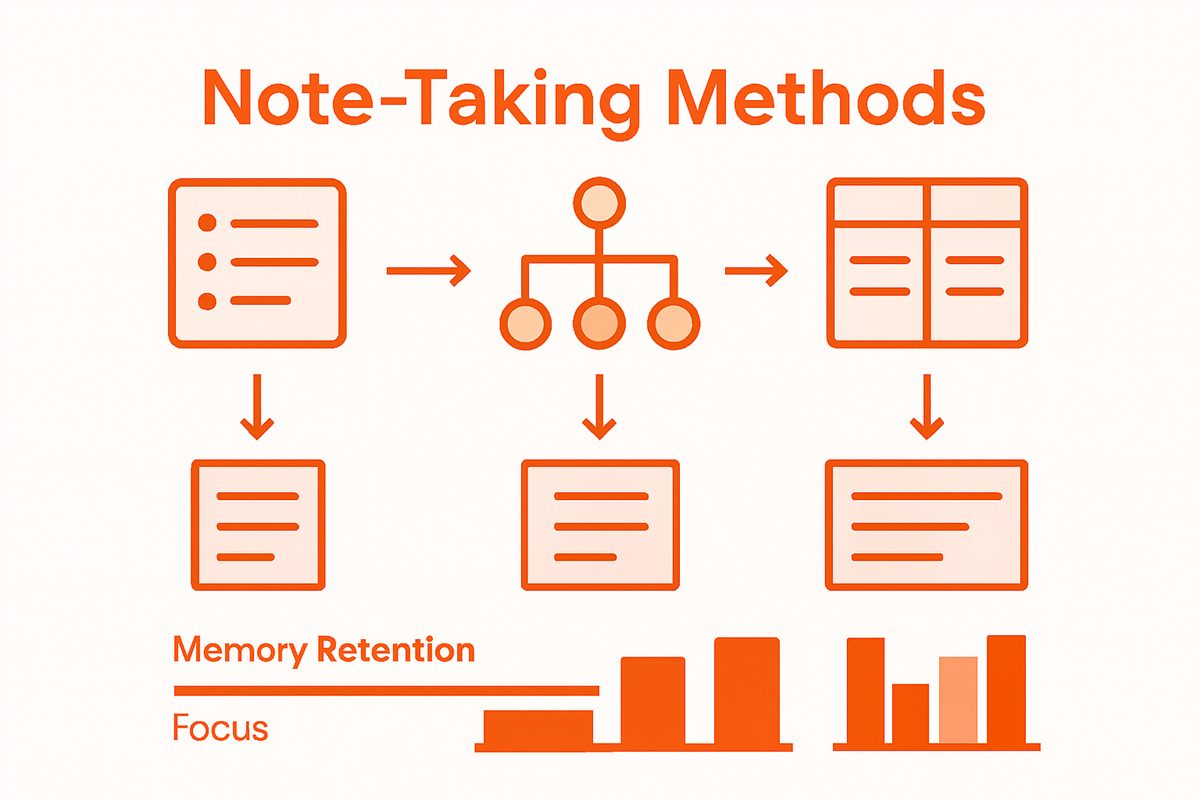
Note-taking isn’t a one-size-fits-all skill. Different methods work better for different subjects and learning styles. Understanding various note-taking techniques can help you discover your most effective approach, allowing you to maximize your learning potential.
Let’s explore some popular note-taking methods that can transform how you capture and retain information:
-
Outline Method: This classic approach involves creating a hierarchical structure with main topics, subtopics, and supporting details. It’s great for linear thinkers who like organized, structured information. The outline method breaks down complex subjects into digestible chunks, making it easier to review and understand.
-
Boxing Method: A visual approach where you divide your page into different “boxes” or sections. Each box represents a different concept or idea, helping you compartmentalize information and see connections between different topics. This method is particularly useful for creative learners who think in visual patterns.
-
Cornell Method: Divided into three sections – notes, cues, and summary. This method encourages active engagement by requiring you to create questions and summaries alongside your main notes. It’s an excellent strategy for deep learning and long-term retention.
-
Mind Mapping: A visual technique where you start with a central topic and branch out with related ideas. It’s perfect for brainstorming, understanding complex relationships, and seeing the big picture of a subject.
-
Charting Method: Best for comparing and contrasting information. You create columns and rows to organize facts, making it ideal for subjects like history, science, or comparative studies.
Remember, the best note-taking method is the one that works for you. Don’t be afraid to experiment and combine techniques to find your perfect style. Your notes are a personal tool for understanding and remembering information.
How Good Notes Enhance Memory and Focus
Memory and focus are like muscles – they get stronger with the right exercise. When you take good notes, you’re not just writing down information, you’re actually training your brain to learn more effectively. Taking notes leads to significant improvements in academic performance and information retention, creating a powerful learning strategy that goes far beyond simple record-keeping.

The act of note-taking triggers multiple cognitive processes that enhance your learning. When you actively engage with information by writing it down, you’re forcing your brain to process and filter content, which helps convert short-term memories into long-term understanding. Strategic note-taking techniques like color coding and recognizing key repetitions can dramatically improve your focus during lectures.
Here’s how good notes specifically boost memory and focus:
- Improves active listening skills
- Helps you identify and remember key concepts
- Reduces cognitive overload by organizing complex information
- Creates a personalized reference for future study
- Increases engagement during learning sessions
Think of your notes as a personal roadmap through complex information. By deliberately selecting what to write and how to structure your notes, you’re creating a powerful learning tool that helps your brain connect, process, and retain information more effectively. Your notes aren’t just a record – they’re a learning strategy.
How forgetting actually helps you remember can further enhance your note-taking approach, making your learning process even more powerful and efficient.
Real-World Uses for Effective Note-Taking
Note-taking isn’t just a classroom skill – it’s a powerful tool that transforms how you absorb, process, and apply information in every aspect of your life. The Cornell Note Taking Method provides a structured approach to recording and reviewing notes that extends far beyond academic settings, making it a versatile strategy for personal and professional growth.
Professional environments demand quick thinking and information retention. Effective note-taking techniques can dramatically improve productivity and information management in workplace settings. Whether you’re in a business meeting, conference, or training session, good notes help you:
- Track action items and key decisions
- Capture critical details and insights
- Create personal reference documents
- Demonstrate engagement and professionalism
- Support better follow-up and implementation
Beyond professional settings, note-taking skills prove invaluable in personal development. From planning personal projects to documenting important conversations, your note-taking approach can help you:
- Organize complex personal goals
- Remember important family discussions
- Track creative ideas and inspirations
- Plan personal growth strategies
- Document important life moments and lessons
The Scribble Study Method offers a surprisingly easy way to take better notes and remember more, proving that effective note-taking is less about perfection and more about finding a system that works for you. Your notes are a personal roadmap – make them count.
Common Note-Taking Mistakes to Avoid
Note-taking is a skill that improves with practice, but many students unknowingly sabotage their learning by making common mistakes. Understanding and avoiding these pitfalls can dramatically improve your ability to capture and retain important information.
One of the most significant errors students make is passive note-taking. Not staying actively involved during class and taking insufficient notes can severely hinder your learning process. Here are the top mistakes to watch out for:
- Transcribing Everything: Writing down every single word is counterproductive. Instead, focus on key concepts and main ideas.
- Ignoring Context: Notes should connect ideas, not just list disconnected facts.
- Inconsistent Review: Notes are useless if you don’t revisit and process them regularly.
- Poor Organization: Messy, unstructured notes make later review challenging.
- Overthinking Perfection: Your notes are for you, not a museum display.
The secret is finding a balance. Your notes should be clear, concise, and meaningful to you. Don’t worry about making them look pretty – focus on capturing understanding. The Feynman Technique can help you take notes that truly reflect your comprehension, turning note-taking from a chore into a powerful learning tool.
Remember, good notes are about quality, not quantity. They’re your personal roadmap to understanding, not a verbatim transcript of everything said.
Master Your Note-Taking and Boost Your Focus Today
Struggling to retain key concepts and stay focused during lectures? This article highlights the challenge of turning passive note-taking into an active learning strategy that improves memory and comprehension. Many learners find themselves overwhelmed by information or distracted, but the right note-taking methods can turn your notes into powerful tools for success. Effective notes help you concentrate, organize complex ideas, and create a personalized study roadmap that supports long-term retention.
If you want to unlock these benefits and overcome common note-taking pitfalls, explore proven strategies and practical tips at Learning with Angie. Start transforming your study habits by discovering effective note-taking techniques designed for students just like you. Take control of your focus and memory now and visit Learning with Angie to build habits that will enhance your academic journey and beyond.
Frequently Asked Questions
What are effective notes and why are they important?
Effective notes are a strategic system that captures key concepts and organizes information logically. They enhance understanding, memory retention, and academic performance by transforming passive listening into an active learning experience.
What are the best note-taking methods?
Popular note-taking methods include the Outline Method, Boxing Method, Cornell Method, Mind Mapping, and Charting Method. Each method caters to different learning styles and subject types, helping you find the approach that works best for you.
How does good note-taking improve focus and memory?
Good note-taking enhances focus and memory by encouraging active listening, organizing complex information, and creating a personalized reference. This process helps convert short-term memories into long-term understanding, making it easier to recall information later.
What common mistakes should I avoid when taking notes?
Common mistakes in note-taking include transcribing everything verbatim, ignoring context, inconsistent review, poor organization, and overthinking perfection. Instead, focus on key concepts, organizing logically, and regularly revisiting your notes.
Recommended
- How Forgetting Makes You Remember What You Study Effectively
- How to Take Notes in APUSH—Improve Speed, Memory, and Grades
- Complete Guide to Good Note Taking Skills
- 15 Reasons the Feynman Technique Is a Game-Changer for Students
- 7 Best Study Gadgets for Students to Boost Learning Power – Projector Display