
Book on How to Study Effectively: Academic Success Unlocked
Facing endless assignments and exam pressures, many North American high school juniors and seniors struggle to find study methods that actually work. Balancing academics with activities and health can feel overwhelming at times. That’s why understanding evidence-based study strategies, like spaced repetition and active recall, makes a real difference. By focusing on smarter, not harder, study habits, students can improve retention, manage their workload, and build skills for success both inside and outside the classroom.
Key Takeaways
| Point | Details |
|---|---|
| Personalized Learning Strategies | Students should identify their unique learning styles and create customized study systems to enhance their learning efficiency. |
| Active Learning Techniques | Implement evidence-based methods such as spaced repetition and active recall to promote long-term understanding. |
| Time Management Skills | Develop a flexible and strategic time management system to balance academic responsibilities while minimizing stress. |
| Challenge Study Myths | Critically examine commonly held beliefs about studying to adopt more effective, research-supported learning techniques. |
Study Skills Books: Core Concepts and Goals
Study skills books are more than just academic instruction manuals – they’re roadmaps designed to transform how students learn, retain information, and achieve academic success. These comprehensive resources go beyond traditional study techniques, diving deep into the psychological and strategic aspects of effective learning.
The core objectives of study skills books typically revolve around several critical areas:
- Developing personalized learning strategies
- Understanding individual learning styles
- Enhancing memory and retention techniques
- Building time management skills
- Managing academic stress and motivation
Evidence-based study strategies demonstrate that successful academic performance isn’t about working harder, but working smarter. These books aim to replace ineffective habits like cramming with scientifically proven methods that promote long-term understanding and knowledge retention.

Here is a summary contrasting traditional study methods with evidence-based strategies:
| Approach | Main Focus | Typical Outcome | Example Technique |
|---|---|---|---|
| Traditional Techniques | Passive memorization | Short-term retention | Rereading textbooks |
| Evidence-Based Methods | Active cognitive engagement | Long-term understanding | Spaced repetition, recall |
Most study skills guides emphasize the importance of psychological preparedness alongside technical learning techniques. They recognize that academic success isn’t just about memorization, but about developing a holistic approach to learning that includes self-belief, goal-setting, and personal growth. These resources teach students how to:
- Identify personal learning barriers
- Create personalized study systems
- Develop adaptive learning techniques
- Maintain consistent academic motivation
Academic potential isn’t predetermined – it’s cultivated through strategic approaches and consistent effort. Study skills books provide the toolkit students need to unlock their intellectual capabilities.
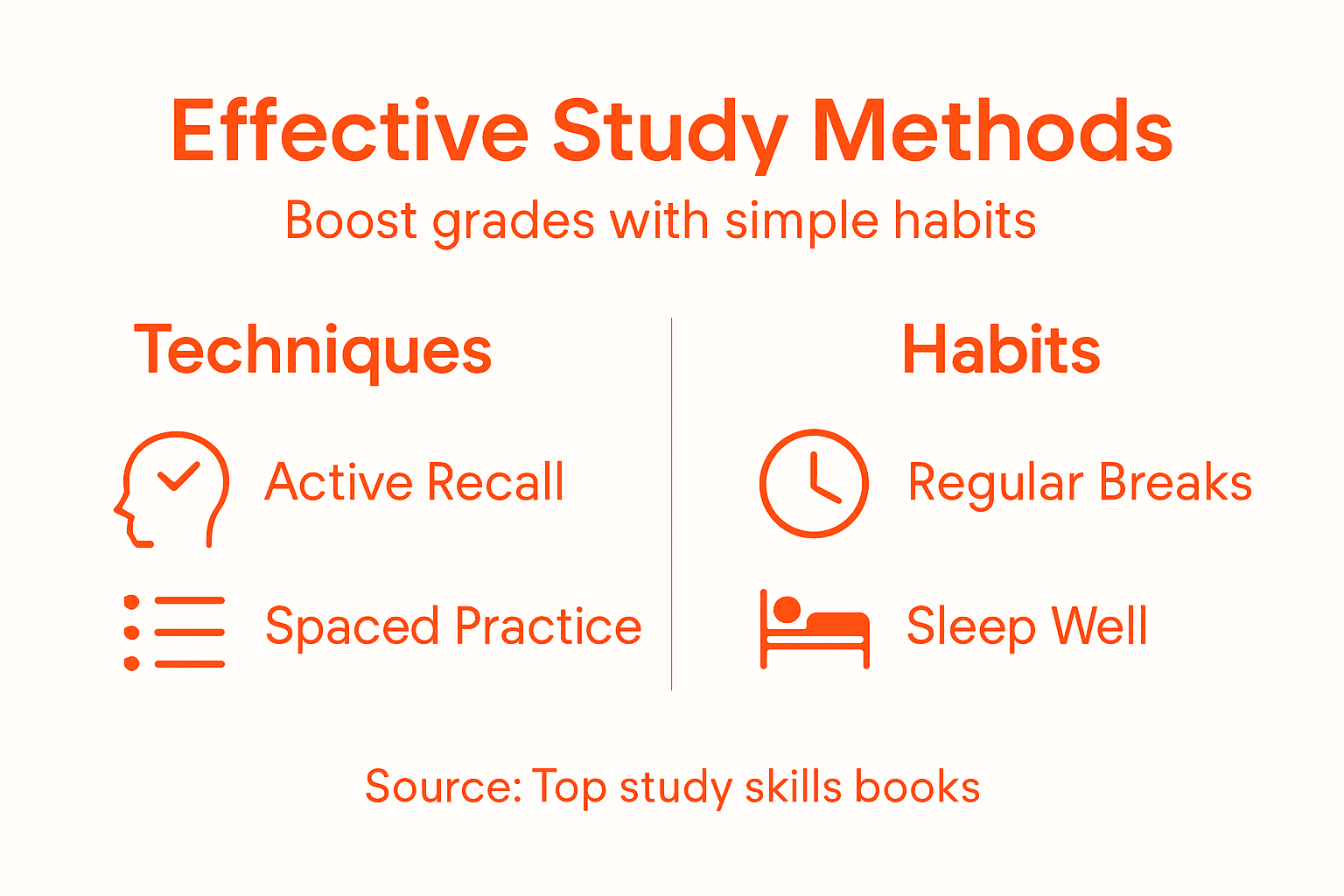
Pro tip: Design a personalized study system that matches your unique learning style and strengths, rather than following a one-size-fits-all approach.
Key Study Techniques in Top Books
Study skills books reveal a sophisticated arsenal of learning techniques that go far beyond traditional memorization methods. These resources introduce students to scientifically validated strategies designed to transform how we absorb, process, and retain academic information.
Research-backed techniques from top study guides emphasize several core approaches:
- Spaced repetition for long-term memory retention
- Active recall instead of passive reading
- Retrieval practice through self-testing
- Interleaving different subject materials
- Focused, distraction-free study sessions
Cognitive learning strategies demonstrate that effective studying requires more than just time investment – it demands strategic, intentional learning methods. By challenging traditional study habits, these techniques help students maximize their cognitive potential and academic performance.
Leading authors like Cal Newport advocate for a revolutionary approach to studying. Instead of endless hours of rote memorization, they recommend quality over quantity in learning. This means:
- Creating structured study schedules
- Using practice quizzes as learning tools
- Applying concepts rather than just memorizing facts
- Minimizing multitasking during study sessions
The most effective study techniques require cognitive effort and discipline. They push students out of their comfort zones, encouraging active engagement with material instead of passive absorption. By implementing these strategies, learners can significantly enhance their understanding and retention of complex academic content.
Pro tip: Design your study sessions around focused, intentional learning blocks that challenge your cognitive abilities rather than mindless repetition.
This table highlights the unique benefits of top study techniques:
| Technique | Key Benefit | Best For |
|---|---|---|
| Spaced Repetition | Boosts long-term memory | Complex, detailed subjects |
| Active Recall | Improves comprehension | Definitions, concepts |
| Interleaving Practice | Enhances flexible thinking | Multiple subjects/topics |
| Retrieval Practice | Deepens retention | Exam preparation |
Types of Learning Strategies Explained
Learning strategies are not one-size-fits-all solutions but sophisticated cognitive tools designed to help students maximize their academic potential. Understanding these strategies allows learners to customize their approach and transform how they absorb and retain information.
Advanced learning techniques reveal six core strategies that form the foundation of effective studying:
- Spacing learning across multiple sessions
- Retrieval practice through active recall
- Interleaving different subject materials
- Elaboration connecting new information to existing knowledge
- Using concrete examples to enhance understanding
- Dual coding combining visual and verbal information
Research demonstrates that these strategies work by engaging different cognitive processes. They challenge traditional study methods like passive reading and rote memorization, encouraging students to actively interact with their learning material.
The effectiveness of learning strategies varies based on individual characteristics and learning contexts. A comprehensive meta-analysis highlights two particularly powerful approaches:
- Distributed practice (spreading study time)
- Practice testing (self-quizzing)
These techniques are not just academic recommendations but scientifically validated methods for enhancing knowledge retention. By understanding and applying these strategies, students can significantly improve their learning efficiency and academic performance.
Pro tip: Experiment with different learning strategies to discover which combination works best for your unique learning style and cognitive strengths.
Time Management and Productivity Habits
Time management is the secret weapon that separates successful students from those constantly struggling with academic demands. It’s not about working harder, but working smarter by creating strategic systems that maximize productivity and minimize stress.
Student time management strategies reveal critical approaches for academic success:
- Creating detailed personal calendars
- Setting clear task reminders
- Prioritizing academic and personal commitments
- Building flexible study schedules
- Establishing consistent routines
- Balancing academic work with personal time
Effective time management goes beyond simple scheduling. It’s a comprehensive approach that involves understanding personal energy levels, recognizing productivity patterns, and developing discipline. Students who master these skills can transform their academic experience from chaotic to controlled.
Research highlights four high-impact productivity techniques:
- Strategic goal-setting
- Task prioritization
- Breaking large projects into smaller steps
- Regular performance review and adjustment
These techniques are not just theoretical concepts but practical tools that can dramatically improve academic performance and personal well-being. By implementing systematic approaches to managing time and workload, students can reduce stress, increase efficiency, and create more space for learning and personal growth.
Pro tip: Develop a personalized time management system that adapts to your unique energy rhythms and learning style, rather than following a rigid, one-size-fits-all approach.
Common Mistakes and Study Myths
Students often fall into predictable traps when developing study strategies, believing myths that can actually undermine their academic performance. Understanding these misconceptions is the first step toward creating more effective learning approaches.
Common study myths that sabotage academic success include:
- Multitasking improves productivity
- Studying means reading materials repeatedly
- Long study sessions are more effective
- Intelligence is a fixed trait
- Pulling all-nighters helps academic performance
- Learning styles determine academic success
- Highlighting is an effective study method
Each of these beliefs represents a dangerous misconception that can significantly hinder student performance. Cognitive research consistently demonstrates that these myths not only fail to improve learning but can actively reduce academic effectiveness.
The most destructive study myths often emerge from misunderstandings about how human memory and learning actually work. Students mistakenly believe that:
- Passive reading equals learning
- Memorization is the same as understanding
- Natural talent matters more than consistent effort
- Stress and pressure enhance cognitive performance
Successful students recognize that learning is an active, dynamic process requiring strategic engagement, consistent practice, and a growth mindset. By challenging these myths and adopting evidence-based study techniques, students can transform their academic approach and dramatically improve their learning outcomes.
Pro tip: Challenge your existing study beliefs by critically examining the evidence behind your current learning strategies, and be willing to adapt when proven methods contradict your intuition.
Choosing the Right Book for Your Needs
Selecting the perfect study skills book is like finding a personalized roadmap to academic success. It’s not about grabbing the most popular title, but discovering a resource that genuinely speaks to your unique learning journey and challenges.
Study skills book selection strategies require careful consideration of multiple factors:
- Your current academic level
- Specific learning challenges
- Personal learning preferences
- Discipline-specific requirements
- Recommended expert endorsements
- Budget and accessibility
Successful students understand that no single book is a magic solution. Each study skills resource offers different perspectives and techniques, making it crucial to approach selection with a strategic mindset. Some books excel at general study methods, while others provide targeted advice for specific academic disciplines.
The most comprehensive study skills books typically cover more than just technical learning strategies:
- Self-management techniques
- Psychological barriers to learning
- Motivational strategies
- Task management skills
- Personal development approaches
Beyond content, consider the book’s writing style, practical examples, and alignment with your personal learning goals. A great study skills book should feel like a conversation with a supportive mentor, offering insights that resonate with your individual academic experience.
Pro tip: Read multiple book reviews, preview chapters when possible, and don’t hesitate to combine insights from different resources to create your personalized study strategy.
Unlock Your Academic Potential with Proven Study Strategies
Are you struggling to move beyond ineffective study habits like cramming and passive reading? This article highlights key challenges such as crafting personalized learning systems, mastering time management, and adopting evidence-based techniques like spaced repetition and active recall. If you want to stop guessing and start studying smarter, understanding these core concepts is essential for long-term academic success.
Discover tailored solutions designed to match your unique learning style and boost productivity. At Learning With Angie, you can explore resources that help you build focused study routines, manage your time strategically, and cultivate motivation to overcome learning barriers. Take control of your educational journey today by visiting our landing page and start implementing methods that truly work. Why wait to unlock your full potential? Begin your transformation now with expert-backed tools and guidance.
Frequently Asked Questions
What are the key benefits of using study skills books?
Study skills books provide personalized learning strategies, enhance memory retention, improve time management skills, and help manage academic stress, ultimately leading to greater academic success.
How do evidence-based study strategies differ from traditional study methods?
Evidence-based study strategies focus on active cognitive engagement, such as retrieval practice and spaced repetition, while traditional methods often rely on passive memorization techniques like rereading.
What types of learning strategies are commonly recommended in study skills books?
Common learning strategies include spaced learning, active recall, interleaving subjects, elaboration, and dual coding, which help students engage with material in various effective ways.
How can I choose the right study skills book for my needs?
Consider factors such as your current academic level, specific learning challenges, personal learning preferences, and the writing style of the book to find a resource that resonates with your unique learning journey.