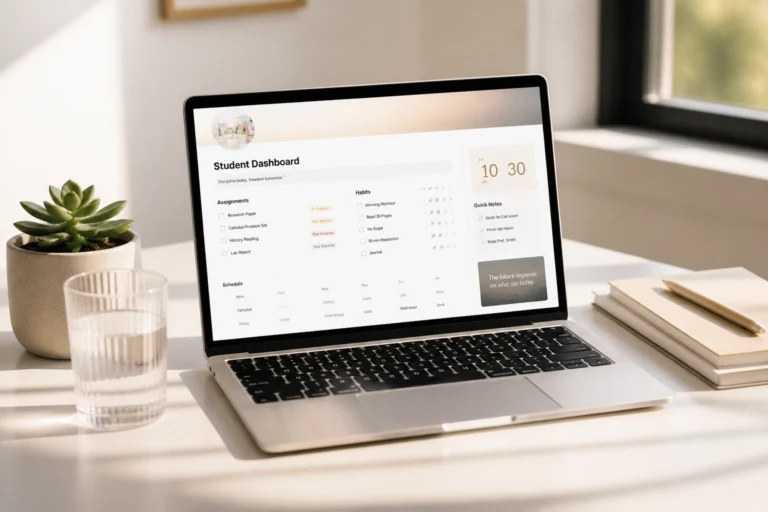
Guide to healthy study habits for students and parents
Highlighting textbooks and rereading notes feel productive, but research shows these popular methods deliver surprisingly weak results. Students spend hours on strategies that barely move the needle on retention or exam performance. Meanwhile, evidence-backed techniques like practice testing and spaced repetition remain underused despite delivering measurably stronger outcomes. This guide reveals the study habits that actually work, backed by cognitive science, and shows both students and parents how to implement them for real academic gains. You’ll discover actionable strategies to enhance focus, boost memory, and build routines that support long-term success without wasting time on ineffective methods.
Key Takeaways
| Point | Details |
|---|---|
| Practice testing | Retrieval practice strengthens memory and improves exam performance more than rereading or highlighting. |
| Spaced repetition | Spacing study sessions over time enhances consolidation and long term retention. |
| Pomodoro focus | The Pomodoro method uses short focused intervals with breaks to reduce fatigue and improve retention. |
| Parent role | Parents support routines and encourage effort rather than micromanaging to bolster academic success. |
Understanding effective study techniques
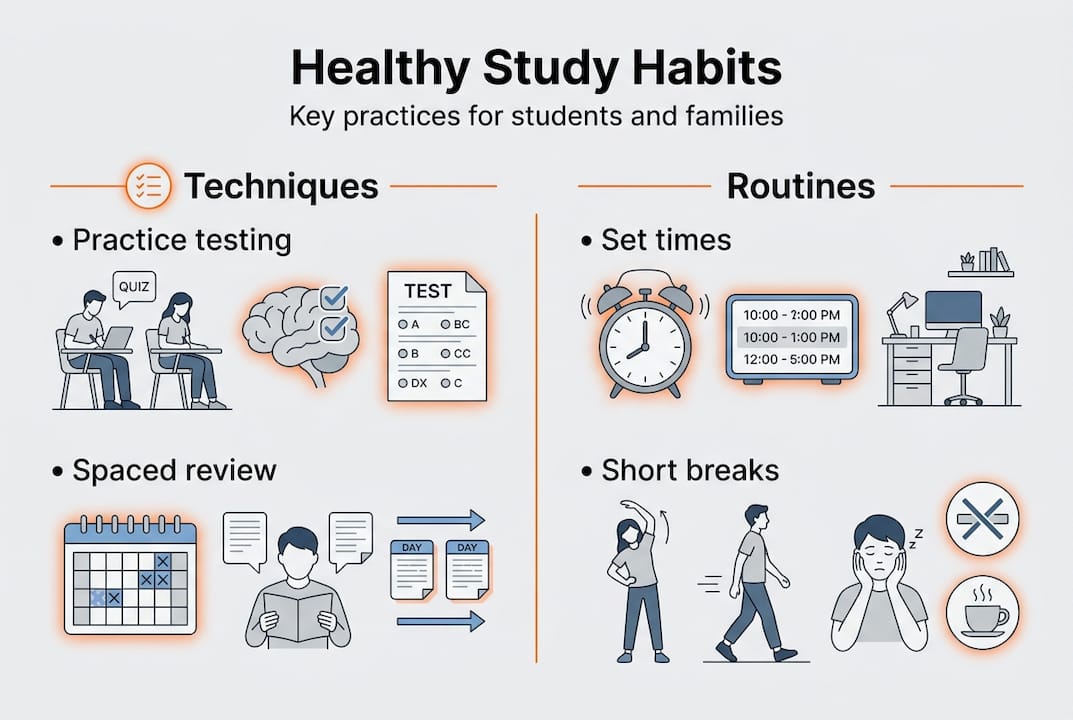
Not all study methods deliver equal results. Cognitive psychology research evaluates techniques based on how well they improve long-term retention and transfer of knowledge. Practice testing and distributed practice offer high utility, meaning they work across diverse content types and student populations. These methods force active retrieval, which strengthens memory pathways far more effectively than passive review.
Practice testing involves recalling information from memory without looking at notes. This retrieval process creates stronger neural connections than simply recognizing information during rereading. Distributed practice spaces study sessions over time rather than cramming everything into one marathon session. Spacing allows consolidation, where your brain processes and stores information more permanently between sessions.
Elaborative interrogation and self-explanation provide moderate benefits. Elaborative interrogation means asking yourself why facts are true, which deepens understanding by connecting new information to existing knowledge. Self-explanation involves describing concepts in your own words and reasoning through problems step by step. Both techniques engage deeper processing than surface-level review.
Common strategies like highlighting and rereading score low on utility scales. Highlighting feels active but rarely involves meaningful cognitive engagement. Students often highlight too much or fail to process what they mark. Rereading creates familiarity that students mistake for mastery, leading to false confidence before exams. Use these methods sparingly, only as initial exposure before switching to higher-impact techniques.
Study technique comparison:
| Technique | Utility Rating | Best Use Case |
|---|---|---|
| Practice testing | High | All subjects, especially fact-heavy content |
| Distributed practice | High | Long-term retention, cumulative exams |
| Elaborative interrogation | Moderate | Conceptual subjects like history, science |
| Self-explanation | Moderate | Problem-solving, math, complex processes |
| Highlighting | Low | Initial reading only, minimal use |
| Rereading | Low | Quick review after active study methods |
For high school students building foundational habits, start with good study habits for high school students that emphasize active techniques. College students facing heavier workloads benefit from strategies to improve study habits that scale with increased academic demands. Both groups gain by replacing passive methods with evidence-backed alternatives that demand cognitive effort but deliver measurable results.
Enhancing focus and retention with time management strategies
Sustained focus without breaks leads to diminishing returns as mental fatigue accumulates. The Pomodoro technique structures study into focused intervals, typically 25 minutes, followed by 5-minute breaks. This pattern improves retention by 15-25% and reduces fatigue compared to continuous study sessions. Short breaks allow your brain to consolidate information and reset attention, preventing the cognitive overload that degrades performance.

Implementing Pomodoro requires minimal setup but delivers substantial benefits. Set a timer for 25 minutes and commit to single-task focus during that window. When the timer sounds, take a genuine 5-minute break away from your study space. After four intervals, extend your break to 15-30 minutes. This rhythm matches natural attention spans and prevents the mental exhaustion that makes studying feel unbearable.
Pomodoro implementation steps:
- Choose one specific task or topic for your 25-minute interval
- Eliminate distractions by silencing notifications and closing unrelated tabs
- Work with full focus until the timer signals your break
- Use breaks for physical movement, hydration, or brief relaxation
- Track completed intervals to visualize progress and maintain motivation
- Adjust interval length based on task complexity and personal attention capacity
Variations suit different learning styles and subjects. Visual learners combine Pomodoro with study techniques for visual learners like color-coded notes or diagrams created during focused intervals. Kinesthetic learners might incorporate brief physical activity during breaks to reinforce memory through movement. Dense subjects like mathematics benefit from shorter 15-minute intervals with frequent breaks, while reading-heavy subjects might extend to 35-minute sessions.
Pro Tip: Pair Pomodoro with practice testing by dedicating each interval to active recall rather than passive review. Spend 20 minutes testing yourself on material, then use the final 5 minutes to check answers and identify gaps. This combination leverages both time management and high-utility study techniques for maximum efficiency.
Consistent application of time management step by step transforms study sessions from exhausting slogs into productive, sustainable work periods. Students report feeling less overwhelmed and more in control when they can see tangible progress through completed intervals rather than facing an undefined mountain of work.
The role of lifestyle and mindset in academic success
Study techniques matter, but they operate within the broader context of daily habits that either support or undermine cognitive performance. Positive lifestyle habits correlate with higher academic performance across multiple studies. Regular meal timing, adequate sleep, and basic hygiene practices create the physiological foundation for effective learning. Students who skip breakfast or maintain irregular sleep schedules fight unnecessary battles against their own biology.
Nutrition directly impacts concentration and memory formation. Eating breakfast stabilizes blood sugar and provides the energy your brain needs for demanding cognitive work. Skipping meals leads to energy crashes that sabotage afternoon study sessions. Hydration matters too; even mild dehydration impairs attention and working memory. These aren’t minor factors but fundamental prerequisites for your brain to function optimally.
Mindset shapes how students approach challenges and deploy learning strategies. A strategic mindset predicts greater strategy use and exam success. Students with strategic mindsets actively prompt themselves to use effective techniques rather than defaulting to familiar but ineffective habits. They ask themselves what strategy fits each situation and adjust their approach based on results. This metacognitive awareness separates students who improve consistently from those who plateau.
Lifestyle factors and academic impact:
| Factor | Impact on Performance | Implementation |
|---|---|---|
| Regular breakfast | 12-18% improvement in concentration | Eat within 1 hour of waking |
| Consistent sleep schedule | 20-25% better retention and recall | Same bedtime and wake time daily |
| Adequate hydration | 10-15% improvement in attention span | Water bottle at study space |
| Daily hygiene routine | 8-12% boost in self-efficacy and focus | Morning and evening consistency |
| Physical activity | 15-20% enhancement in cognitive function | 20-30 minutes daily movement |
Pro Tip: Parents can encourage these habits by modeling them rather than nagging. Keep healthy breakfast options readily available, maintain family sleep routines, and praise effort when you notice your student following through. Avoid micromanaging; instead, create an environment where positive habits become the path of least resistance.
The connection between lifestyle and academics becomes clear when you consider learning as a physical process requiring energy, recovery, and optimal conditions. Students who balance lifestyle and academics recognize that taking care of their body isn’t separate from academic success but essential to it. Treating study habits and life habits as interconnected systems produces better outcomes than optimizing one while neglecting the other.
Tailored strategies for students with special needs and common challenges
Students with ADHD and executive function challenges benefit from the same evidence-backed techniques but need additional structure and environmental modifications. Structured environments and the Pomodoro technique benefit ADHD students by providing external organization that compensates for internal regulation difficulties. Clear routines reduce decision fatigue and make starting work less overwhelming.
Task chunking breaks large assignments into smaller, manageable pieces with defined endpoints. Instead of “study for biology exam,” chunk it into “review chapter 3 diagrams” or “practice 10 metabolism questions.” Smaller tasks feel less intimidating and provide frequent completion points that maintain motivation. Visual aids like checklists or progress trackers make abstract work concrete and visible.
Active learning techniques particularly help students who struggle with sustained attention. Movement-based memorization, teaching concepts aloud, or creating physical models engages multiple sensory channels and provides the stimulation that keeps focus from drifting. These approaches transform passive sitting into dynamic interaction with material.
Adaptation strategies for executive function challenges:
- Use timers and alarms to externalize time awareness and transition prompts
- Create dedicated study spaces with minimal visual distractions and organized materials
- Implement color-coded systems for different subjects or task types
- Build in accountability through study partners or parent check-ins at set times
- Start study sessions with a brief physical activity to regulate arousal levels
- Keep a master task list visible and update it immediately when assignments arrive
Technology offers powerful support when used strategically. Apps like Forest or Focus Keeper gamify the Pomodoro technique, providing external motivation and progress tracking. Digital planners with reminders compensate for working memory limitations. Text-to-speech tools assist with reading-heavy assignments. The key is selecting tools that genuinely support your specific challenges rather than adding complexity.
Pro Tip: Balance technology use by establishing clear boundaries. Use devices for timers, planners, and specific learning apps, but block social media and gaming during study intervals. Physical timers sometimes work better than phone apps because they eliminate the temptation to check notifications when you glance at the screen.
Building a study routine with consistent times and locations helps students with executive function challenges by reducing the cognitive load of deciding when and where to work. Routines become automatic over time, freeing mental resources for the actual learning. Understanding key studying don’ts prevents common pitfalls that disproportionately impact students who already face additional challenges.
Enhance your study habits with expert resources
Transforming study habits requires more than knowing what works; you need structured guidance for implementation. Learning with Angie provides comprehensive resources designed specifically for high school students, college students, and parents supporting academic success. Our study skills 2025 guide walks you through building effective routines from scratch, with actionable steps tailored to different learning styles and academic levels.
Creating a realistic schedule that balances coursework, activities, and rest prevents burnout while maximizing productivity. Our guide on how to create a study schedule shows you how to allocate time based on task difficulty and personal energy patterns. Combine scheduling with time management step by step strategies to ensure you’re not just busy but genuinely productive. These resources provide the frameworks you need to implement the evidence-backed techniques covered in this guide.
Frequently asked questions
What are the most effective study techniques?
Practice testing and spaced repetition consistently rank as the most effective methods for long-term retention. Practice testing forces active recall, which strengthens memory pathways more than passive review. Spaced repetition distributes study sessions over time, allowing your brain to consolidate information between sessions. Combining both techniques by testing yourself repeatedly with increasing intervals between sessions maximizes learning efficiency across all subject types.
How can parents support their child’s study habits?
Establish consistent routines by designating specific study times and creating a dedicated, organized workspace free from distractions. Model healthy habits yourself, showing that learning and time management matter at all ages. Praise effort and strategy use rather than just grades or outcomes, which encourages a growth mindset and persistence through challenges. Avoid micromanaging; instead, offer support when requested and celebrate small wins to build confidence. Resources like good study habits for high school students provide specific guidance you can share with your student.
What lifestyle changes improve academic performance?
Eating regular meals, especially breakfast, stabilizes blood sugar and provides consistent energy for cognitive work. Maintaining a consistent sleep schedule with 7-9 hours nightly allows memory consolidation and improves attention span. Basic hygiene routines and daily physical activity boost self-efficacy and cognitive function. These habits create the physiological foundation that makes effective studying possible. Students who balance lifestyle and academics recognize that caring for their body directly supports their academic goals.
How long should study sessions last?
Optimal study session length varies by individual and subject, but research supports 25-50 minute focused intervals followed by 5-10 minute breaks. The Pomodoro technique’s 25-minute intervals work well for most students and subjects, preventing mental fatigue while maintaining high-quality focus. Dense subjects like mathematics might benefit from shorter 15-20 minute intervals, while reading comprehension might extend to 35-40 minutes. The key is maintaining genuine focus during work periods and taking real breaks rather than pushing through exhaustion, which degrades retention and wastes time.