Your self-care guide: healthy habits for student success
Self-care is not a reward you earn after finals week. It is a daily practice that directly shapes how well you study, focus, and bounce back from setbacks. A lot of students push self-care to the bottom of their to-do list, treating it like a luxury they cannot afford. But self-care routines actually increase student resilience and academic performance. This guide gives you practical, research-backed strategies you can start using right now, no matter how packed your schedule is.
Key Takeaways
| Point | Details |
|---|---|
| Self-care boosts academics | Consistent routines lead to better grades, focus, and resilience for students. |
| Start small and track | Small, daily habits tracked in journals or apps build long-term success. |
| Prioritize structured methods | Mindfulness, exercise, and CBT are more effective than unstructured approaches. |
| Use campus support | Leverage wellness centers, counseling, and peer groups for a well-rounded self-care plan. |
Why self-care matters for students
Self-care, in a student context, means taking intentional actions to support your physical health, emotional well-being, and academic stamina. It is not about bubble baths or expensive spa days. It is about building habits that keep you functioning at your best when deadlines pile up and stress spikes.
Research confirms that self-care fosters better mental health, academic resilience, and higher overall performance in students. That is not a small claim. It means the students who prioritize rest, movement, and emotional check-ins are genuinely outperforming those who grind without breaks.
One of the biggest myths students carry is that taking care of yourself is somehow selfish or unproductive. It is not. Think of it this way: you cannot pour from an empty cup. Skipping sleep to study one more chapter often leads to worse retention and slower thinking the next day.
Here are the top science-backed benefits of consistent self-care:
- Reduced stress and anxiety during high-pressure academic periods
- Improved focus and concentration during study sessions
- More stable energy levels throughout the day
- Better emotional regulation when things get overwhelming
- Stronger resilience when facing academic setbacks
And here is something worth noting: long-term self-care habits are significantly more effective than sporadic efforts. Doing a face mask once during finals does not cut it. Consistency is what builds real results. If you want to go deeper on this, check out this guide on prioritizing self-care during academic challenges.
Now that it is clear why this matters, let us explore the essentials of putting self-care into practice.
Building a sustainable self-care routine
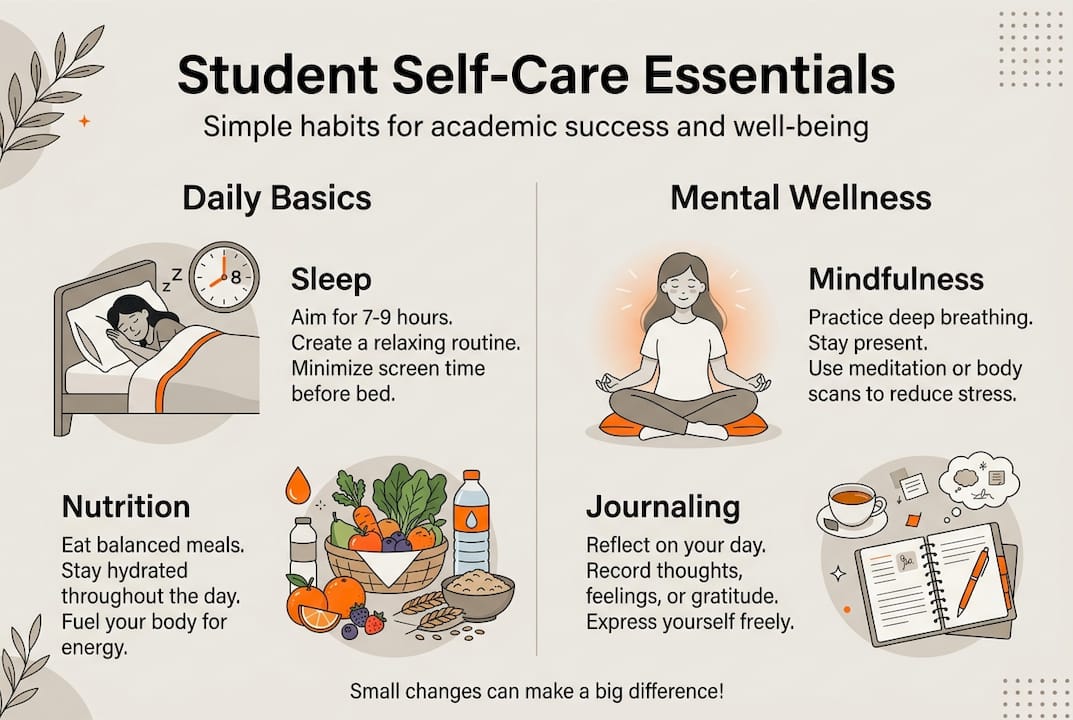
The reason most students fail at self-care is not lack of motivation. It is that they try to overhaul everything at once. Habit formation research tells us that small, consistent actions wired into your existing schedule are far more likely to stick than big dramatic changes.
A routine-building framework that works for students focuses on integration, meaning you attach new habits to things you already do. Brush your teeth? Add two minutes of deep breathing. Walk to class? Leave your earbuds out and use it as a mindful reset.
Here is a simple step-by-step approach to building your self-care routine:
- Pick one area to start. Choose physical, emotional, or academic self-care. Do not try all three at once.
- Choose one small action. A five-minute gratitude journal entry, a ten-minute walk, or a timed digital break all count.
- Attach it to an existing habit. Morning coffee, lunch break, or right after your last class are great anchors.
- Track your progress. Use a journal, planner, or app to log your habit daily. Seeing your streak grow is genuinely motivating.
- Reflect weekly. Every Sunday, ask yourself what worked and what felt forced. Adjust without guilt.
Personally, I love recommending journaling for self-growth as a starting point because it is flexible, low-cost, and incredibly effective. Even five minutes of writing about what you are grateful for can shift your mindset before a tough study session. The American Psychological Association supports starting with small actions like gratitude journaling and tracking progress with journals or apps.
If you enjoy visual planning, minimalist bullet journaling is a gorgeous way to organize your habits and keep yourself accountable.
Pro Tip: Track small wins every week. Even noting “I went for a walk three times this week” reinforces the habit loop and keeps you motivated to continue.
With the basics of routine-building in place, it is essential to choose methods proven most effective for students.
Best self-care methods for students: what works?
Not all self-care is created equal. Some approaches have strong research support, while others are more about personal enjoyment. Both have a place, but knowing the difference helps you build a smarter routine.
Evidence favors mindfulness, CBT (Cognitive Behavioral Therapy), and exercise over unstructured methods for building student resilience. CBT, which stands for Cognitive Behavioral Therapy, is a structured approach that helps you identify and reframe negative thought patterns. You can learn more about it through this CBT overview from the National Institutes of Health.
Here is a quick comparison to help you decide what fits your lifestyle:
| Practice | Type | Pros for students | Cons for students |
|---|---|---|---|
| Mindfulness meditation | Structured | Reduces anxiety, improves focus | Requires quiet space and consistency |
| Exercise (walking, gym) | Structured | Boosts mood, energy, and sleep | Time commitment |
| CBT techniques | Structured | Reframes stress and negative thinking | May need guidance to start |
| Creative hobbies | Unstructured | Fun, expressive, low pressure | Less measurable impact |
| Social hangouts | Unstructured | Emotional connection, stress relief | Can become avoidance if overused |
Signs that a self-care method is actually working for you:
- You feel noticeably calmer or more focused after doing it
- You look forward to it rather than dreading it
- Your sleep quality or energy levels have improved
- You are handling stressful situations with more patience
The benefits of journaling also fit beautifully here. Journaling bridges structured and unstructured self-care because it gives you a framework while still being personal and creative. Check out this journaling guide for a practical starting point.
Pro Tip: Mix at least one structured practice (like a ten-minute meditation or a workout) with one activity you genuinely enjoy. The structured method builds resilience; the enjoyable one keeps you coming back.
After understanding the options, it is time to apply these strategies in a typical student week for lasting results.
Integrating self-care into your academic life
Knowing what to do and actually fitting it into a packed student schedule are two very different things. Between classes, assignments, part-time jobs, and a social life, it can feel like there is simply no room. But the truth is, self-care does not need a big time block to be effective.
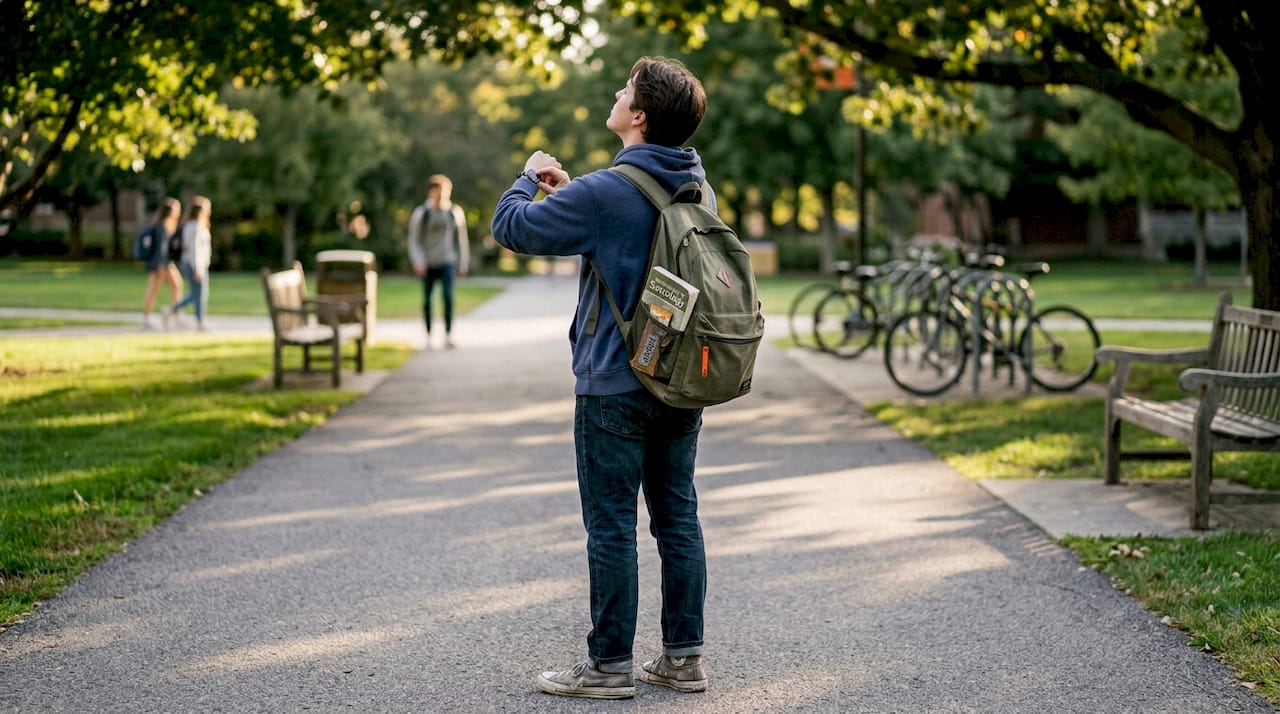
Self-care should be approached as a long-term lifestyle, not a one-off fix. That means weaving small moments of care into your existing week rather than waiting for a free afternoon that may never come.
Here is an example of what a realistic student week could look like with self-care built in:
| Day | Morning | Afternoon | Evening |
|---|---|---|---|
| Monday | 5-min journaling | Walk between classes | Screen-free wind-down |
| Tuesday | Deep breathing | Healthy lunch break | Light stretching |
| Wednesday | Gratitude list | Study break walk | Early bedtime |
| Thursday | Mindful coffee | Social connection | Journaling |
| Friday | Slow morning | Creative hobby | Rest or social time |
| Weekend | Sleep in | Nature walk or exercise | Reflect and plan ahead |
During high-stress periods like exams or big project deadlines, here is how to adjust without abandoning your habits:
- Shorten, do not skip. Cut your walk from 20 minutes to 10. Keep the habit alive even in a smaller form.
- Prioritize sleep above all else. Pulling all-nighters consistently backfires. Protect at least seven hours.
- Use your planner. Schedule self-care like a class. If it is on the calendar, it is more likely to happen. Your student bullet journaling setup is perfect for this.
- Lean on your support system. Text a friend, call a parent, or reach out to a campus resource.
Pro Tip: Even 10 minutes of intentional self-care daily is more powerful than a two-hour session once a month. Consistency always outperforms duration.
While personal commitment is key, students have unique support networks through their schools. Let us use them wisely.
Leveraging campus resources and community support
You do not have to build your self-care routine alone. Most colleges and universities offer a surprisingly wide range of free or low-cost wellness resources that students rarely take full advantage of.
Typical campus resources include counseling centers, student recreation facilities, peer support groups, wellness workshops, and mental health awareness events. These exist specifically for you, and using them is a sign of strength, not weakness.
Signs you may need professional support beyond self-care habits:
- Persistent sadness or anxiety that does not lift after a few days
- Difficulty completing basic tasks like eating, sleeping, or attending class
- Feeling disconnected from friends, family, or activities you used to enjoy
- Thoughts of hopelessness or harming yourself
“If you are experiencing ongoing distress that interferes with your daily life, please reach out to a campus counselor or mental health professional. Early support makes a significant difference in recovery and long-term well-being.”
The American Psychological Association recommends that universities institutionalize self-care through wellness centers and counseling resources, recognizing that student mental health is a campus-wide responsibility.
Beyond campus, community support for mental health through peer groups and local organizations can also provide meaningful connection and accountability.
For more strategies on staying balanced, explore these resources: work-life balance strategies, wellness in student routines, tools for burnout prevention, and affirmations for student stress.
With personalized strategies and community support, you are set up for ongoing success.
Level up your student self-care with proven tools
You have got the knowledge. Now it is time to put it into action with tools and resources designed specifically for students like you. At Learning with Angie, I have put together guides that make it easier to build routines that actually stick. Start with wellness routines for students to map out your personal self-care plan. If your study environment needs a refresh, the guide on study aesthetics for students will help you create a space that supports focus and calm. And if time always feels like the enemy, the time management resources will show you how to protect your well-being without sacrificing your grades. Your self-care journey starts with one small step today.
Frequently asked questions
What is the most effective self-care method for students?
Mindfulness, exercise, and journaling are the most research-supported methods for improving student well-being, focus, and resilience. Starting with just one of these consistently will make a noticeable difference.
How do I maintain consistency with self-care as a busy student?
Build small habits into your existing daily routine and use a journal or tracking app for accountability. Integrated routines and regular tracking significantly boost long-term adherence.
When should a student seek professional help for stress or burnout?
Seek help if stress persists for more than a few weeks, affects your ability to function daily, or leads to feelings of hopelessness. Persistent burnout signs should never be ignored.
Can self-care really impact my grades?
Absolutely. Consistent self-care habits are directly linked to better focus, stronger resilience, and improved academic performance across multiple studies.
Are there self-care resources available for free at my school?
Yes! Most colleges offer counseling services, wellness programs, and recreation centers at little or no cost. Universities are encouraged to institutionalize these resources specifically to support student well-being.
Recommended
- 7 Must-have Good Study Habits for High School Students
- Complete Guide to Self-Care Hacks for Holidays
- Balancing Lifestyle and Academics for Student Success
- Eating Healthy on a Student Budget
- Nigerian Lifestyle Tips For Young Adults 2026
- Routine opbouwen bij jongeren: stappenplan voor structuur – Dapowerkt