
Personal goal setting: master academic success in 2026
Did you know that over 70% of students set vague goals that fail to improve their academic performance? Without clear direction, you risk wasting time and missing opportunities to excel. Personal goal setting transforms scattered efforts into focused achievements. This guide teaches you a proven framework to set effective goals that boost your grades, sharpen your time management skills, and build lasting academic success. You’ll learn practical strategies to create SMART goals, track your progress, and balance academics with future career planning. Whether you’re struggling with procrastination or simply want better results, mastering personal goal setting is your pathway to confident, organized learning.
Key takeaways
| Point | Details |
|---|---|
| Effective goal setting improves performance | SMART goals boost GPA by up to 30% and enhance time management skills significantly. |
| Clarity prevents procrastination | Specific, measurable, achievable, relevant, and time-bound goals eliminate confusion and build discipline. |
| Balanced planning enhances success | Integrating academic goals with career aspirations creates comprehensive pathways to achievement. |
| Regular review sustains progress | Adjusting goals based on performance and circumstances maintains momentum and motivation. |
| Structured plans increase confidence | Organized goal tracking helps students stay focused and reduces academic stress effectively. |
Why clear personal goal setting matters for students
Many students approach academics with enthusiasm but without structure. They say things like “I want better grades” or “I need to study more,” yet these vague intentions rarely translate into real improvement. Without specific targets, you drift through semesters reacting to deadlines rather than proactively managing your learning. This reactive approach creates stress, inconsistency, and disappointing results.
Research demonstrates the power of structured goal setting. Studies show that SMART goal setting significantly improves academic performance and time management in high school students. When you define exactly what you want to achieve, how you’ll measure progress, and when you’ll complete it, your brain shifts from wishful thinking to strategic planning. This clarity transforms abstract desires into concrete action steps.

Clear goals prevent procrastination by eliminating ambiguity. When you know precisely what success looks like, you can break big objectives into manageable tasks. Instead of feeling overwhelmed by “get better at math,” you tackle “complete 20 practice problems daily for two weeks.” This specificity builds momentum. Each small win reinforces your commitment and proves you’re capable of achieving what you set out to do.
Effective goal setting also builds essential life skills beyond academics. You develop discipline, self-awareness, and the ability to prioritize competing demands. These capabilities serve you throughout college, career, and personal development. Students who master goal setting steps achieving success early gain advantages that compound over time.
Consider this perspective from educational psychology:
“Students who set specific, challenging goals consistently outperform those who simply try their best. The act of defining success creates psychological commitment and activates problem-solving strategies that vague intentions never trigger.”
The difference between struggling and thriving often comes down to goal clarity. When you know where you’re headed, you make better decisions about how to spend your time. You recognize which activities move you forward and which distract you. This awareness transforms your daily choices and ultimately your academic trajectory.
Key benefits of clear personal goal setting include:
- Increased motivation through visible progress tracking
- Better focus during study sessions and reduced mind wandering
- Improved ability to manage multiple deadlines simultaneously
- Greater confidence in your academic abilities and future potential
- Enhanced organization skills that reduce last-minute cramming
How to set SMART goals for academic success
The SMART framework provides a practical structure for transforming vague wishes into achievable targets. Each letter represents a critical element that makes goals effective. Understanding and applying these principles separates students who achieve consistent results from those who struggle despite good intentions.
Specific goals answer the questions who, what, where, when, and why. Instead of “improve my writing,” you define “write three practice essays per week focusing on thesis development and evidence integration.” This precision eliminates confusion about what actions to take. You know exactly what success requires.
Measurable goals include concrete criteria for tracking progress. Setting a target GPA for the semester is a measurable and realistic goal. You can monitor your performance after each test and assignment, adjusting your study strategies based on actual data rather than guesses. Measurement creates accountability and reveals whether your current approach is working.
Achievable goals stretch your abilities without setting you up for failure. If your current GPA is 2.8, aiming for 4.0 next semester might be unrealistic. A better target might be 3.2, which requires significant improvement but remains within reach with consistent effort. Achievable goals build confidence through attainable wins.
Relevant goals align with your broader academic and career aspirations. If you plan to study engineering, prioritizing advanced math and science makes sense. If you’re headed toward communications, developing writing and presentation skills deserves focus. Relevance ensures your efforts contribute to long-term success, not just short-term grades.
Time-bound goals include specific deadlines that create urgency. “Raise my biology grade by the end of the quarter” works better than “eventually get better at biology.” Deadlines prevent endless postponement and help you allocate time appropriately across competing priorities.
Here’s a step-by-step process to create your own SMART academic goals:
- Identify the specific academic area you want to improve and why it matters to your future.
- Define exactly what success looks like with measurable criteria you can track weekly.
- Assess whether the goal is challenging yet achievable given your current performance and available time.
- Confirm the goal aligns with your broader academic plans and career interests.
- Set a clear deadline and break the goal into weekly milestones to maintain momentum.
- Write your goal down and share it with someone who will help hold you accountable.
Pro Tip: Create both outcome goals (like achieving a specific GPA) and process goals (like studying two hours daily). Process goals give you direct control over actions that lead to desired outcomes, making success feel more manageable.
Examine how SMART goals transform vague intentions into actionable plans:
| Goal Type | Example | Likelihood of Success | Why It Works or Fails |
|---|---|---|---|
| Vague Goal | Get better grades | Low | No specific target, measurement, or timeline creates confusion |
| SMART Goal | Raise GPA from 2.8 to 3.2 by semester end through daily study blocks | High | Specific target, measurable progress, realistic timeline, clear actions |
| Vague Goal | Study more often | Low | Undefined frequency and duration leads to inconsistent effort |
| SMART Goal | Complete all assignments 24 hours before due dates for next 8 weeks | High | Concrete behavior, trackable completion, builds consistent habits |
Explore more examples of goal setting to see how other students apply SMART principles across different subjects. You can also use the ultimate goal setting checklist to ensure your goals include all necessary elements before committing to them.
Building a personal academic success plan with goal tracking
Once you’ve defined SMART goals, organizing them into a comprehensive plan ensures consistent progress. A personal academic success plan integrates your long-term aspirations, mid-term objectives, and short-term actions into one coherent system. This structure prevents goals from becoming isolated wishes that compete for your attention.
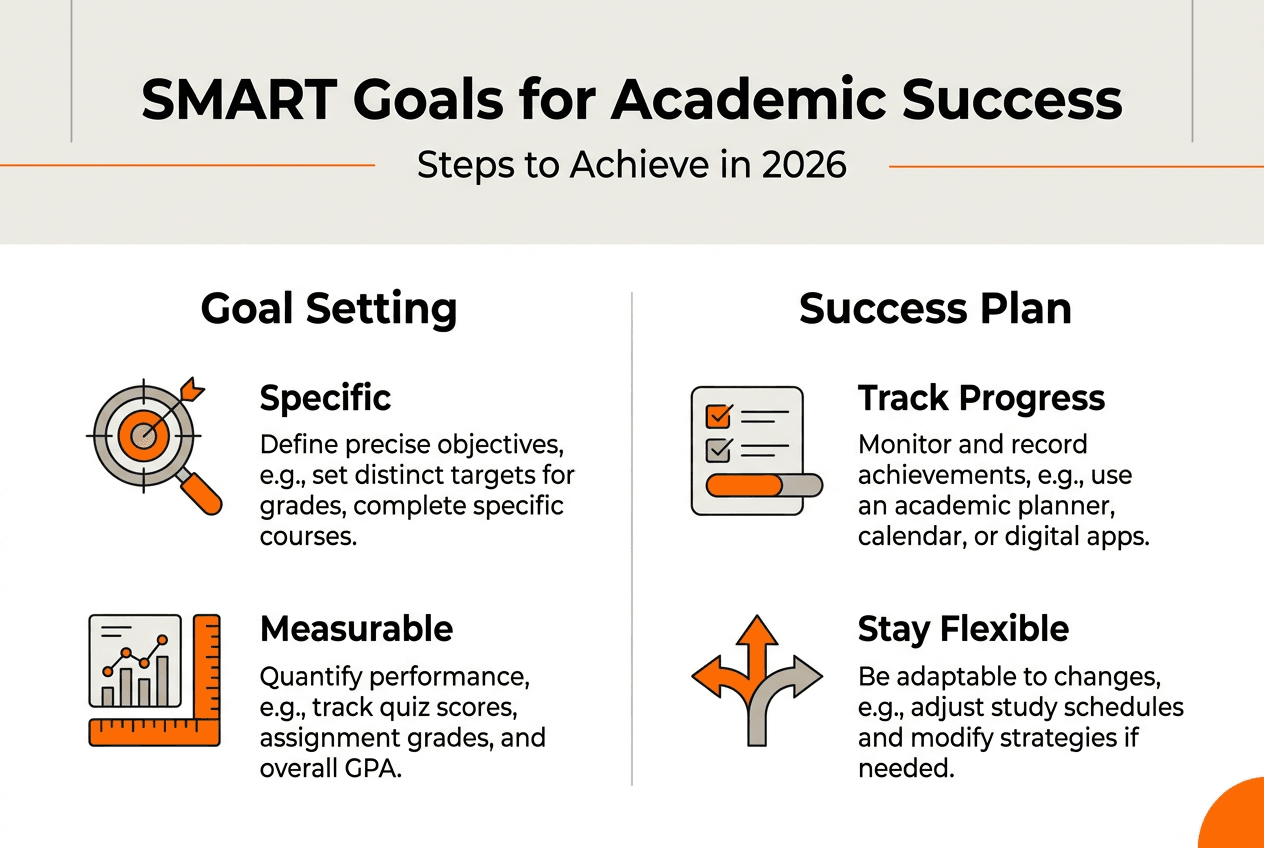
Your plan should include three time horizons. Long-term goals span an entire academic year or beyond, like graduating with honors or gaining admission to your target college. Mid-term goals cover a semester or quarter, such as achieving a specific GPA or mastering a challenging subject. Short-term goals focus on weekly or daily actions, like completing assignments early or maintaining consistent study schedules.
A well-structured academic success plan helps organize goals, track progress, and identify support needs. This organization reveals how daily choices connect to bigger dreams. When you see the relationship between tonight’s study session and next year’s college acceptance, motivation becomes easier to sustain.
Effective goal tracking requires regular monitoring and honest assessment. Weekly reviews let you celebrate wins, identify obstacles, and adjust strategies before small problems become major setbacks. During these reviews, ask yourself what worked well, what didn’t, and what you’ll change moving forward. This reflection builds self-awareness and strategic thinking.
Integrating proven study techniques enhances your ability to achieve goals. The Pomodoro technique, which alternates focused 25-minute work blocks with short breaks, improves concentration and prevents burnout. When you create study schedule that incorporates these methods, you accomplish more in less time while maintaining energy and focus.
Time management skills directly impact goal achievement. Students who submit assignments early build consistency and reduce stress. This practice also creates buffer time for unexpected challenges, ensuring one difficult week doesn’t derail your entire semester. Learning to manage time for academic success transforms good intentions into reliable habits.
Your academic success plan should include these essential components:
- Clear written goals for each subject with specific performance targets
- Weekly study schedule that allocates time based on difficulty and importance
- Progress tracking system to monitor completion and identify patterns
- List of resources and support contacts for when you need help
- Regular review dates to assess progress and make necessary adjustments
- Reward system to celebrate milestones and maintain motivation
Pro Tip: Schedule a 30-minute planning session every Sunday to review the past week and prepare for the coming one. This consistent routine keeps goals visible and ensures you never lose sight of your priorities amid daily demands.
Flexibility is crucial for long-term success. Life throws unexpected challenges at everyone. A family emergency, illness, or surprising difficulty in a course might require goal adjustments. This doesn’t mean failure. It means you’re responding intelligently to new information. Rigid adherence to outdated plans creates frustration, while thoughtful adaptation maintains momentum even through setbacks.
Balancing academic goals with future career planning
Focusing exclusively on grades without considering career development creates a narrow path to success. While strong academic performance matters, employers and graduate schools increasingly value practical experience, soft skills, and demonstrated passion for your field. Integrating career-focused activities with academic goals builds a comprehensive profile that opens more opportunities.
Many students make the mistake of postponing career exploration until after graduation. This approach limits your options and wastes valuable years when internships, volunteer work, and skill development could be building your professional foundation. Balancing schoolwork and career planning is essential, such as securing internships through co-op programs.
Career-focused academic goals might include developing presentation skills for your target industry, networking with professionals in your field, or completing projects that demonstrate practical application of classroom knowledge. These objectives complement traditional academic targets while building capabilities that transcend any single course or grade.
Consider how integrated goals create more value than academic-only objectives:
| Approach | Example Goal | Benefits | Limitations |
|---|---|---|---|
| Academic Only | Achieve 3.8 GPA in business courses | Strong transcript, subject mastery | No practical experience or professional connections |
| Integrated Academic-Career | Achieve 3.5 GPA while completing marketing internship and building portfolio | Good grades plus real-world skills and network | Requires more time management and planning |
| Academic Only | Master statistical analysis techniques | Technical competence in one area | Limited application without context |
| Integrated Academic-Career | Apply statistics to analyze real business data in part-time role | Technical skills plus problem-solving experience | More complex to arrange and balance |
Balancing academics with career development requires strategic planning. You can’t do everything simultaneously, so prioritize activities that align with both immediate academic needs and long-term career aspirations. A business student might choose a part-time retail job over random gig work because it builds customer service skills relevant to future roles.
Steps to balance academic goals with career planning effectively:
- Research career paths early to understand what skills and experiences employers value most
- Identify academic courses and projects that align with your target industry or profession
- Seek internships, volunteer opportunities, or part-time work that builds relevant experience
- Develop soft skills like communication, teamwork, and leadership through extracurricular involvement
- Build relationships with professors and professionals who can provide mentorship and references
- Create a portfolio or professional presence that showcases your growing capabilities
This balanced approach builds motivation by connecting daily academic work to exciting future possibilities. When you understand how today’s chemistry homework relates to your dream of becoming a pharmacist, that assignment gains meaning beyond just earning points. This sense of purpose fuels persistence through challenging material.
Integrated planning also develops professional identity and self-efficacy earlier in your academic journey. You begin seeing yourself as a future professional, not just a student. This shift in mindset influences how you approach learning, what questions you ask, and how you present yourself to others. These subtle changes compound into significant advantages over time.
Explore strategies for balancing lifestyle and academics to ensure your career development efforts don’t overwhelm your ability to maintain healthy habits and relationships. Sustainable success requires attention to all dimensions of your life, not just academics and career.
Enhance your personal goal setting with our expert resources
Mastering personal goal setting is just the beginning of your academic success journey. LearningWithAngie offers comprehensive guides on study skills and time management that complement your goals and accelerate your progress. Our step-by-step techniques help you boost productivity, stay organized throughout the year, and build habits that last beyond graduation. Discover our study skills 2025 guide for proven methods to improve retention and comprehension. Learn to master time management step by step with practical frameworks tailored for student schedules. Visit LearningWithAngie to find checklists, planners, and expert advice designed specifically for high school and college students ready to achieve their full potential.
Frequently asked questions about personal goal setting
How do I know if my goals are realistic?
Realistic goals stretch your abilities without requiring impossible circumstances. Look at your current performance and available time honestly. If you’re earning a 2.5 GPA, aiming for 3.0 next semester is realistic with focused effort, while expecting 4.0 probably isn’t. Test your goal by asking whether someone with your resources and constraints has achieved something similar before.
What should I do if I fail to meet a goal on time?
Failure to meet a goal isn’t the end, it’s feedback. Analyze what went wrong without harsh self-judgment. Did you underestimate the difficulty, overcommit your time, or encounter unexpected obstacles? Adjust your approach based on what you learned and set a new, more informed target. Progress matters more than perfection.
How often should I review and update my goals?
Review short-term goals weekly to track progress and make quick adjustments. Assess mid-term goals monthly to ensure you’re on track for semester targets. Evaluate long-term goals each semester to confirm they still align with your evolving interests and circumstances. Regular reviews prevent you from pursuing outdated objectives that no longer serve your growth.
Can goal setting help reduce academic stress?
Yes, clear goals significantly reduce stress by eliminating uncertainty about what you should be doing. When you know your priorities and have a plan to address them, anxiety decreases. Goals also prevent last-minute cramming by encouraging consistent effort. This steady approach feels more manageable than the panic of facing multiple deadlines unprepared.
What role do parents have in supporting goal setting?
Parents can provide accountability, encouragement, and perspective without taking over the process. They might help you identify realistic targets based on their life experience or celebrate your progress to maintain motivation. However, the goals must be yours, not theirs. Parental support works best when it empowers your independence rather than creating pressure to meet someone else’s expectations.