How to Read Faster Without Losing the Plot
You can move through pages faster and still remember what mattered. The trick is not raw speed. The trick is reading with purpose, so your eyes, attention, and memory work together.
If reading feels slow, the problem often is not your brain. Your eyes backtrack, your inner voice reads every word, or your focus slips every few lines. Fix those habits, and you can read faster without turning the chapter into a blur.
What faster reading actually looks like
When you want to read faster, start by dropping one bad idea: every page does not need the same pace. A novel chapter, a lab report, and test directions ask different things from you. Strong readers shift speeds the way good drivers shift gears.
That matters because speed alone can fool you. You might finish ten pages quickly and still forget the main point. If you cannot explain the argument, trace the plot, or answer the question, the extra speed did not help.
Claims about extreme speed-reading often leave that part out. Flying through a book sounds impressive. Still, school reading usually asks you to remember details, connect ideas, and use what you read later.
A better goal is simple. Read as fast as you can while still keeping the meaning clear.
Start with a small check. Read for two or three minutes at your normal pace. Then close the book and write one or two sentences about what you read. If the summary is fuzzy, the problem may be focus, not speed. If you understood it well, you may have room to push a little faster.
This also helps if you are a parent helping a younger reader. Ask for a quick recap after a page or two. You will hear right away if the pace fits the text.
Speed helps only when you can still say what the page meant.
Once that goal is clear, the rest gets easier. You are not trying to win a race. You are trying to move through words with less waste.
Preview the page before you start reading
A chapter is a map before it is a wall of words. If you glance at the map first, your brain has places to put new ideas.
Start with a one-minute preview. Look at the title, headings, bold words, pictures, charts, and summary boxes. In an article, read the subheads and the first sentence of a few paragraphs. In a novel, notice chapter length, scene breaks, and any shift in speaker or setting.
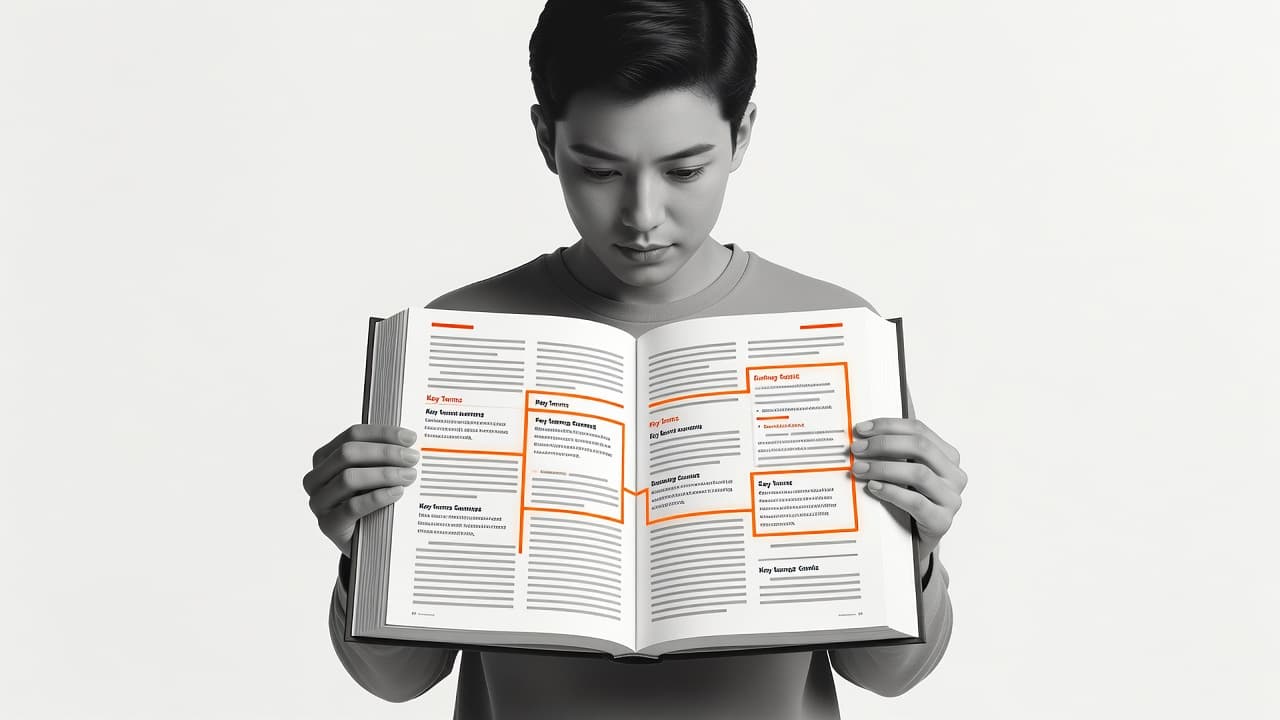
This short preview gives you a frame. You stop treating every sentence as equally important. Instead, you start seeing the big idea, the supporting parts, and the places where the author is likely to turn.
Textbooks reward this habit. If you preview a chapter on the water cycle, for example, words like evaporation, condensation, and precipitation will not feel random when they appear in the paragraphs. You already know the path.
Stories also get easier when you preview lightly. A fast glance at chapter breaks can prepare you for a time jump or a new point of view. That helps you hold the plot together, especially in longer books.
Previewing also cuts down on re-reading. When you know where the text is headed, your brain spends less time saying, “Wait, what is this section even about?” You enter the page with a goal, and your eyes follow it.
So before you read line one, scan the shape of the text. That single habit can save minutes and help you remember more.
Move your eyes with more purpose
Many slow readers do not struggle with hard words. They struggle with wandering eyes. Your eyes stop too often, jump backward too much, or drift off the line. A simple pacing method can clean that up fast.
Use a finger, pen cap, or index card as a guide. Move it under each line at a steady pace. Your eyes will often follow the motion, and that reduces aimless stops. Set the pace a little faster than feels natural, not so fast that meaning disappears.
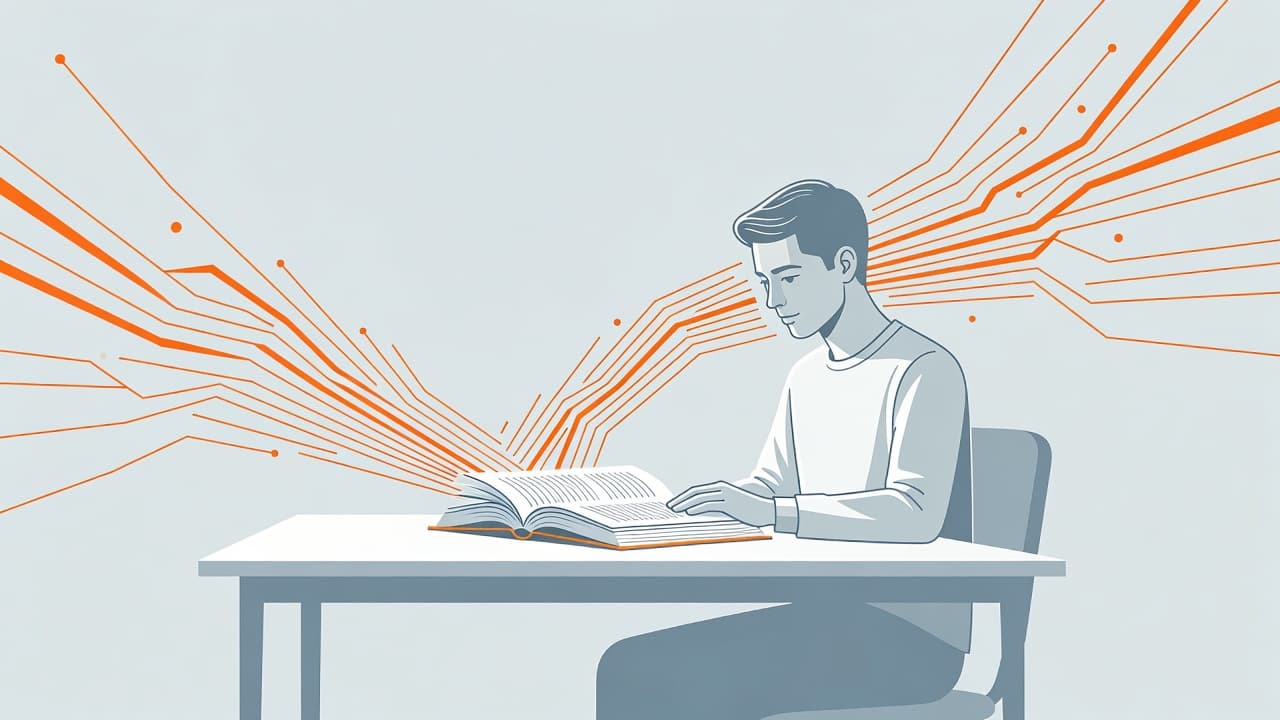
This works because your eyes like a track. Without one, they often slip backward out of habit. Those backward jumps are called regressions. Some are useful, but many are not. You may reread a line even when you understood it the first time.
Try this rule for one practice session: if a sentence feels slightly odd, keep going until the end of the paragraph. Then decide if you need to go back. Often the next lines clear it up on their own.
You can also train your eyes to take in small groups of words instead of one word at a time. Most short phrases can be seen in a single glance. That does not mean you should skip words. It means you stop giving every word its own full stop sign.
Columns and narrow pages make this easier. Wide textbook pages can be harder, so do not force giant jumps. Keep the chunks small and steady.
A short drill helps. Read one page with your normal pace. Next, read a similar page with your finger guiding each line. Then write a quick summary from memory. If the second page feels smoother and the summary still makes sense, you found a better speed.
This method is plain, but it works. Your eyes waste less motion, and your brain gets a cleaner stream of text.
Reduce subvocalization and protect your focus
Subvocalization is the voice in your head that “says” the words as you read. Some of that is normal. In fact, it can help with poetry, speeches, tough definitions, or new language study. The problem starts when the voice becomes a bottleneck and forces you to hear every single word at speaking speed.
You can spot it by watching for lip movement, whispering, jaw tension, or a strong urge to mouth the sentence. If that sounds familiar, do not try to kill the inner voice completely. Instead, loosen its grip.

A pacing guide helps here too, because it nudges your eyes forward before the voice can fully settle on each word. Previewing also helps, because familiar structure lowers the need to “say” everything to feel safe. In addition, try reading in short phrases, not tiny word-by-word bites.
Focus matters just as much. You will not read faster if your attention resets every two minutes. Put your phone out of reach. Clear the desk. Pick one small target, such as ten pages or fifteen minutes. Then read until the timer ends.
Short reading sprints work well for students because they lower the start-up stress. Fifteen focused minutes usually beat forty scattered ones. After the sprint, pause and say the main point out loud or jot it in one sentence. That locks in meaning and shows whether your speed still fits.
If you are helping a child or teen, keep the same pattern. Set a short timer, remove distractions, and ask for a quick recap. You do not need a long quiz. One clear sentence tells you a lot.
Your best pace appears when attention is steady. Without focus, every other reading trick gets weaker.
Know when slowing down is the smarter move
The fastest readers are not the ones who rush every page. They are the ones who know when to hit the brakes.
Some texts are built for speed. You can move quickly through review notes, familiar chapters, easy narrative sections, and first-pass previews. Other texts need slower reading because the meaning sits in the details.
This quick guide helps:
| Text type | Best pace | Reason |
|---|---|---|
| Chapter preview or review notes | Fast | You are finding structure and main ideas |
| Familiar story sections | Medium-fast | Flow matters more than close analysis |
| New textbook concepts | Medium-slow | You need time to connect terms and ideas |
| Math proofs, lab steps, test directions | Slow | Small misses can cause big errors |
If a passage carries new facts, tricky logic, or directions you must follow, slow down on purpose. The same goes for scenes in a novel where motives shift, clues appear, or the writer hides meaning between the lines.
You can also change speed inside the same page. Skim the easy part, then slow down for the dense paragraph. That is not a failure. That is skilled reading.
When you give hard material the time it needs, you actually save time later. You spend less energy fixing confusion, re-reading whole pages, or missing key points on an assignment.
Keep the pace and keep the meaning
You do not need superhuman speed to read faster well. You need better habits: preview the text, guide your eyes, cut back on useless re-reading, loosen the inner voice, and protect your focus.
Most of all, let the text set the pace. Some pages are for quick movement. Others deserve a careful read. When you can finish a chapter and tell it back clearly, you have found the kind of speed that counts.
This post may contain affiliate links. If you make a purchase through these links, I may earn a small commission at no extra cost to you.
Want a head start? The Study Skills System gives your reading a home: one place to plan what to read, capture what matters and review it before the test.