It’s 9:40 p.m. The exam is at 10 tomorrow morning. Your notes are open, your highlighter is out, and you have a choice to make about the next few hours. Give this post fifteen minutes and you’ll know exactly what to do with the rest of tonight.
Here’s the tricky part about the night before the exam: the things that feel most like studying are often the ones that do the least. And the things that actually help feel almost too small to count. So let’s sort them. No lecture. You’re already up, you’re already a little worried, and you don’t need anyone telling you what you should have done last week. Tonight is what you’ve got. Tonight is enough to work with.
Quick answer
What should you do the night before the exam? Skip the full re-read. Pick the three or four topics that carry the most points, close your notes, and write down everything you remember about each one for 15 minutes. Check what you missed and fix only that. Then make a short “can’t do yet” list, pack your bag, set two alarms, and go to sleep at a normal time. In the morning, spend 15 minutes on that short list and nothing else. One focused retrieval pass plus sleep beats three more hours of re-reading.
The trap: why re-reading at 11 p.m. feels so productive
Let’s name it, because almost everybody does it. You open the notes to page one and start reading. Things look familiar. You nod along. You highlight a line or two. An hour goes by and it feels like progress, because every page you turn is a page “covered.”
The problem is that recognizing something and being able to produce it are two different skills. Re-reading trains the first one. The exam tests the second. When the page is in front of you, of course it looks familiar. Tomorrow the page won’t be there, and “I’ve seen this” won’t put words on the answer sheet.
That’s not a flaw in you. It’s how memory works for everyone, and it’s exactly why re-reading is so tempting when you’re tired: it’s comfortable, it never tells you you’re wrong, and it fills the time. The fix isn’t more hours. It’s a different kind of fifteen minutes.
Other things that feel productive tonight (and mostly aren’t)
- Rewriting your notes neatly. Lovely in week three. Tonight it’s copying, not learning.
- Making a brand-new set of flashcards. Making them eats the whole evening. If you already have cards, great, use them. If you don’t, skip to the method below.
- Watching “the whole unit explained” videos. One short clip for one topic you truly don’t get? Fine. A two-hour playlist is re-reading with a play button.
- Starting a chapter you’ve never opened. New material the night before rarely sticks, and it crowds out the things you almost know. “Almost know” is where tonight’s points are.
- The group chat. Ten minutes to confirm the room and the format is useful. An hour of everyone comparing how behind they are just spreads the worry around.
What actually helps the night before the exam
Three things. That’s the whole list. One retrieval pass, one short written list, and sleep.
1. One retrieval pass on the highest-weight topics
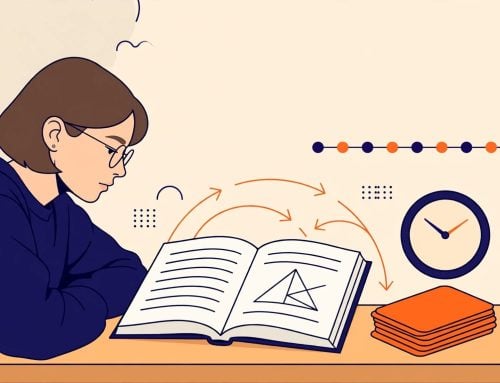
Retrieval just means pulling information out of your head instead of pouring it in. It’s the closest thing to a rehearsal of the actual exam, which is why it works so well the night before. Here’s the 15-minute version:
- Pick your topics (2 minutes). Look at the study guide, the syllabus, or the last few weeks of class. Which three or four topics will carry the most points? If your teacher said “this will be on the test,” that’s one of them. Write them down.
- Close everything (8 minutes). Notes shut, laptop lid down. Take a blank page and write what you remember about the first topic: definitions, steps, formulas, a worked example, the diagram. Messy is fine. Move to the next topic when you run dry.
- Check and fix (5 minutes). Open your notes and compare. Circle what you missed or got wrong. Read only those parts, then cover them and say them back out loud.
That’s one round. If you have the energy, do a second round on the next set of topics, and a third if it’s still early. Each round is fifteen minutes, and each one tells you something re-reading never will: what you actually know. If you want the longer version of this method for the weeks before an exam, it’s the backbone of our exam prep study system.
For a math or science exam, swap “write what you remember” for “work one problem of each type without looking at the solution.” Same idea. You’re practicing the thing you’ll be asked to do.
2. A written list of what you can’t do yet
After your retrieval rounds, you’ll have a handful of things that still didn’t come out right. Write them on one index card or sticky note. Be specific: not “chapter 7” but “the difference between mitosis and meiosis” or “when to use the quotient rule.”
This little list does two jobs. First, it gets the worry out of your head and onto paper, which makes it a lot easier to fall asleep. Second, it becomes your entire plan for tomorrow morning. Keep it short. Five items is plenty. If it’s longer than that, star the three worth the most points and let the rest go.
Want a calmer exam week next time? Our free student Notion template gives you one place for every exam date, assignment and study session, so the night before stops sneaking up on you. It takes about fifteen minutes to set up, and you can do it after this exam is over.
3. Sleep (the unglamorous one that does the most)
Plainly: sleep is when your brain files what you studied. The work you did tonight gets sorted and stored while you’re out. Cut the sleep short and you’re trading material you already learned for a few extra pages you’ll half remember. You also walk in slower at reading questions, slower at catching your own mistakes, and quicker to blank on things you knew cold yesterday.
So the most useful thing you can do at 11 p.m. is usually to stop. Not because staying up is “bad,” but because at that hour sleep is simply worth more points than another pass through the notes. A normal night’s sleep is the goal. If you’re reading this late and a full night isn’t possible anymore, take what you can get. Some is much better than none.
Two small things that make it easier to actually fall asleep:
- Pack tonight. Pencils, calculator, student ID, water bottle, whatever the exam allows. Bag by the door. One less thing for your brain to circle.
- Set two alarms and put your phone across the room. You’ll sleep better knowing you can’t oversleep, and you won’t scroll.
If winding down is hard for you in general, our morning-to-night routine for students has a simple evening shutdown you can borrow.
The morning-of 15 minutes (worth more than the extra hour tonight)
Here’s the payoff for going to bed. Tomorrow morning, rested, fifteen minutes will do more than the hour you would have squeezed out at 1 a.m. Use it like this:
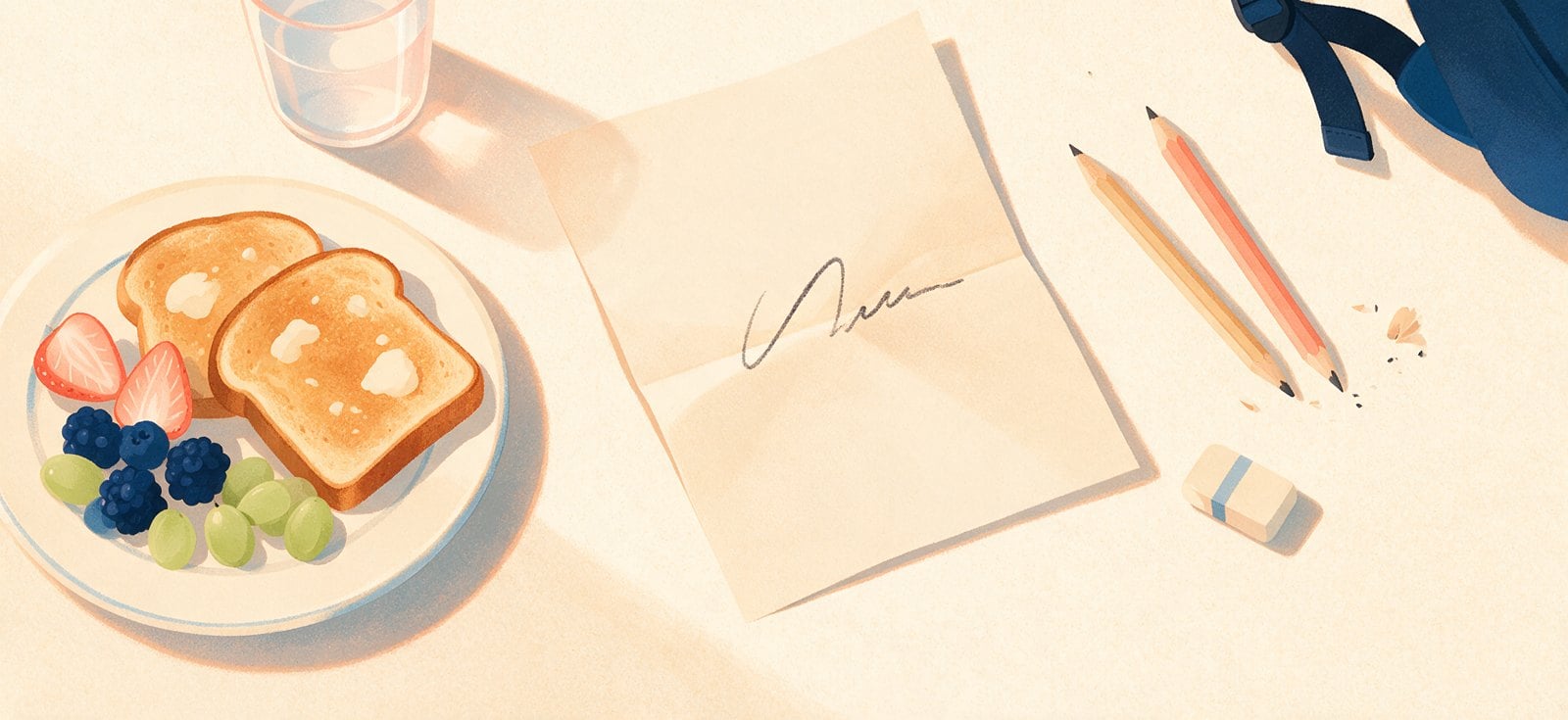
- Eat something and drink water. Nothing fancy. Toast counts.
- Take out your “can’t do yet” card. For each item, look at the answer once, cover it, and say it back. That’s it. You’re topping up the few things that were shaky, right before you need them.
- Don’t open anything new. No fresh chapters, no “let me just check one more thing” in the hallway. If someone outside the room starts quizzing people on something you’ve never heard of, step away. It’s almost never on the test, and it only rattles you.
- Get there a few minutes early. Pick your seat, breathe, put your card away.
When the exam lands in front of you, take the first minute to flip through the whole thing and jot down any formulas or lists you’re afraid of losing. Then start with a question you know. Momentum is real.
When cramming is the right call (honestly)
Sometimes the night before is all the time there is. Work ran long, three deadlines collided, life happened. If that’s tonight, you’re not doomed and you don’t need a speech. You need the least-bad version of cramming. Here it is:
- Triage first. You can’t cover everything, so don’t try. Use the study guide or syllabus to pick the topics worth the most points, and the ones you’re closest to understanding. Those come first. Anything that’s both low-weight and totally unfamiliar gets dropped on purpose.
- Learn it in retrieval rounds, not read-throughs. Read one topic for five to ten minutes, then close it and write what you remember. Check. Move on. It’s the same 15-minute loop as above, just with a little more “input” at the front.
- Do the practice questions. If there’s a review sheet, old quiz, or end-of-chapter problem set, that’s your best material. Teachers tend to test what they’ve already asked.
- Set a hard stop. Decide your bedtime now and write it down. Even in a cram, the last hour before 2 a.m. gives you very little, and the sleep gives you a lot. Protect at least a few hours.
- Still make the card. The “can’t do yet” list and the morning-of 15 minutes matter even more when you’ve crammed.
If this is one of several exams stacked in the same week, the bigger question is which one gets your hours. We walked through that decision step by step in how to study for midterms when you have four in one week.
Your night-before checklist
- Pick the 3 to 4 highest-weight topics
- Do one 15-minute retrieval round (notes closed, write, check, fix)
- Repeat for the next topics if it’s still early
- Write your “can’t do yet” card, five items max
- Pack your bag and set two alarms
- Lights out at a normal time
- Morning: breakfast, water, 15 minutes with the card, nothing new
If you’d like that on paper instead of on a screen, The Exam Season Survival Kit ($12.97) has the night-before checklist, retrieval pages and an exam-week planner ready to print and fill in. It’s built for the night before a test, and for the three weeks before one too.
Next time, give yourself a longer runway
Once this exam is behind you, the easiest upgrade is starting the retrieval rounds earlier, in small pieces. Fifteen minutes, a few days apart, beats one long night every time. Two posts will help you set that up: spaced repetition for heavy reading classes shows you how to spread the reviews out, and our cumulative exam study plan shows you how to plan backwards from the exam date so the last night is a light one.
Like seeing the whole month at a glance? Print the free undated monthly planner, write in your next exam date, and count back three short review sessions from it. Tape it somewhere you can’t miss. Future you, the night before that exam, will be very glad you did.
Your next fifteen minutes
Close this tab. Write down your top three topics. Shut the notes, set a timer for eight minutes, and write what you know. Check it, fix what you missed, make your card, pack your bag.
Then go to bed. You’ve done the part that counts.
You don’t need to have it all figured out. You just need the next step.
Rooting for you,
Team Angie